The best drum machines for electronic music can turn a sketch into a complete groove, whether you are producing in a DAW, building a hardware setup, or performing live. The right choice depends on the sounds you want, how much sequencing control you need, and whether portability matters.
This roundup covers dedicated drum machines, sample-based units, MIDI pad controllers, tabletop kits, and guitar pedals. Use the guide below to compare their strengths and choose a setup that fits your workflow and budget.
Best 10 Drum Machines for Electronic Music Picks for 2026
Classic Analog Choice

- 15 classic analog drum sounds
- 34 rhythm presets
- 16-step sequencer and USB connection
Best For: Accessible analog-style beats and live performance
Portable Pad Controller

- 16 velocity-sensitive MPC pads
- 48 assignable pads across three banks
- Includes MPC Beats and Ableton Live Lite
Best For: Computer-based beat making and expressive pad performance
Compact Digital Percussion

- Six-part DSP drum synthesis engine
- Active Step and Slice sequencing tools
- Built-in speaker and portable design
Best For: Experimental percussion and portable electronic production
Budget MIDI Beat Maker

- 48 assignable pads across three banks
- Faders, knobs, tap tempo, and note repeat
- Includes MIDI cable and production software kit
Best For: Affordable DAW-based beat making and MIDI control
Portable Sample Sequencer
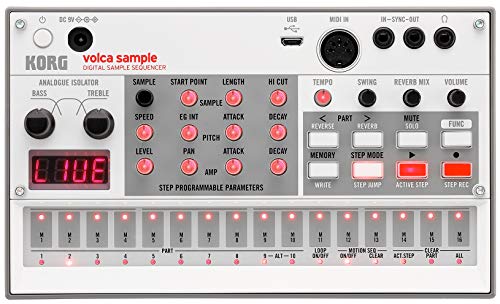
- 8-voice sample-based sequencing
- Pattern chaining and expanded memory
- Battery-powered with USB connectivity
Best For: Portable electronic beatmaking and sample-based genres
Footswitch Drum Grooves

- 121 grooves across 11 styles
- Tap tempo and live fill function
- Dual footswitches for performance control
Best For: Guitar and bass rigs needing hands-on backing rhythms
Tabletop Digital Drum Kit

- Eight touch-sensitive pads and pedals
- 600 sounds with recording features
- USB MIDI, headphone, and battery support
Best For: Pad-based practice and beginner electronic production
Performance Rhythm Pedal

- 121 grooves spanning 11 genres
- 66 customizable rhythm slots
- Tap tempo, fills, and stereo I/O
Best For: Guitarists and performers needing foot-controlled rhythms
Portable Beat Maker
Stylophone Beat Compact Drum Machine

- Four drum kits and four bass sounds
- Layer, mute, and record patterns
- Battery-powered with headphone support
Best For: Portable beat making and beginner-friendly experimentation
Looping Practice Workstation
M-VAVE Circle Drum Machine and Looper

- Four operating modes including mixed mode
- 30 presets with app editing and sharing
- 11 minutes of loop storage across four slots
Best For: Solo performers combining drums, loops, and tuning
Classic Analog Choice – Behringer RD-78
The Behringer RD-78 is a straightforward option for electronic musicians who want classic analog drum sounds, built-in rhythm ideas, and hands-on sequencing in a compact unit. Its 16-step sequencer and 34 rhythm presets make it practical for both studio programming and live performance.
Best For: Producers and performers seeking an accessible analog-style drum machine with preset patterns.
Pros:
- Includes 15 classic analog drum sounds.
- Offers 34 rhythm presets for quick beat creation.
- Compact, durable design with USB connectivity.
Cons:
- Its 16-step sequencer may feel limited for longer or highly evolving arrangements.
- The supplied notes do not indicate built-in speaker functionality.
The RD-78 focuses on immediate beat programming rather than extensive sound design. It is a sensible pick among drum machines for electronic music when simplicity, portability, and familiar analog character are priorities.
Portable Pad Controller – Akai Professional MPD218
The Akai Professional MPD218 is a USB MIDI pad controller for triggering drums, samples, effects, and instruments through compatible software. With velocity-sensitive MPC pads, note repeat, and included production software, it suits computer-based electronic music workflows rather than standalone operation.
Best For: Beat makers who want expressive pads and portable DAW control.
Pros:
- Provides 16 velocity-sensitive MPC pads across three banks for 48 assignable pads.
- Includes note repeat and full-level controls for expressive performances.
- Comes with MPC Beats, Ableton Live Lite, and Drum Synth 500 software.
Cons:
- Requires a computer, iOS setup, or compatible software to generate sounds.
- It is a controller rather than a self-contained drum machine.
The MPD218 is best viewed as a performance-focused front end for software instruments. Choose it when tactile pad playing matters more than onboard sequencing or standalone operation.
Compact Digital Percussion – Korg Volca Drum
Korg Volca Drum Digital Percussion Synthesizer w/ 16-step Sequencer and Active Step
Check Price On AmazonThe Korg Volca Drum is a compact digital percussion synthesizer designed for hands-on pattern creation. Its six-part DSP synth engine, waveguide resonator, and flexible 16-step sequencing tools give electronic musicians plenty of ways to add movement and texture to programmed rhythms.
Best For: Electronic producers who want portable digital percussion synthesis and experimental sequencing.
Pros:
- Six-part DSP engine supports a wide range of drum sounds.
- Active Step, Slice, accent, choke, and randomize functions expand pattern variation.
- Compact design includes a built-in speaker for portable creation.
Cons:
- The 16-step sequencer may require pattern chaining or additional equipment for longer arrangements.
- Its specialized digital synthesis approach may be less suitable for users seeking traditional analog sounds.
The Volca Drum stands out among drum machines for electronic music when sound manipulation and rhythmic variation are central to the workflow. Its small format also makes it convenient for mobile sessions and live setups.
Budget MIDI Beat Maker – Donner STARRYPAD
The Donner STARRYPAD is a USB MIDI pad controller for triggering drums, samples, and effects inside DAW software. It combines 16 velocity-sensitive pads with faders, knobs, pad banks, tap tempo, note repeat, and included software resources for an adaptable electronic music setup.
Best For: Beginners and budget-conscious producers building a DAW-based beat-making system.
Pros:
- Offers 48 assignable pads through three banks.
- Adds two faders, two knobs, and extra buttons for software control.
- Includes a MIDI cable, Melodics courses, and a Cubase LE software kit.
Cons:
- Does not produce sound by itself and requires DAW software.
- The editor controls pad setup but does not record or arrange music.
- Mobile iPhone or iPad use requires an additional Apple adapter.
The STARRYPAD offers broad control for its compact format, but it should not be confused with a standalone drum machine. It is a practical entry point for producers who already plan to work inside a computer or mobile DAW.
Portable Sample Sequencer – Volca Sample 2
Korg Volca Sample 2 Digital Sample Sequencer Drum Machine w/Pattern Chain Mode and 16-step Sequencer
Check Price On AmazonThe Korg Volca Sample 2 is a compact choice for electronic musicians who want a lightweight, sample-based drum machine for electronic music. Its 16-step sequencer, pattern chaining, expanded memory, and computer connectivity make it practical for building beats and arranging short patterns.
Best For: Future bass, trap, lo-fi hip-hop, and portable sample-based production.
Pros:
- 8-voice polyphony with a 16-step sequencer and pattern chain mode.
- Expanded memory supports more samples and longer recordings than previous models.
- Built-in speaker, headphone output, battery operation, and compact size support standalone use.
- USB connectivity and Librarian software help manage samples and patterns.
Cons:
- The 16-step sequencing format may feel limiting for longer or more complex arrangements.
- It uses six AA batteries or an AC adapter, rather than an internal rechargeable battery.
Choose the Volca Sample 2 if portability and sample manipulation matter more than full-size controls. Digital reverb, a double filter, and pattern chaining give this small unit useful sound-shaping and sequencing flexibility.
Footswitch Drum Grooves – MOOER Drummer X2
The MOOER Drummer X2 is a pedal-format drum machine for electronic music and live guitar or bass setups. With 121 grooves, 11 music styles, song banks, tap tempo, and a fill function, it is designed for hands-on rhythm control without navigating menus.
Best For: Guitarists and bassists who need selectable backing grooves and foot-controlled rhythm changes.
Pros:
- Offers 121 grooves across 11 styles, plus customizable song banks with seven rhythm slots each.
- Dedicated knobs provide direct control over speed, genre, level, pattern, and EQ.
- Fill and tap-tempo functions support real-time performance changes.
- Dual footswitches and an external control connection expand live preset control.
Cons:
- It is powered by the included 9V DC adapter rather than batteries.
- Its pedal-oriented design may be less suitable for producers seeking detailed step sequencing or sample loading.
The Drummer X2 makes the most sense when immediate groove selection and foot control are priorities. Stereo connections, an EQ control, and editor software add useful flexibility for practice, rehearsal, and performance rigs.
Tabletop Digital Drum Kit – Pyle PTED01
The Pyle PTED01 is a tabletop digital drum kit for players who want physical pads alongside electronic production tools. Its touch-sensitive pads, 600 sounds, recording features, USB MIDI connection, and headphone output make it a flexible entry point for drum machines for electronic music.
Best For: Beginners, home practice, and producers who want a pad-based MIDI controller with built-in drum sounds.
Pros:
- Includes eight touch-sensitive pads, pedals, and 600 sounds for varied playing options.
- USB connection allows use as a MIDI controller with Mac and PC software.
- Supports recording, pre-recorded kits and songs, headphones, and external playback.
- Can run from the included AC adapter or six C batteries for portable use.
Cons:
- At 7.3 pounds, it is less portable than compact groovebox-style drum machines.
- The tabletop kit uses a larger footprint than a dedicated compact sequencer.
Consider the PTED01 if you prefer playing rhythms on drum-style pads rather than programming every hit. Its MIDI functionality broadens its usefulness, while the built-in sounds and recording controls support standalone practice and basic beat creation.
Performance Rhythm Pedal – FLAMMA FF02 Drum Machine
The FLAMMA FF02 is a practical choice for musicians seeking drum machines for electronic music that can also fit directly into a guitar or bass rig. It offers 121 grooves across 11 genres, tap tempo, adjustable rhythms, and stereo connectivity for practice, live use, or studio setups.
Best For: Guitarists, bassists, and performers who want foot-controlled rhythm patterns with customizable storage.
Pros:
- Provides 121 drum grooves across 11 music genres.
- Includes 66 storage slots for customized rhythms.
- Tap tempo and real-time fills support live performance control.
- Stereo inputs and outputs suit guitar, bass, and studio connections.
Cons:
- Requires a corded 9V power supply.
- Its pedal-focused design may be less suitable for users seeking a standalone tabletop workstation.
The FF02 stands out when hands-free control and quick rhythm changes matter more than extensive sequencing features. Its compact pedal format and dual footswitches make it especially useful for live instrumental setups.
Portable Beat Maker – Stylophone Beat Compact Drum Machine
The Stylophone Beat is a compact option among drum machines for electronic music, combining four drum kits with four bass sounds in a small, battery-powered format. Its stylus interface, built-in speaker, layering functions, and headphone support make it convenient for portable beat creation.
Best For: Beginners, mobile producers, and beat makers who prioritize portability and simple pattern experimentation.
Pros:
- Includes four drum kits and four bass sounds.
- Supports multiple recorded layers and sound muting.
- Click track and tempo lock help maintain timing.
- Runs on three AA batteries and has a built-in speaker.
Cons:
- AA batteries are required but not included.
- Its compact sound set is more limited than larger drum machines.
- Headphone connectivity is specified for wired headphones.
Choose the Stylophone Beat for accessible, portable rhythm making rather than deep sound design. It is well suited to sketching ideas, layering simple patterns, and practicing away from a full studio.
Looping Practice Workstation – M-VAVE Circle Drum Machine and Looper
The M-VAVE Circle combines drum patterns, looping, and tuning in one pedal, making it a flexible option for musicians comparing drum machines for electronic music and live performance tools. It includes 30 presets, app-based editing and sharing, and separate volume control for drums and loops.
Best For: Solo performers and practice-focused musicians who want drum backing, layered loops, and a tuner in one pedal.
Pros:
- Offers tuner, drum machine, looper, and mixed modes.
- Includes 30 preset drum patterns with app customization.
- Stores up to four loop songs with a total recording time of 11 minutes.
- Provides separate drum and loop volume controls.
Cons:
- Individual loop storage locations are limited to five minutes.
- Its app sharing features are designed for users of the same product.
- Requires compatible 9V DC or USB power.
The Circle is a strong fit when looping and rhythm accompaniment need to share pedalboard space. Its display, metal housing, and dual power options add practical value for rehearsals and performances.
How We Picked the Best Drum Machines for Electronic Music
We focused on the features that have the greatest effect on everyday use: sound variety, sequencing flexibility, hands-on control, connectivity, portability, and suitability for production or live performance. The selection includes hardware for beginners, compact grooveboxes for mobile setups, MIDI controllers for computer-based workflows, and pedal-style units for guitarists and other performers.
Because these products serve different roles, no single option is best for everyone. A dedicated synthesizer or sampler may work independently, while a MIDI controller generally needs software or external sound sources.
Quick Comparison
- Best for classic hardware grooves: Behringer RD-78
- Best for computer-based beat making: Akai MPD218
- Best for experimental percussion: Korg Volca Drum
- Best for sample sequencing: Korg Volca Sample 2
- Best for guitarists: MOOER FF02 or FLAMMA FF02
- Best for portable practice: Stylophone Beat
- Best for an all-in-one tabletop kit: Pyle Electronic Tabletop Digital Drum Set
Key Buying Factors for Drum Machines for Electronic Music
Sound Engine and Library
Analog drum machines often deliver focused, punchy voices suited to classic electronic styles. Digital percussion synthesizers provide deeper sound design possibilities, while sample-based models are better when you want recognizable kits, one-shots, or custom samples. Check whether the unit offers built-in sounds only or supports sample loading and editing.
Sequencing and Performance Control
Look for step sequencing, pattern chaining, fills, swing, pattern length, and real-time recording. Pad layouts are useful for finger drumming, while step buttons make it easier to program precise repeating patterns. Tap tempo and pattern switching are especially valuable during live use.
Connectivity and Workflow
USB MIDI is important for DAW integration and software control. MIDI input and output expand hardware setups, while stereo outputs, headphones, and auxiliary connections affect monitoring options. Confirm whether the product creates sound on its own or functions primarily as a controller.
Portability and Power
Compact battery-powered units are convenient for travel, rehearsals, and quick ideas. Pedals are practical for musicians who need synchronized rhythm support onstage. Larger tabletop kits may provide more playing surface but require more space.
Who Should Buy Which Drum Machines for Electronic Music?
Choose the Behringer RD-78 if you want a straightforward analog-style drum machine with hands-on pattern programming. Choose the Korg Volca Drum if sound design and unusual percussion are more important than traditional drum samples.
Choose the Korg Volca Sample 2 for compact sample-based sequencing, or the Akai MPD218 if your beats are built primarily inside a computer. The Donner controller is another practical option for pad-based production with assignable controls.
Choose the MOOER, FLAMMA, or M-VAVE pedal if you need rhythm support for guitar, bass, looping, or live practice. The Pyle tabletop kit suits users who want touch-sensitive pads and pedals, while the Stylophone Beat is best for simple, portable, hands-on beat creation.