The best digital wireless in-ear monitor systems help performers hear a consistent mix while moving freely on stage. The right setup can reduce cable clutter, improve monitoring control, and make rehearsals, worship services, and live shows easier to manage.
This roundup compares 10 systems across digital and UHF designs, stereo and mono operation, receiver capacity, frequency flexibility, range, and setup convenience. Use the buying guide below to narrow the choices based on your band size, venue, and monitoring workflow.
Best 10 Digital Wireless in Ear Monitor Systems Picks for 2026
Best Compact 2.4GHz Pick
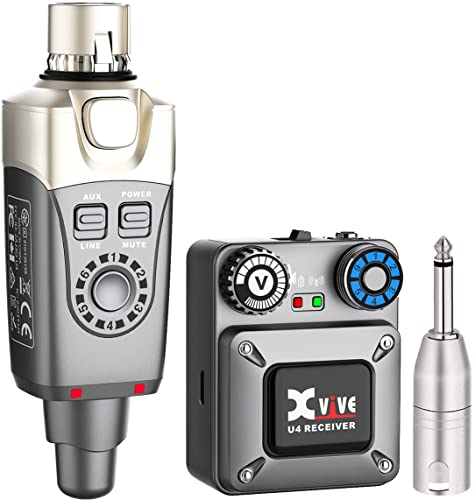
- Over 90-foot stated range
- Less than 5ms latency
- Up to five hours of battery life
Best For: Small venues, rehearsals, and portable personal monitoring
Best UHF Mono Setup
Phenyx Pro PTM-11 Wireless IEM

- 50 adjustable UHF frequencies
- Up to 164-foot stated range
- Separate inputs and pass-through outputs
Best For: Bands, churches, broadcasts, and mono monitoring
Best Digital Stereo Choice
ANLEON S2D Wireless IEM System

- 24-bit/48 kHz digital audio
- Stereo monitoring design
- 902–927MHz license-free operation
Best For: Music production and stereo live monitoring
Best Feature-Rich Xvive Set
Xvive U4 Professional IEM System

- 24-bit/48 kHz audio
- Built-in limiter and metal housing
- Up to five hours of rechargeable use
Best For: Bands, rehearsals, studios, and live performers
Multi-Performer UHF Pick

- Four bodypacks included
- Up to 300-foot stated range
- 80 selectable frequencies
Best For: Bands and stage setups needing four receivers
Portable Digital Pick

- 24-bit audio with 192kHz sampling
- Under-6ms latency
- Up to 10-hour rechargeable battery
Best For: Mobile performers and band rehearsals
Low-Latency 5.8GHz Pick

- 5.8GHz interference-resistant connection
- Under-5ms latency
- Automatic one-to-many pairing
Best For: Small teams and live performances
Flexible Band Practice Pick
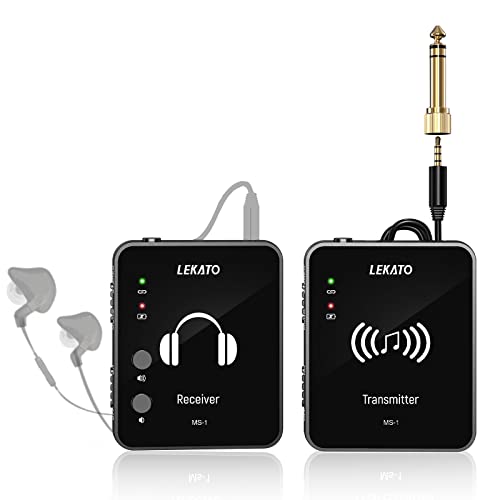
- One transmitter supports up to six receivers
- Stereo/mono operation with under-12ms latency
- Five-hour battery and 100-foot open-area range
Best For: Small- to medium-sized bands, churches, and rehearsals
Professional UHF Control Pick
Phenyx Pro PTM-10 Wireless IEM

- Selectable 900MHz UHF with 89 frequencies
- Up to five systems and 160-foot stated range
- EQ, limiter, balance, PAD, and rack-mount features
Best For: Stages, studios, conferences, and multi-system setups
Lowest-Latency Compact Pick

- Mono latency is rated below 4.5ms
- One transmitter supports up to four receivers
- Six- to eight-hour operation with mute and status LEDs
Best For: Portable rehearsals, singers, trainees, and small performances
Best Compact 2.4GHz Pick – Xvive U4 Wireless IEM System
The Xvive U4 is a practical choice for shoppers comparing digital wireless in ear monitor systems for small venues, rehearsals, and live performances. Its 2.4GHz connection offers a stated range of more than 90 feet, while latency under 5ms helps keep monitoring responsive.
Best For: Small-club performers, rehearsal setups, and personal or team monitoring.
Pros:
- Less than 5ms latency for responsive monitoring.
- Supports simultaneous broadcasts across six channels.
- Rechargeable transmitter and receiver provide up to five hours of battery life.
- Compact metal system includes a transmitter, receiver, adapter, and carrying bag.
Cons:
- Operating range is more limited than some UHF alternatives.
- Battery life may require recharging during longer events.
- The listed system is not water resistant.
Choose the U4 when portability and simple setup matter most. Its short stated latency and rechargeable design make it a convenient option for mobile performers, though larger venues may call for a longer-range system.
Best UHF Mono Setup – Phenyx Pro PTM-11 Wireless IEM
The Phenyx Pro PTM-11 is a strong option for buyers seeking digital wireless in ear monitor systems with a mono signal, flexible frequency selection, and separate outputs. Its UHF design offers 50 adjustable frequencies and a stated operating range of up to 164 feet.
Best For: Bands, churches, broadcasters, conference hosts, and studio users who prefer focused mono monitoring.
Pros:
- Mono monitoring helps simplify setup and avoid stereo phase issues.
- Offers 50 selectable frequencies and supports up to five systems working together.
- Separate left and right inputs and line outputs allow flexible signal routing.
- Metal half-rack transmitter and included rackmount kit support more permanent installations.
Cons:
- Mono output is less suitable for listeners who require stereo monitoring.
- The bodypack uses two AA batteries rather than a stated rechargeable battery.
- Thick walls, glass, and metal can reduce the operating range.
The PTM-11 stands out when frequency coordination and signal-routing flexibility are more important than stereo sound. Its included accessories also make it well suited to organized stage, studio, or presentation setups.
Best Digital Stereo Choice – ANLEON S2D Wireless IEM System
The ANLEON S2D is designed for shoppers comparing digital wireless in ear monitor systems that prioritize stereo sound and clear signal transmission. It uses 24-bit/48 kHz digital audio and operates in the license-free 902–927MHz ISM band.
Best For: Music production users and performers who want stereo monitoring with a digital signal path.
Pros:
- 24-bit/48 kHz sampling supports detailed digital audio.
- Stereo monitoring accommodates vocals, guitars, and other instruments.
- UHF transmission is described as stable with very low stated latency.
- License-free 902–927MHz ISM operation simplifies frequency use.
Cons:
- The supplied notes do not specify an operating range or battery life.
- No earphones or accessory list is provided in the supplied details.
- There is no stated water-resistance rating.
The S2D is the most fitting choice here for buyers focused on digital stereo quality rather than a detailed accessory package. Verify the included components and range before committing it to a demanding live setup.
Best Feature-Rich Xvive Set – Xvive U4 Professional IEM System
The professional Xvive U4 is a versatile pick among digital wireless in ear monitor systems for studio work, band rehearsal, and live performance. It combines 2.4GHz uncompressed transmission with under-5ms latency, six-channel operation, and a built-in limiter to help manage loud input levels.
Best For: Performers and bands wanting quick setup, rechargeable operation, and detailed mono monitoring.
Pros:
- Less than 5ms latency and six simultaneous channels support responsive group monitoring.
- 24-bit/48 kHz audio, 20Hz–20kHz frequency response, and a stated 107dB signal-to-noise ratio.
- Rechargeable lithium battery provides up to five hours of use.
- Metal construction and built-in limiter add practical stage durability and input protection.
Cons:
- The system provides mono monitoring rather than stereo monitoring.
- Five-hour battery life may be limiting for extended events.
- Its stated 2.4GHz range may be less suitable for very large venues.
This U4 package is a good fit when low latency, straightforward pairing, and rechargeable power are priorities. It offers a more detailed feature set than a basic monitor kit while retaining a simple plug-in-and-play workflow.
Multi-Performer UHF Pick – XTUGA RW2080
The XTUGA RW2080 is a practical choice when you need a digital wireless in ear monitor systems setup for several performers. Its UHF transmission, two-channel design, four bodypack receivers, adjustable frequencies, and stated 300-foot coverage make it suited to larger stage or rehearsal setups.
Best For: Bands, stage productions, lectures, and other setups needing four receivers from one system.
Pros:
- Includes four bodypack receivers and four earphones.
- UHF operation is designed for delay-free monitoring compared with 2.4GHz designs.
- Offers up to 300 feet of stated wireless coverage and 80 selectable frequencies.
- Metal transmitter, LCD display, built-in limiter, and rackmount kit support regular professional use.
Cons:
- At 4.9 pounds, the complete system is less portable than the compact alternatives.
- Its UHF frequency range and multi-unit setup may require more planning than a simple single-receiver kit.
Choose the RW2080 if multiple performers and long-range coverage matter most. It is a fuller, more installation-oriented package than lightweight personal monitoring systems.
Portable Digital Pick – Donner CV-3
The Donner CV-3 is a compact digital wireless in ear monitor system for performers who prioritize portability and straightforward connectivity. It combines 24-bit audio, a color-screen receiver, mono/stereo switching, and under-6ms latency in a lightweight rechargeable design.
Best For: Band rehearsal, live performance, and studio monitoring where a lightweight single-receiver kit is enough.
Pros:
- 192kHz sampling, 24-bit depth, and 110dB SNR support detailed audio output.
- Under-6ms latency helps minimize noticeable monitoring delay.
- Color screen provides real-time audio visualization and system information.
- Includes 1/4-inch, 1/8-inch, and XLR connectivity options, with up to 10 hours of battery life.
Cons:
- The stated wireless range is 100 feet, shorter than the XTUGA system’s advertised coverage.
- Only one receiver is included, so additional performers may require more equipment.
- Its 2.4GHz band may be less suitable for environments with heavy 2.4GHz congestion.
The CV-3 stands out for musicians who want a small, easy-to-carry system with flexible inputs and a useful display. Its rechargeable battery and 0.14-pound receiver make it especially convenient for mobile setups.
Low-Latency 5.8GHz Pick – EMR 1 Wireless IEM
The EMR 1 is a digital wireless in ear monitor system aimed at performers who want a cleaner 5.8GHz connection and fast stereo monitoring. Its under-5ms latency, automatic one-to-many pairing, and rechargeable design make it a convenient option for bands, worship teams, and live events.
Best For: Small performance teams, worship groups, streamers, and rehearsals using multiple receivers.
Pros:
- 5.8GHz transmission is designed to reduce interference compared with crowded 2.4GHz systems.
- 48kHz/24-bit stereo audio supports clear monitoring with enhanced dynamic range.
- Under-5ms latency helps keep monitoring closely synchronized with performance.
- Automatic one-to-many pairing simplifies sharing a monitor mix among performers.
Cons:
- The stated battery life is over five hours, shorter than the Donner CV-3’s advertised 10 hours.
- Its stated wireless range is 100 feet, limiting coverage for larger stages.
- The supplied details list no headphone jack on the receiver.
The EMR 1 is a strong fit when interference resistance, simple pairing, and very low latency are more important than extended range or all-day battery life. Its two-year manufacturer warranty is an added advantage for regular gigging.
Flexible Band Practice Pick – LEKATO MS-1 Wireless IEM
The LEKATO MS-1 is a practical choice for shoppers comparing digital wireless in ear monitor systems for rehearsals, churches, studios, and smaller gigs. Its 2.4GHz connection supports stereo transmission, automatic pairing, and up to six receiver sets from one transmitter.
Best For: Small- to medium-sized bands and performers who need one-to-many monitoring.
Pros:
- Supports up to six receiver sets with one transmitter.
- Offers stereo/mono selection, 24-bit/48kHz audio, and under-12ms latency.
- Provides up to five hours of battery life and a 100-foot open-area range.
- Automatic pairing simplifies setup.
Cons:
- Its 2.4GHz band may be more susceptible to congestion than selectable UHF systems.
- Five-hour battery life may require charging for longer events.
The MS-1 emphasizes straightforward setup and multi-user flexibility. It is a strong fit when convenience and several receiver connections matter more than extended battery capacity or advanced rack-system controls.
Professional UHF Control Pick – Phenyx Pro PTM-10 Wireless IEM
The Phenyx Pro PTM-10 is a feature-rich option among digital wireless in ear monitor systems, using a selectable 900MHz UHF band for stage, studio, speech, lecture, and exhibit applications. It combines stereo monitoring with EQ, balance, limiter, lock, and PAD controls.
Best For: Performers and production teams that want adjustable monitoring and rack-friendly hardware.
Pros:
- Selectable 89-frequency operation supports up to five systems simultaneously.
- Offers up to 160 feet of stated operating range and stereo/mono modes.
- Includes EQ, balance, limiter, lock, and PAD functions for monitoring control.
- Metal transmitter, LCD panel, hybrid XLR/6.3mm inputs, rack kit, and carrying case support professional use.
Cons:
- The included bodypack uses two AA batteries rather than a stated rechargeable battery.
- Its larger professional feature set may be more than casual users need.
The PTM-10 stands out for frequency flexibility and signal-management tools. Choose it when dependable UHF operation, multiple-system coordination, and installation-oriented accessories are priorities.
Lowest-Latency Compact Pick – LEKATO MS-02 Wireless IEM
The upgraded LEKATO MS-02 targets shoppers seeking digital wireless in ear monitor systems with very low latency and a compact beltpack design. Its mono mode is rated below 4.5ms, while one transmitter can connect with up to four receivers for rehearsals, churches, recording, and stage use.
Best For: Singers, trainees, and small groups that prioritize low latency and portable operation.
Pros:
- Provides under-4.5ms mono latency with 24-bit/48kHz audio.
- Supports one transmitter with up to four receivers.
- Offers six to eight hours of stated operation, volume and battery LEDs, and one-key mute.
- Includes mono/stereo switching, automatic pairing, and a 100-foot open-area range.
Cons:
- Earbuds are not included and must be purchased separately.
- The 2.4GHz connection may face more congestion than selectable UHF systems.
The MS-02 improves on the MS-01 with lower latency, longer stated battery life, and a mute control. It is especially appealing for performers who already own suitable earbuds and want a lightweight, multi-receiver setup.
How We Picked the Best Digital Wireless in Ear Monitor Systems
We selected systems that cover the most common live-monitoring needs, from simple single-performer setups to multi-bodypack configurations. Our comparison focuses on wireless band and interference management, mono or stereo monitoring, transmitter and receiver usability, expected range, latency, pairing, and the practical needs of rehearsals, small venues, stages, and installations.
Because specifications and included accessories can vary by listing, confirm the current package contents, operating frequencies, power requirements, and regional wireless regulations before buying.
Quick Comparison
| Best For | Look For | Most Important Advantage |
|---|---|---|
| Solo performers | One transmitter and comfortable beltpack | Simple setup and portability |
| Bands and small productions | Multiple receivers or expandable operation | Shared monitor mixes and flexible coverage |
| Professional stages | Selectable frequencies and rack-mount support | Better system organization and coordination |
| Stereo monitoring | Stereo transmission and receiver output | More natural placement of instruments and vocals |
| Budget setups | Reliable pairing and included accessories | Lower entry cost with fewer setup steps |
Key Buying Factors for Digital Wireless In-Ear Monitor Systems
Wireless Band, Range, and Interference
Digital 2.4GHz and 5.8GHz systems are often quick to pair and convenient for portable use, but they share spectrum with other wireless devices. UHF systems may offer more frequency-selection options, especially in crowded venues, though local regulations and frequency coordination matter. Treat advertised range as an ideal maximum; walls, people, antenna placement, and stage layout can reduce usable distance.
Mono Versus Stereo
Mono is often sufficient for vocals, cues, and basic stage monitoring. Stereo is more useful when the mix depends on instrument placement, effects, or a wider sense of space. Make sure the mixer output, transmitter, receiver, and earphones all support the listening format you want.
Latency, Pairing, and Controls
Low latency helps vocals and instruments feel connected to the performance. Auto-pairing can speed up setup, while adjustable frequencies, clear displays, and accessible volume controls help during live troubleshooting. Check whether the receiver uses rechargeable batteries or replaceable cells and how long it operates per charge.
Capacity and Expandability
A single transmitter may support multiple compatible bodypacks, but the exact limit and pairing method differ. For bands, verify that each performer can receive the intended mix and that additional receivers are available separately. Also check whether the system is truly stereo when used with multiple bodypacks.
Who Should Buy Which Digital Wireless in Ear Monitor Systems?
Choose a compact 2.4GHz or 5.8GHz system if you prioritize quick setup, portability, and straightforward rehearsals or small gigs. Choose a UHF model with selectable frequencies if you perform in busy wireless environments or need more control over channel coordination. For bands sharing one monitor mix, prioritize a system that supports multiple bodypacks. For professional or fixed installations, rack-mountable hardware, frequency flexibility, durable metal construction, and clear front-panel controls are worth extra attention.