Choosing channel strips for church sound systems means balancing clean microphone gain, feedback control, easy operation, and dependable signal routing. The right setup can make spoken word clearer, vocals more consistent, and weekly services easier to mix.
This roundup covers compact channel processors, analog mixers, digital stage boxes, and loudspeaker-management tools so you can compare options based on your church’s inputs, workflow, and sound-system architecture.
Best 10 Channel Strips for Church Sound Systems Picks for 2026
Vocal Control Center

- One-channel mic and instrument preamp
- Compression, de-essing, enhancement, and gate
- Rack-mountable with loop-out and LED metering
Best For: Dedicated processing for a lead vocal, pastor’s mic, or instrument
Networked Stage Expansion

- Eight mic/line inputs and eight XLR outputs
- Remote XMAX preamps with gain compensation
- AVB networking for compatible PreSonus systems
Best For: PreSonus Series III church systems needing remote stage inputs
Eight-Channel Analog Hub
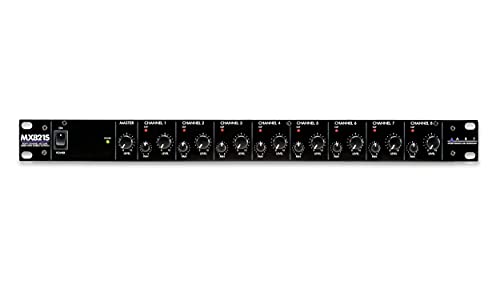
- Eight mic/line input channels
- Individual level and pan controls
- Switchable +48V phantom power per mic input
Best For: Permanent installations needing simple analog source mixing
Speaker System Processor

- Two analog inputs and six analog outputs
- 24-bit/96 kHz digital conversion
- Parametric and dynamic EQ for system outputs
Best For: Loudspeaker management after the church mixer
Flexible Analog Expansion

- Eight XLR mic inputs plus eight 1/4-inch inputs
- Switchable +48V phantom power per channel
- Prefader output and auxiliary bus for routing
Best For: Compact analog input expansion and cascading
Single-Channel Processing
ART VoiceChannel Tube Channel Strip
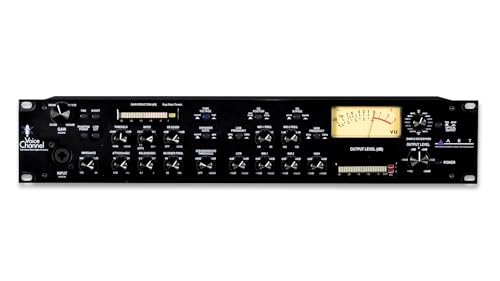
- Tube preamp for warmth and definition
- Compressor, expander, de-esser, and gate
- ADAT, AES/EBU, S/PDIF, TOSLink, and USB outputs
Best For: Dedicated vocal or instrument processing with digital integration
Digital Stage Connectivity
Behringer S32 32-Channel Stage Box

- 32 programmable Midas-designed mic preamps
- 16 analog servo-balanced XLR outputs
- AES50 and Ultranet connectivity
Best For: Large digital church PA and stage setups
Tube-Controlled Vocal Front End
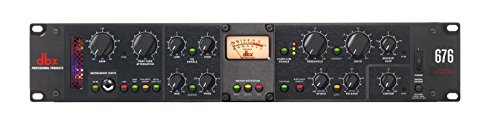
- Class-A tube preamp with selectable tonal character
- Compressor/limiter and sweepable-mid parametric EQ
- Rack-mountable with XLR and 1/4-inch connections
Best For: Featured vocals, instruments, and spoken-word channels
Flexible Small-System Mixer
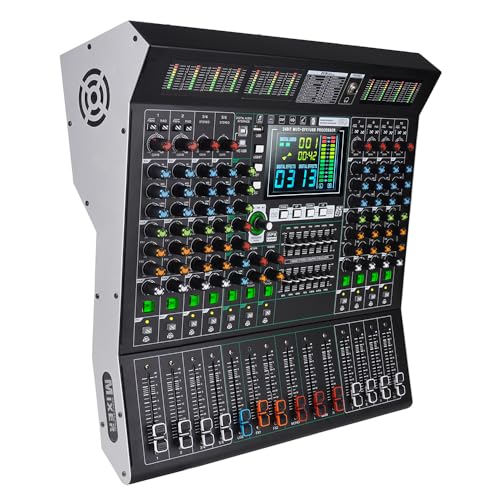
- Ten channels with independent three-band EQ
- 99 DSP effects plus USB and Bluetooth playback
- 48V phantom power and XLR/RCA outputs
Best For: Small church and conference-room sound setups
Digital Stage Expansion

- 16 programmable MIDAS-designed mic preamps
- Eight servo-balanced XLR outputs
- AES50 and ULTRANET connectivity for compatible systems
Best For: Networked digital church sound systems
Vocal Control Center – dbx 286s Channel Strip
For churches seeking channel strips for church sound systems, the dbx 286s is a focused one-channel option for microphones and instruments. Its preamp combines compression, de-essing, enhancement, and expander/gate processing to help shape vocals before they reach the mixer.
Best For: Churches that need dedicated processing for a lead vocal, pastor’s microphone, or electronic instrument.
Pros:
- Combines compression, de-esser, enhancer, and expander/gate processing.
- Accepts XLR microphone input and balanced or unbalanced 1/4-inch line input.
- Rack-mountable 1U design with status LEDs and loop-out capability.
Cons:
- Processes only one channel.
- Requires corded AC power and external mixing equipment.
The dbx 286s is a practical choice when a church wants hands-on control over one important source. Its broad processing selection is useful for vocal clarity, but larger setups may need multiple units or additional channel processing.
Networked Stage Expansion – PreSonus NSB 8.8
The PreSonus NSB 8.8 is a networked stage box rather than a traditional analog channel strip, making it relevant to channel strips for church sound systems built around a PreSonus Series III workflow. It provides eight remote-controllable XMAX preamps, eight mic/line inputs, and AVB connectivity for flexible stage-to-console routing.
Best For: Churches using compatible PreSonus Series III mixers that need remote preamps and expanded stage connections.
Pros:
- Offers eight locking mic/line inputs and eight locking XLR outputs.
- Provides remote-controllable XMAX preamps with gain compensation for shared inputs.
- Includes two locking AVB Ethernet ports and control through UC Surface software.
Cons:
- Designed around an AVB network and compatible PreSonus ecosystem.
- Does not provide the onboard compression or de-essing found in a traditional channel strip.
The NSB 8.8 is best viewed as a digital stage-input expansion solution. It can simplify distributed church setups, but buyers should confirm mixer compatibility and AVB requirements before choosing it as part of a processing system.
Eight-Channel Analog Hub – ART MX821S Mixer
The ART MX821S is an eight-channel analog mic/line mixer for church installations and small sound systems. While it is not a dynamics channel strip, its individual level and pan controls, balanced microphone inputs, and switchable phantom power make it useful for combining multiple sources before a larger console or distribution path.
Best For: Permanent church installations needing straightforward eight-channel analog mixing.
Pros:
- Provides eight input channels with individual level and pan controls.
- Accepts balanced XLR microphone or unbalanced 1/4-inch TS inputs.
- Includes full +48V phantom power switchable for each microphone input.
Cons:
- Does not include compression, de-essing, EQ, or gating.
- Uses stereo outputs rather than individual channel outputs.
- Offers basic analog mixing rather than networked control.
The MX821S suits buyers who primarily need input consolidation and stereo routing. Churches needing vocal shaping or feedback-focused processing will need to add external processors or use a mixer with built-in channel tools.
Speaker System Processor – Behringer DCX2496LE
The Behringer ULTRADRIVE DCX2496LE is a digital loudspeaker management system, not a microphone channel strip. For churches comparing channel strips for church sound systems, it is better suited to system-level speaker processing after the mixer, with two analog inputs, six analog outputs, parametric EQs, and dynamic EQ capabilities.
Best For: Church sound systems needing centralized loudspeaker management and multi-output routing.
Pros:
- Provides two analog inputs and six analog outputs.
- Uses 24-bit/96 kHz A/D and D/A converters with a stated 113 dB dynamic range.
- Offers parametric EQs and level-dependent dynamic EQs on inputs and outputs.
Cons:
- Is intended for loudspeaker management rather than individual microphone processing.
- Does not provide a microphone preamp or dedicated de-esser.
- Requires separate mixing and source-processing equipment.
The DCX2496LE can be valuable at the system-output stage, especially where a church needs flexible EQ and multiple speaker feeds. It should complement, not replace, a vocal or instrument channel strip.
Flexible Analog Expansion – Rolls RM82 8-Channel Mixer
For church sound systems needing straightforward channel strips for church sound systems, the Rolls RM82 provides eight microphone inputs, eight 1/4-inch unbalanced inputs, and flexible routing for mixing, recording, monitoring, or cascading.
Best For: Churches that need compact analog input expansion with multiple routing options.
Pros:
- Eight XLR microphone inputs and eight 1/4-inch inputs.
- Individually switchable +48V phantom power.
- Includes tone controls, trim controls, and prefader RCA output.
- RCA auxiliary bus input supports cascading or a ninth unbalanced input.
Cons:
- 1/4-inch inputs are unbalanced.
- Warranty coverage is listed as 90 days.
The RM82 is a practical analog choice when a church needs more microphone capacity and simple signal-routing flexibility rather than onboard digital processing.
Single-Channel Processing – ART VoiceChannel Tube Channel Strip
The ART VoiceChannel is a single-channel option for channel strips for church sound systems when a worship leader, speaker, or instrument needs dedicated preamp and dynamics processing. Its tube preamp design is paired with compressor, expander, de-esser, and gate controls.
Best For: Churches needing dedicated processing for one vocal, instrument, or other input with digital connectivity.
Pros:
- Tube preamp design aimed at warmth and definition.
- Includes compressor, expander, de-esser, and gate functions.
- Offers ADAT, AES/EBU, S/PDIF, TOSLink, and USB connectivity.
- Supports sample rates up to 192 kHz.
Cons:
- Provides one channel rather than multi-channel input expansion.
- Its extensive connectivity may be more than needed for a basic analog setup.
Choose the VoiceChannel when one important source deserves more detailed tone and dynamics control, especially in a system that can use its digital outputs.
Digital Stage Connectivity – Behringer S32 32-Channel Stage Box
For larger church sound systems, the Behringer S32 is a stage-box solution that expands remote input and output capacity. It provides 32 Midas-designed programmable microphone preamps, 16 analog XLR outputs, and AES50 networking for digital signal transport.
Best For: Churches needing high-channel-count stage connectivity and integration with compatible digital PA or monitoring systems.
Pros:
- Provides 32 fully programmable microphone preamps.
- Includes 16 servo-balanced analog XLR outputs.
- AES50 ports support low-jitter, low-latency networking.
- Ultranet supports Behringer P16 personal monitoring applications.
Cons:
- Requires a compatible digital system to take full advantage of its networking features.
- It is a stage box rather than a standalone conventional channel strip.
The S32 is best viewed as a scalable digital front end for a modern church PA, particularly where many stage inputs, distributed outputs, and personal monitoring are part of the design.
Tube-Controlled Vocal Front End – dbx DBX676FX
For church sound systems that need hands-on control over a featured vocal, instrument, or spoken-word microphone, the dbx DBX676FX combines a high-voltage Class-A tube preamp with dynamics processing and EQ. Its rack-mountable 2U design and XLR/1/4-inch connectivity make it suited to permanent installations or portable live rigs.
Best For: Churches seeking detailed control over a primary vocal, instrument, or speech channel.
Pros:
- High-voltage Class-A tube preamp supports warm, clear, or more saturated tones.
- Built-in compressor/limiter helps produce a louder, cleaner signal.
- Three-band parametric EQ includes sweepable mids for focused tonal shaping.
- Offers XLR and 1/4-inch connectivity, a front-panel instrument input, VU metering, and rack mounting.
Cons:
- Its single-channel, 2U format is less practical when many church inputs need processing.
- Tube-based processing may be more control than needed for basic speech reinforcement.
The DBX676FX is a specialized channel strip rather than a complete mixer, but it can add substantial control to an important source. It is particularly useful when a church wants to refine a lead vocal, instrument, or speaking microphone before sending it to the main system.
Flexible Small-System Mixer – MD-10 10-Channel Mixer
The MD-10 is a practical option for smaller church sound systems that need multiple inputs, built-in effects, and simple playback features in one unit. It provides 10 independently controlled channels, individual three-band EQ, 48V phantom power, USB audio, Bluetooth, and a broad selection of DSP effects.
Best For: Small churches, conference rooms, and live ministry setups needing an all-in-one mixer.
Pros:
- Ten independent channels provide separate control for connected sources.
- Includes three-band channel EQ, a nine-band equalizer, and 99 DSP effects.
- USB playback and Bluetooth support add convenient music and media options.
- Supports 48V phantom power and includes XLR and RCA output connectivity.
Cons:
- The listed 30-day return and exchange policy is relatively limited.
- Its 16.1-by-16-by-5.5-inch footprint may require dedicated table or rack space.
- Bluetooth and USB features may be unnecessary for churches with an established playback system.
The MD-10 offers broad functionality for a modest live setup, especially where one mixer must handle microphones, effects, playback, and monitoring needs. Its 10-channel layout is best matched to smaller installations rather than large worship productions with extensive input counts.
Digital Stage Expansion – Behringer S16 Digital Snake
For church sound systems built around compatible digital networking, the Behringer S16 provides a tidy way to place microphone inputs and analog outputs closer to the stage. It features 16 programmable MIDAS-designed mic preamps, eight servo-balanced XLR outputs, and AES50 networking for digital audio and control.
Best For: Churches using compatible digital consoles, P16 personal monitoring, or networked TURBOSOUND systems.
Pros:
- Provides 16 fully programmable mic preamps for a substantial input count.
- Eight analog XLR outputs support distributed system connections.
- AES50 ports use SuperMAC networking for low-jitter, low-latency transmission.
- ULTRANET supports BEHRINGER P16 personal monitoring and compatible TURBOSOUND connectivity.
Cons:
- It is a digital snake, not a standalone mixer or complete channel strip.
- Its usefulness depends on compatible digital-network equipment.
- Additional console and networking hardware may be required for a complete church system.
The S16 is best viewed as a stage I/O expansion unit for a compatible digital rig. With 16 mic inputs and eight XLR outputs, it can reduce long analog cable runs and simplify stage connectivity, but it is not the right standalone choice for a church seeking an independent mixer.
How We Picked These Channel Strips for Church Sound Systems
We selected products that address common church-audio needs, including microphone preamplification, dynamics control, routing, stagebox connectivity, mixing, and speaker management. The list includes both dedicated channel strips and related signal-chain hardware because many worship systems use a combination of rack processors, analog mixers, and digital snakes rather than one device for every task.
Priority goes to useful input and output options, practical control features, installation flexibility, and suitability for spoken word, vocals, instruments, and live-stream feeds. Before buying, verify compatibility with your mixer, network protocol, connectors, and available rack or stage space.
Quick Comparison
- Dedicated vocal or microphone processing: A dbx or ART channel strip can add preamp gain, compression, equalization, de-essing, gating, or tube coloration to an individual source.
- Multiple analog inputs: The ART MX821S and Rolls RM82 suit installations or small systems that need several microphone or line sources in a compact format.
- Digital stage connectivity: The PreSonus NSB 8.8, Behringer S32, and Behringer S16 are better suited to digital consoles and distributed stage wiring.
- System-level control: The Behringer ULTRADRIVE DCX2496LE is designed for loudspeaker management rather than individual microphone processing.
- Flexible live mixing: The MD-10 provides a broader mixer-style feature set for smaller or less centralized setups.
Key Buying Factors for Channel Strips for Church Sound Systems
Input Count and Signal Type
Count microphones, instruments, playback sources, and livestream feeds, then allow room for expansion. Confirm whether you need mic preamps, line inputs, XLR connections, balanced outputs, or digital networked I/O.
Dynamics and Speech Control
Compression helps keep vocals and sermons consistent, while a gate or expander can reduce stage noise. De-essing is particularly useful for microphones used by pastors, speakers, and vocalists with strong sibilance.
Digital Compatibility
Stage boxes only deliver their full value when they match the console and network ecosystem. Check AVB, digital-snake, clocking, software, and firmware requirements before purchasing.
Installation and Operation
Rack size, front-panel access, remote control, labeling, and serviceability matter in volunteer-operated systems. Simple controls may be preferable for a fixed installation, while advanced routing is valuable for larger production teams.
Who Should Buy Which Channel Strips for Church Sound Systems?
Choose a dedicated dbx or ART channel strip when one or two important sources need focused processing. Select an analog multi-channel mixer for straightforward microphone and line summing. Choose a digital stage box when the church already uses a compatible digital console and needs cleaner, longer-distance stage connectivity. For a complete PA installation, add a loudspeaker-management processor when crossover, limiting, and system alignment are required. Smaller congregations or mobile worship teams may prefer an all-in-one mixer with built-in effects and USB connectivity.