If you want cleaner recordings, more usable gain, and less hiss in your sessions, the preamps matter just as much as the converters. That’s why this roundup focuses on audio interfaces with better preamps for home studios, podcasting, streaming, and mobile recording.
Below, you’ll find 10 carefully selected options that balance sound quality, input count, feature sets, and real-world value so you can choose the right interface for your setup.
Best 10 Audio Interfaces with Better Preamps Picks for 2026
Clarett+ Headroom Pick
Focusrite Clarett+ 2Pre 10-In/4-Out USB-C Audio Interface

- Two Clarett+ preamps with low distortion.
- All-analogue Air adds top-end presence.
- USB-C power and ADAT expansion.
Best For: Clean, transparent recording with a compact desktop interface.
FX-Ready Preamps Pick
Antelope Audio Zen Quadro Audio Interface with Synergy Core Real-Time FX

- Four Discrete preamps with up to 75 dB gain.
- Synergy Core FX for near-zero-latency tracking.
- Dual USB-C and expandable 14-in/10-out routing.
Best For: Tracking and streaming with strong preamps and onboard effects.
Console-Style Duo
Audient iD14 MKII, 2 Class-A Microphone Preamps

- Two Class-A preamps from Audient's console line.
- USB-C connection for easier setup and power.
- Two headphone outputs for monitoring flexibility.
Best For: Small studios wanting console-inspired preamp quality.
Big Studio Value
Focusrite Scarlett 18i16 4th Gen USB-C Audio Interface

- Four 4th Gen preamps with 69 dB gain.
- RedNet-derived 24-bit/192 kHz converters.
- Auto Gain and Clip Safe simplify sessions.
Best For: Multi-input recording with improved preamps and workflow tools.
Compact Desktop Pick
Audient iD4 MKII with Class A Preamps

- Class A mic preamp from Audient’s console line
- USB-C desktop interface with metal housing
- Mac, PC, and iOS compatible
Best For: Solo home recording and portable desktop setups
Rack Studio Upgrade
Universal Audio Volt 876 with Vintage Preamps
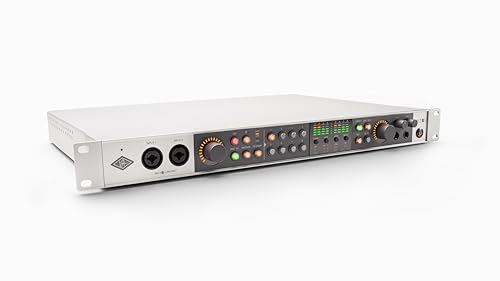
- Eight onboard Vintage preamps
- 24x28 rack interface with 32-bit / 192 kHz conversion
- Expandable via Volt 876, Apollo, and ADAT gear
Best For: Multi-input studios and producers seeking vintage-style tone
Value Producer Choice
SSL 2 MKII Plus with 4K Enhancement
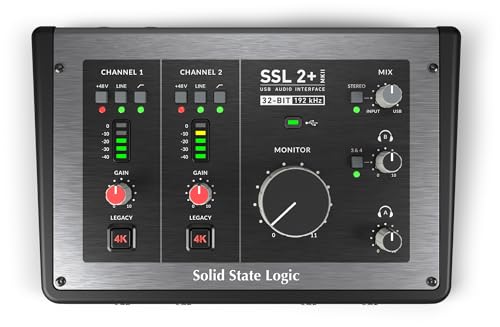
- Two XLR mic preamps with Legacy 4K enhancement
- Bus-powered USB-C interface with zero-latency monitoring
- Includes MIDI I/O, loopback, and dual headphone outs
Best For: Small studios, podcasters, and creators wanting SSL character
Streaming-ready Interface
Antelope Audio Zenith 2 USB-C Audio Interface for Streaming & Podcasting

- Two discrete preamps with 75 dB of clean gain
- Built-in DSP for vocal shaping and zero-latency monitoring
- Loopback plus dual headphone mixes for streaming workflows
Best For: Streamers and podcasters who want strong preamps with onboard processing
Classic Tone Interface
Universal Audio Volt 276 USB Audio Interface

- Vintage mode emulates UA 610-style preamp sound
- Built-in compressor based on the 1176
- Cross-platform support for Mac, Windows, iPad, and iPhone
Best For: Musicians who want simple recording with vintage-style coloration
Value Multi-Input Pick
Behringer U-PHORIA UMC404HD Audiophile 4x4 Audio Interface

- Four MIDAS-designed mic preamps with phantom power
- 4x4 USB/MIDI layout for multi-source recording
- 24-bit/192 kHz capture with a metal chassis
Best For: Budget buyers who need four inputs and dependable preamps
Clarett+ Headroom Pick – Focusrite Clarett+ 2Pre 10-In/4-Out USB-C Audio Interface
If you want audio interfaces with better preamps, the Focusrite Clarett+ 2Pre is built around clean gain, low distortion, and lots of headroom. Its two Clarett+ mic preamps, All-analogue Air, and improved converters make it a strong choice for detailed vocal and instrument recording.
Best For: Home and project studios that want transparent recording quality with a simple 2-preamp desktop setup.
Pros:
- Two Clarett+ preamps with high headroom and low noise.
- All-analogue Air adds a clear high-frequency lift for vocals.
- Improved A-D and D-A converters aim for accurate recording and playback.
- USB-C bus power and ADAT expansion make it flexible for growing setups.
Cons:
- Only two mic preamps if you need larger sessions right away.
- Best features are focused on clean capture rather than built-in DSP effects.
This is a practical pick if your priority is better preamp quality over flashy extras. It focuses on clarity, headroom, and conversion quality, while still leaving room to expand later through ADAT.
FX-Ready Preamps Pick – Antelope Audio Zen Quadro Audio Interface with Synergy Core Real-Time FX
The Antelope Audio Zen Quadro stands out among audio interfaces with better preamps because it pairs four Discrete mic preamps with up to 75 dB of gain and near-zero-latency processing. It is aimed at creators who want strong front-end sound plus built-in effects for tracking, streaming, and mobile work.
Best For: Creators who want four high-gain preamps and onboard FX for tracking vocals, instruments, and content production.
Pros:
- Four Discrete 6-transistor mic preamps with up to 75 dB of gain.
- Real-time Synergy Core FX with included effects and low-latency workflow.
- Up to 130 dB AD/DA dynamic range and 64-bit AFC clocking.
- Dual USB-C and bus power support flexible studio, mobile, and streaming setups.
Cons:
- Feature set is broad, so it may be more than needed for simple recording.
- Best value depends on whether you will use the onboard effects and routing.
If you want preamp quality plus processing in one box, this interface offers a lot of capability. It is especially appealing for users who record in multiple environments and want a compact unit that can do more than basic capture.
Console-Style Duo – Audient iD14 MKII, 2 Class-A Microphone Preamps
For buyers comparing audio interfaces with better preamps, the Audient iD14 MKII is a straightforward desktop option with two Class-A microphone preamps pulled from Audient’s high-end console line. It is designed for clean home recording, with USB-C connectivity and a compact metal chassis.
Best For: Solo creators and small studios that want console-style Class-A preamps in a simple desktop interface.
Pros:
- Two Class-A microphone preamps based on Audient’s ASP8024 HE console.
- USB-C connector simplifies power and connectivity.
- All-metal desktop housing adds durability for portable use.
- Two headphone outputs support flexible monitoring.
Cons:
- Only two mic preamps, so it is not built for larger tracking sessions.
- Maximum sample rate tops out at 96 kHz.
The iD14 MKII is a good fit if you want better-sounding preamps without moving into a bigger studio interface. Its appeal is in the quality of its front end and the no-fuss desktop design.
Big Studio Value – Focusrite Scarlett 18i16 4th Gen USB-C Audio Interface
The Focusrite Scarlett 18i16 4th Gen is a strong choice if you’re shopping for audio interfaces with better preamps and need more I/O at the same time. Its four 4th Gen mic preamps offer 69 dB of gain, while the included Air modes and RedNet-derived converters aim for a polished recording path.
Best For: Musicians and producers who need multiple inputs, modern conversion, and improved preamps in one interface.
Pros:
- Four 4th Gen preamps with 69 dB of gain.
- 24-bit/192 kHz converters from Focusrite’s RedNet range.
- Air modes add presence and harmonic drive.
- Auto Gain and Clip Safe streamline recording sessions.
Cons:
- Larger footprint than a simple two-input desktop interface.
- Best suited to users who will use the added I/O and workflow tools.
This model makes sense when preamp quality is important but you also need a more capable studio hub. It balances strong front-end sound with enough connectivity for more involved recording setups.
Compact Desktop Pick – Audient iD4 MKII with Class A Preamps
If you’re comparing audio interfaces with better preamps, the Audient iD4 MKII stands out for its Class A console microphone preamp and updated transducer design. It is a straightforward desktop interface built to improve home recording quality without adding extra complexity.
Best For: Solo creators, singer-songwriters, and small home studios that want a compact interface with a high-quality mic preamp.
Pros:
- Class A microphone preamp based on Audient’s ASP8024 HE console design
- High-speed USB-C connection for simpler setup and improved power delivery
- All-metal desktop housing for durability and portability
- Mac, PC, and iOS compatibility
Cons:
- Only 2 channels, so it is not built for larger recording sessions
- Best suited to a desktop setup rather than a rack or multi-input studio
The iD4 MKII makes sense if your priority is cleaner front-end quality in a small footprint. It focuses on the essentials and adds the kind of preamp upgrade many home recordists actually notice.
Rack Studio Upgrade – Universal Audio Volt 876 with Vintage Preamps
For buyers searching for audio interfaces with better preamps, the Universal Audio Volt 876 brings eight onboard Vintage preamps and classic compressor character inspired by UA’s 610 tube console and 1176 limiter. Its 24×28 rack-style layout is aimed at serious tracking setups that need more channels and a polished front end.
Best For: Project studios, bands, and producers who want multiple inputs with vintage-style preamp color.
Pros:
- Eight onboard Vintage preamps for rich analog tone
- 32-bit / 192 kHz conversion for high-resolution recording
- UAD Console app support with Auto-Gain, session recall, and cue mixes
- Expandable with up to three Volt 876 units or Apollo/ADAT gear
Cons:
- Rack-mount style design is less portable than compact desktop interfaces
- Feature set may be more than needed for simple solo recording
The Volt 876 is the most studio-oriented option here, especially if you need several preamps and want a tonal character associated with classic UA gear. It is built for larger recording workflows rather than grab-and-go use.
Value Producer Choice – SSL 2 MKII Plus with 4K Enhancement
If you want audio interfaces with better preamps in a compact format, the Solid State Logic SSL 2 MKII Plus gives you two XLR mic preamps plus SSL’s Legacy 4K analog enhancement. It is a bus-powered USB-C interface with practical recording features for producers, podcasters, and live-studio musicians.
Best For: Creators who want a small interface with dual mic preamps, monitoring flexibility, and SSL-style color.
Pros:
- Two XLR mic preamps in a bus-powered USB-C design
- Legacy 4K analog enhancement for added character
- 32-bit / 192 kHz AD/DA converters and zero-latency monitoring
- Discrete headphone outputs, loopback, high-pass filters, and MIDI I/O
Cons:
- Only 2×4 channel layout, so it is not meant for larger tracking sessions
- Detailed software support is not fully specified in the notes
The SSL 2 MKII Plus is a strong middle ground if you want better-sounding preamps without moving up to a larger rack system. It combines a practical feature set with SSL’s familiar tonal enhancement in a portable, bus-powered format.
Streaming-ready Interface – Antelope Audio Zenith 2 USB-C Audio Interface for Streaming & Podcasting
If you want audio interfaces with better preamps for streaming, podcasting, and compact recording setups, the Antelope Audio Zenith 2 is built around clean gain and onboard DSP. Its two discrete, console-grade preamps offer 75 dB of gain, and the interface adds smart vocal processing, loopback, and zero-latency monitoring so you can shape a finished sound while you work.
Best For: Streamers, podcasters, and home recordists who want strong preamps plus flexible DSP in a portable USB-C interface.
Pros:
- Two discrete, console-grade preamps with 75 dB of clean gain
- Onboard DSP with vocal chain, EQ, compression, de-essing, and air controls
- Loopback and dual independent headphone mixes for streaming and collaboration
- Class-compliant USB-C operation for PC, Mac, iOS, and Android
Cons:
- Some advanced remote control features require the optional software panel
- Feature set may be more than needed for users who only want a basic recorder
The Zenith 2 stands out if your priority is a portable interface that still promises serious mic headroom and a polished monitoring workflow. It looks especially compelling for creators who want better preamps and DSP tools in one box rather than adding extra processing later.
Classic Tone Interface – Universal Audio Volt 276 USB Audio Interface
Among audio interfaces with better preamps, the Universal Audio Volt 276 is a practical pick if you want a classic studio character without a complicated setup. Its Vintage mode emulates UA 610-style preamps, and the built-in compressor based on the 1176 gives vocals and instruments a more finished sound on the way in.
Best For: Singers, songwriters, and small home studios that want easy-to-use vintage-style preamp coloration and compression.
Pros:
- Vintage mode for UA 610-inspired preamp tone
- Built-in analog compressor based on the 1176
- Works with Mac, Windows, iPad, and iPhone for flexible recording
- Includes LUNA DAW and UAD plug-ins/instruments in the bundle
Cons:
- Requires an external power supply
- Mobile use may need extra accessories on some iPads and iPhones
The Volt 276 is a strong option when you want your recordings to sound more polished before you even open a plugin. It is less about deep routing and more about giving you an easy, good-sounding front end with a recognizable analog-inspired feel.
Value Multi-Input Pick – Behringer U-PHORIA UMC404HD Audiophile 4×4 Audio Interface
If you need audio interfaces with better preamps on a budget, the Behringer U-PHORIA UMC404HD is a straightforward 4×4 option with four MIDAS-designed mic preamps and 24-bit/192 kHz resolution. It is geared toward recording multiple microphones and instruments at once, while still keeping the setup simple over USB.
Best For: Budget-conscious users who need four mic inputs and solid preamps for multi-source recording.
Pros:
- Four MIDAS-designed mic preamps with +48V phantom power
- 4×4 USB audio/MIDI interface for recording multiple sources
- 24-bit/192 kHz resolution for high-quality capture
- Metal chassis built for durability
Cons:
- USB 2.0 design is more basic than newer premium interfaces
- Windows support is listed, but no Mac support is specified in the supplied notes
The UMC404HD makes sense when input count matters as much as mic quality. It will not match the feature depth of more expensive creator-focused interfaces, but it does cover the essentials well for multi-mic recording.
How We Picked the Best Audio Interfaces with Better Preamps
We prioritized interfaces known for strong mic preamp performance, low-noise operation, solid driver support, and practical recording features. For Audio Interfaces with Better Preamps, the goal is not just higher gain, but cleaner gain with enough headroom for vocals, instruments, and spoken word.
We also considered channel count, USB-C connectivity, monitor controls, onboard DSP or compression where useful, and how well each model fits a range of budgets and studio sizes.
Quick Comparison
Some of these models are best for solo creators who want a simple two-input desktop interface, while others are designed for bigger sessions with multiple microphones, line inputs, and rack-style expandability. If you record one voice at a time, a compact 2-in/2-out model may be enough. If you track drums, bands, or multiple presenters, a higher-input interface will make more sense.
Key Buying Factors for Audio Interfaces with Better Preamps
Preamp Quality and Gain
Look for clean gain before you look for marketing terms. Better preamps should sound quiet at higher gain settings and still preserve detail in voices and acoustic instruments. This matters especially for low-output dynamic microphones.
Input Count and Workflow
Choose the number of mic, line, and instrument inputs you actually need. Extra inputs are useful, but only if they support your recording style without making the interface harder to use.
Monitoring and Latency
Direct monitoring, low-latency drivers, and clear monitor mix controls improve tracking speed and reduce frustration. These features are especially helpful for podcasting and overdub work.
Connectivity and Expansion
USB-C is now the most convenient standard for many setups, but also check whether the interface supports ADAT, MIDI, or other expansion options if your studio may grow later.
Extra Tools You May Actually Use
Onboard compression, saturation, DSP effects, and loopback can be valuable, but only when they fit your workflow. Don’t overpay for features you won’t use.
Who Should Buy Which Audio Interfaces with Better Preamps?
Solo creators, streamers, and podcasters should usually start with a compact 2-input model that offers clean preamps and simple monitoring. Singer-songwriters and project studio users often benefit from a step up to interfaces with more flexible I/O and stronger headphone control. Bands, multi-mic podcasts, and larger home studios should focus on higher-channel-count models that can handle more sources without compromising preamp quality.
If your main priority is better vocal capture, quieter recordings, and more professional headroom, this category is a smart place to shop. The best choice is the one that gives you the cleanest signal path for your microphone, your room, and your workflow.