Choosing the right equalizer can make a home studio sound cleaner, tighter, and easier to mix. The best options help you shape tonal balance without adding noise or complicating your setup.
Below, you’ll find 10 strong picks for different studio needs, from simple analog graphic EQs to more flexible digital rack units.
Best 10 Audio Equalizers for Home Studios Picks for 2026
Studio-Grade 31-Band Precision
dbx 231s Dual Channel 31-Band Equalizer

- Dual 31-band, 1/3-octave constant Q control
- Switchable 6 dB or 12 dB boost/cut ranges
- Front bypass switch and LED output ladders
Best For: Serious home studios needing detailed dual-channel EQ control
Rack EQ With Sub Output
15-Band Stereo EQ Rack Sub Out Noise Reduction Home/Studio/Live
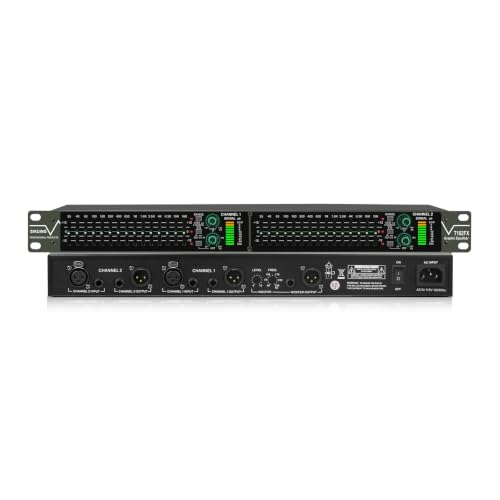
- 15-band dual-channel EQ with 25 Hz to 16 kHz coverage
- Dedicated subwoofer output with 50 Hz to 250 Hz adjustment
- Bypass, low-cut filter, and LED metering
Best For: Stereo setups that need EQ control plus subwoofer integration
Full-Control Dual Channel
Graphic Equalizer 31-Band Stereo EQ for Home Audio, EQ-231

- Dual 31-band EQ with ±12 dB per band
- LOW-CUT and BYPASS switches simplify tuning
- XLR balanced and 1/4-inch TRS I/O support
Best For: Detailed rack setups that need maximum band control
Compact Balanced Tone Shaping
Douk Audio 7 Band Equalizer Balanced EQ Audio Preamp T7

- 7-band EQ from 64 Hz to 8 kHz
- XLR and RCA inputs/outputs for flexible hookup
- High SNR and very low distortion for clean audio
Best For: Compact home setups that want simple balanced EQ control
Pro Dual-Channel Starter Pick
15-Band Stereo EQ for Home Audio
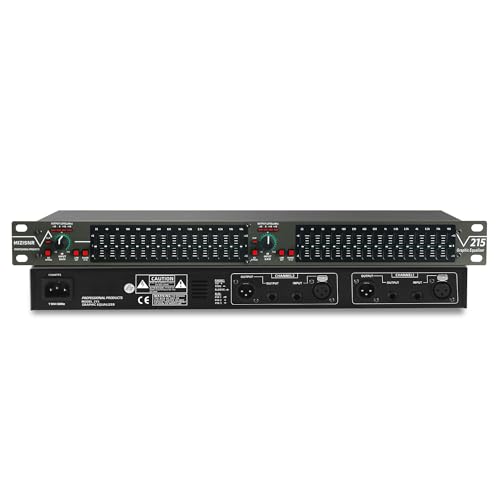
- 15 bands per channel with ±12 dB adjustment
- LOW-CUT and BYPASS switches for cleaner tuning
- XLR balanced and 1/4" TRS connections
Best For: Home studio users needing simple dual-channel EQ control
Precision Control Upgrade
31-Band Stereo EQ with LED Monitoring

- 31 bands per channel with selectable ±6 dB/±12 dB range
- LED indicators for real-time signal monitoring
- Combo XLR/1/4" TRS inputs and dual output options
Best For: Users wanting finer EQ control and live signal visibility
Feature-Rich Digital Pick
31-Band Digital EQ with Bluetooth

- 10 preset modes plus independent high/mid/bass adjustment
- Bluetooth 5.2 and USB playback built in
- 31-band LED spectrum display with multiple light colors
Best For: Home studios and media rooms needing EQ with playback extras
Dual-Channel Rack EQ
Stereo Graphic Equalizer 15-Band EQ for Home Audio System

- 15 bands per channel with ±12dB adjustment
- Low-cut control and dedicated bass output
- XLR and 1/4-inch TRS connectivity
Best For: Home studio users who want simple stereo rack EQ control
Digital Precision EQ
31-Band Digital Equalizer with PC Tuning

- 31-band dual-channel EQ with PC software
- 10 presets, bypass mode, and LED display
- XLR, TRS, and stereo L/R connectivity
Best For: Users who want detailed digital EQ control and preset recall
Streaming Rack EQ
31-Band Graphic Equalizer with Bluetooth 5.2

- 31-band DSP EQ with LED monitoring
- Bluetooth 5.2 and USB playback support
- Independent subwoofer output with 50Hz to 250Hz range
Best For: Users who want EQ control with wireless streaming and USB playback
Studio-Grade 31-Band Precision – dbx 231s Dual Channel 31-Band Equalizer
If you want audio equalizers for home studios that offer deep control, the dbx 231s gives you dual-channel 31-band, 1/3-octave constant Q shaping with switchable 6 dB or 12 dB boost/cut ranges. It is built like a rack-ready tool for careful tonal correction, level monitoring, and straightforward bypass comparison.
Best For: Home studio owners who want a full-featured dual-channel rack equalizer with detailed frequency control.
Pros:
- Dual 31-band, 1/3-octave constant Q design for detailed adjustments
- Switchable 6 dB or 12 dB boost/cut ranges for flexible tuning
- Front-panel bypass switch for quick A/B comparison
- 4-segment LED ladders help monitor output levels
Cons:
- Rack-mounted format is less convenient for small desktop setups
- Uses a more specialized feature set than simpler home-audio EQs
The dbx 231s is a strong fit when you need precise, repeatable control rather than a basic tone knob. Its balanced XLR and TRS connections, gain range, and visual metering make it a practical choice for serious studio routing.
Rack EQ With Sub Output – 15-Band Stereo EQ Rack Sub Out Noise Reduction Home/Studio/Live
Among audio equalizers for home studios, this 15-band stereo rack unit stands out if you want practical shaping plus added bass control. It covers 25 Hz to 16 kHz, includes an EQ bypass button, a low-cut filter, and a dedicated adjustable subwoofer output for systems that need more than standard stereo EQ.
Best For: Home studio and hybrid listening setups that need stereo EQ with subwoofer routing.
Pros:
- Independent dual channels with 15 bands of precision EQ
- Low-cut filter helps remove muddy hums and low-end noise
- Dedicated adjustable subwoofer output from 50 Hz to 250 Hz
- LED signal metering and clip light support easier level monitoring
Cons:
- Fewer bands than a 31-band graphic equalizer
- Rack-mounted design may be overkill for simple desktop use
This model makes sense if you want a compact rack EQ that can also integrate a subwoofer. Its full-metal chassis, standard rack kit, and XLR/TRS connectivity make it suitable for studio, home audio, or live use.
Full-Control Dual Channel – Graphic Equalizer 31-Band Stereo EQ for Home Audio, EQ-231
If you are comparing audio equalizers for home studios and want the most granular shaping available here, this dual-channel 31-band EQ is the most detailed option in the group. Each channel offers adjustable range up to ±12 dB, plus a LOW-CUT switch, BYPASS switch, and 4-segment LED ladders for level feedback.
Best For: Users who want maximum band count and flexible balanced/unbalanced connectivity in a rack EQ.
Pros:
- Dual-channel 31-band design with ±12 dB per band
- LOW-CUT switch helps reduce floor rumble, hum, and wind noise
- BYPASS switch makes comparison and debugging simple
- XLR balanced and 1/4" TRS input/output support adds flexibility
Cons:
- Rack format is better for installed setups than portable use
- Very detailed control may be more than casual listeners need
This EQ is best when you want fine control and broad compatibility in a studio rack. Its comprehensive band layout and visual metering make it a practical choice for users who like to shape sound carefully.
Compact Balanced Tone Shaping – Douk Audio 7 Band Equalizer Balanced EQ Audio Preamp T7
For audio equalizers for home studios that favor simplicity, the Douk Audio T7 keeps the control set focused with seven fixed bands from 64 Hz to 8 kHz. It is a compact balanced EQ preamp with XLR and RCA inputs and outputs, making it easy to slot into a home stereo, amplifier, or computer speaker setup.
Best For: Small home listening or studio setups that want straightforward, low-noise tone shaping.
Pros:
- 7-band EQ offers direct control over low, mid, and high frequencies
- XLR and RCA inputs/outputs provide flexible connectivity
- High SNR over 104 dB and 0.003% distortion support clean playback
- Compact aluminum alloy casing helps with shielding and durability
Cons:
- Only 7 bands, so it is less surgical than 15-band or 31-band models
- No volume control knob, since it outputs at a fixed rated level
The T7 is a good pick when you want simple tone correction without a large rack unit. Its low distortion, dual-output convenience, and small footprint make it appealing for compact systems.
Pro Dual-Channel Starter Pick – 15-Band Stereo EQ for Home Audio
If you want audio equalizers for home studios with straightforward rack-mount control, this 15-band stereo EQ offers practical shaping for dual-channel setups. The ±12 dB range per band gives you enough room to trim problem frequencies or add a little contour, while the LOW-CUT switch helps clean up rumble, hum, and other low-end noise.
Best For: Home studio users who want a dual-channel rack EQ with simple bypass and low-cut control.
Pros:
- 15 bands per channel for detailed stereo EQ control
- LOW-CUT switch helps reduce wind noise, floor rumble, and electrical hum
- BYPASS switch makes A/B checking and debugging easier
- XLR balanced and 1/4″ TRS input/output support for flexible hookup
Cons:
- Less granular than a 31-band design
- No LED level monitoring mentioned
- Rack-mount format may not suit desktop-only setups
Overall, this is a solid choice if you need a clean, conventional graphic EQ for home audio or studio use without extra complexity. It focuses on core functions that matter most for basic tone shaping and noise cleanup.
Precision Control Upgrade – 31-Band Stereo EQ with LED Monitoring
Among audio equalizers for home studios, this 31-band stereo EQ stands out if you want more precise frequency shaping and real-time level feedback. It combines dual-channel control with selectable ±6 dB or ±12 dB ranges, so you can make subtle changes or more aggressive adjustments depending on the room or source.
Best For: Studio owners who want fine-grained EQ control, LED monitoring, and flexible connections.
Pros:
- True 31-band control on each channel for detailed adjustments
- LED level indicators provide real-time signal monitoring
- LOW-CUT and BYPASS features support cleaner, safer operation
- Combo XLR/1/4″ TRS inputs plus dedicated XLR and 1/4″ TRS outputs
Cons:
- More complex than a basic 15-band EQ
- Requires rack space and wired installation
- May be more EQ than casual listeners need
This model makes sense if you want a more surgical approach to room correction, live monitoring, or studio routing. The combination of 31 bands, signal LEDs, and flexible I/O gives it a more professional feel than simpler rack equalizers.
Feature-Rich Digital Pick – 31-Band Digital EQ with Bluetooth
If you want audio equalizers for home studios with extra playback features, this 31-band digital model adds more than standard frequency control. It includes 10 preset modes, independent high/mid/bass adjustment, intelligent noise reduction, and a built-in Bluetooth 5.2 module plus USB playback support for more flexible source options.
Best For: Home studios, home theater setups, and multimedia rooms that want EQ plus Bluetooth and USB playback.
Pros:
- 10 preset modes for quicker recall
- 31-band LED spectrum indication with four light colors
- Bluetooth 5.2 and USB playback support
- XLR balanced and 1/4″ TRS input/output compatibility
Cons:
- Digital feature set may be more than a basic studio EQ need
- Rack-mount installation is still required
- Some users may prefer a simpler analog workflow
This is a good fit when you want an EQ that also functions as a more versatile media source and spectrum display unit. The added presets, wireless playback, and visual feedback make it especially appealing for mixed-use rooms and studio environments.
Dual-Channel Rack EQ – Stereo Graphic Equalizer 15-Band EQ for Home Audio System
If you’re comparing audio equalizers for home studios, this 15-band dual-channel rack EQ is built for hands-on shaping and straightforward integration. It offers separate control per channel, a low-cut function to reduce unwanted rumble, and balanced XLR plus 1/4-inch TRS connections for flexible setup in a studio or home audio rack.
Best For: Home studio owners and audiophiles who want a simple rack-mount equalizer with per-channel control and bass management.
Pros:
- 15-band control per channel with up to ±12dB adjustment for detailed tuning
- Low-cut feature helps remove unwanted low-end noise
- XLR balanced and 1/4-inch TRS connections suit multiple audio setups
- Dedicated bass output adds extra low-end control
Cons:
- Less feature-dense than the digital 31-band options
- Designed around rack integration, so it may not fit every desktop setup
This is a practical pick if you want a no-frills equalizer with useful connectivity and focused control over stereo sound. The bypass switch and 1U rack format make it easy to slot into a home studio chain without much fuss.
Digital Precision EQ – 31-Band Digital Equalizer with PC Tuning
For buyers shopping audio equalizers for home studios, this dual-channel 31-band digital model stands out for detailed adjustment and PC-based tuning. It combines a large LED display, 10 presets, and noise reduction with flexible XLR, stereo L/R, and TRS connectivity for studio or live audio use.
Best For: Users who want detailed digital control, preset recall, and software-assisted tuning in a home studio or small sound system.
Pros:
- 31-band dual-channel EQ for fine frequency shaping
- PC software supports more precise adjustments
- 10 built-in presets plus bypass mode for quick comparison
- LED display makes real-time monitoring easier
Cons:
- More complex than a basic analog-style equalizer
- Noise reduction range is specific, so it may not replace broader acoustic fixes
This is a strong choice if you want a more technical EQ workflow and value visual feedback during adjustments. The mix of presets, software control, and multiple connection types makes it versatile for gear that moves between studio and home audio use.
Streaming Rack EQ – 31-Band Graphic Equalizer with Bluetooth 5.2
If you need audio equalizers for home studios with modern playback features, this 31-band rack unit adds Bluetooth 5.2 and USB support alongside DSP equalization. It also includes a spectrum-style LED display, 10 presets, bypass switching, and a dedicated subwoofer output for systems that need more low-end control.
Best For: Home audio and studio users who want EQ control plus wireless streaming and USB playback in one rack unit.
Pros:
- 31-band DSP equalizer with real-time frequency monitoring
- Bluetooth 5.2 and USB playback add flexible source options
- Independent subwoofer output with adjustable 50Hz to 250Hz range
- 10 presets and bypass switch simplify switching and setup checks
Cons:
- Feature-rich design may be more than needed for simple EQ-only setups
- Rack-mount format is better suited to fixed installations than portable use
This model is appealing if you want one rack device to handle both equalization and source playback. The combination of wireless streaming, USB audio, and a dedicated sub output makes it especially practical for home theater, DJ, or studio racks.
How We Picked These Audio Equalizers for Home Studios
We focused on units that make sense for real home-studio workflows: reliable channel count, practical frequency bands, reasonable rack or desktop usability, and features that support clean signal shaping. We also looked at whether each model is suited to stereo monitoring, DJ-style control, or broader room correction use.
Quick Comparison
For straightforward tone shaping, 15-band and 31-band graphic EQs are the most common choices. If you want finer control, 31-band models give more precise adjustments. If space and setup flexibility matter more, compact desktop or preamp-style options can be easier to integrate. Digital models may add convenience, while analog rack units often offer a simple hands-on workflow.
Key Buying Factors for Audio Equalizers for Home Studios
Band Count and Control Resolution
More bands usually mean finer control over problem frequencies. A 15-band unit is often enough for broad correction, while 31-band models are better when you want detailed shaping or more exact room and monitor tuning.
Signal Compatibility
Check whether the equalizer matches your setup through RCA, XLR, or other inputs and outputs. If you are working with powered monitors, mixers, audio interfaces, or consumer stereo gear, the right connection type is just as important as the EQ itself.
Channel Layout
Dual-channel stereo EQs are the most practical choice for home studios because they let you process left and right channels together. That matters for maintaining balance in playback chains and monitoring systems.
Noise and Build Quality
For home recording and mixing, a quiet signal path is essential. Look for models designed with noise reduction and stable rack construction, especially if the EQ will stay in the signal chain long term.
Digital Vs. Analog Workflow
Analog graphic EQs are simple and immediate, which many users prefer for fast adjustments. Digital options may offer extra flexibility or visual feedback, but they should still be easy to set and stable during use.
Who Should Buy Which Audio Equalizers for Home Studios?
If you want precise, hands-on control for a studio monitor chain, a 31-band dual-channel rack EQ is usually the best fit. If you need a simpler setup for desktop speakers, home audio, or casual production, a compact 7-band or 15-band model may be enough. Buyers looking for broader system tuning and more detailed correction should lean toward higher-band units, while those prioritizing convenience and affordability can start with a more basic stereo EQ.
In short, the best Audio Equalizers for Home Studios are the ones that match your gear, offer the right amount of control, and keep your signal clean. Choose the simplest model that still gives you the flexibility your room and workflow actually need.