Looking for an affordable in ear monitor system that gives you cleaner stage monitoring without draining your budget? The best options now deliver low-latency wireless performance, dependable range, and simple setup for solo performers, bands, and small venues.
Below, we focus on practical picks that make sense for real-world use, from compact 2.4GHz systems to more robust UHF setups, so you can choose the right balance of price, features, and reliability.
Best 10 Affordable in Ear Monitor System Picks for 2026
Budget-Friendly One-to-Many Pick
LEKATO MS-1 Wireless in Ear Monitor System
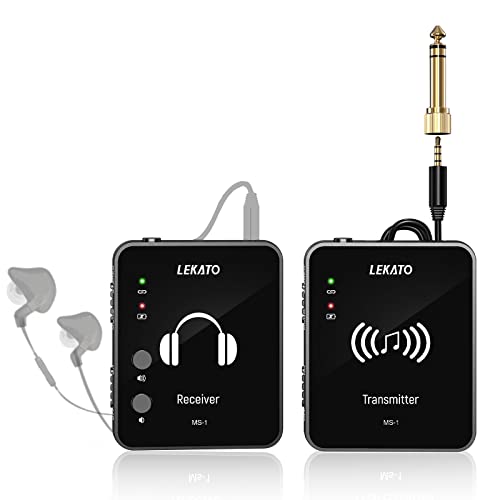
- One transmitter can pair with up to 6 receivers
- Auto-pairing simplifies quick setup
- 2.4GHz stereo with under 12ms latency
Best For: Small bands, churches, and rehearsal spaces
Portable Performance Pick
Xvive U4 Wireless in-Ear Monitor System Set
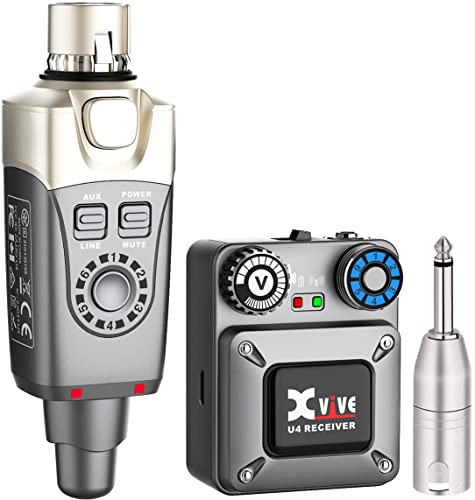
- Under 5ms latency for live monitoring
- Over 90 feet of wireless range
- 6-channel operation with 5-hour battery life
Best For: Small clubs, studios, and touring performers
Low-Latency Upgrade Pick
LEKATO Wireless in Ear Monitor System MS-02

- Mono mode latency is under 4.5ms
- Battery lasts 6 to 8 hours
- Supports up to 4 paired receiver sets
Best For: Bands and singers who want a compact low-latency upgrade
Longest-Running Portable Pick
MELONARE Portable Wireless in Ear Monitor System with Charging Case PM-2

- Charging case extends total runtime to 30 hours
- OTG input supports phones, tablets, and laptops
- Up to 150 ft range with one-to-many monitoring
Best For: Mobile performers who want long battery life and easy setup
Best for larger bands

- 4 bodypack receivers included
- UHF with 2x40 preset frequencies
- 330 ft open-space range
Best For: Bands and churches needing multiple mono IEM packs
Best for practice players

- Automatic pairing and clip-on receiver
- <5ms low-latency monitoring
- 8+ hour battery life
Best For: Guitarists and solo players practicing at home or on small stages
Best for dual-user monitoring

- 2 bodypack receivers included
- 100 selectable UHF frequencies
- Rack kit and carry case included
Best For: Two-performer and worship monitoring setups
Feature-Packed 5.8GHz Pick
SWIFF AUDIO WX520 Wireless In Ear Monitor System

- 5.8GHz wireless with 4 channels
- Cue talkback and stereo/mono switching
- One transmitter supports multiple receivers
Best For: bands, studios, and live teams needing monitoring plus cue communication
Simple Value Stage Option
XTUGA J02S Wireless In Ear Monitor System

- Low latency under 4.5ms
- Up to 10 hours of runtime
- One-key mute and mono/stereo switching
Best For: musicians and church teams wanting an easy, long-lasting starter IEM setup
UHF Step-Up Choice
Phenyx Pro PDP-M Wireless In-Ear Monitor System
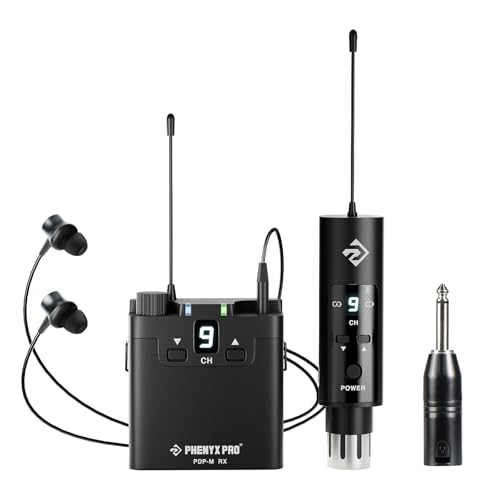
- UHF 900MHz frequency-hopping for stability
- 16 selectable frequencies
- One transmitter can feed multiple receivers
Best For: bands and performers wanting a more pro-focused wireless monitor setup
Budget-Friendly One-to-Many Pick – LEKATO MS-1 Wireless in Ear Monitor System
If you want an affordable in ear monitor system for rehearsals, church, or small gigs, the LEKATO MS-1 keeps setup simple while covering the essentials. It supports one transmitter to multiple receivers, auto-pairs with a quick button press, and sends true stereo audio over 2.4GHz with low latency.
Best For: Small bands, churches, and rehearsal setups that need an easy one-to-many wireless IEM option.
Pros:
- Supports up to 6 receivers working at the same time
- Auto-pairing makes setup quick and straightforward
- True stereo transmission with under 12ms latency
- Rechargeable battery lasts more than 5 hours per charge
Cons:
- Wireless range is listed at 100 ft in open areas, so it is better suited to smaller venues
- Battery life is solid, but not the longest in this group
The MS-1 is a practical entry point if you need wireless monitoring without a complicated setup. Its mix of stereo support, multiple-receiver pairing, and lightweight use case makes it a sensible pick for everyday stage and practice work.
Portable Performance Pick – Xvive U4 Wireless in-Ear Monitor System Set
The Xvive U4 is an affordable in ear monitor system option if you want a compact wireless setup for live performance or studio use. It works on 2.4GHz, offers over 90 feet of range, and keeps latency under 5ms for distraction-free monitoring.
Best For: Performers who want a simple, portable wireless monitor system for small clubs, studio sessions, or stage use.
Pros:
- Less than 5ms latency for responsive monitoring
- Over 90 feet of working range
- Can broadcast on 6 channels
- Rechargeable battery lasts up to 5 hours
Cons:
- Battery life is limited to about 5 hours
- Range is best suited to smaller venues rather than large stages
For musicians who value speed and portability, the U4 covers the core needs without adding complexity. It is a straightforward wireless IEM set built for real-world performance situations where fast response and easy transport matter.
Low-Latency Upgrade Pick – LEKATO Wireless in Ear Monitor System MS-02
The LEKATO MS-02 is a strong choice if you are comparing an affordable in ear monitor system with upgraded latency and longer runtime. It offers 2.4GHz stereo wireless transmission, one transmitter to multiple receivers, and a claimed mono mode latency of under 4.5ms.
Best For: Small to medium bands, singers, and rehearsal groups that want low-latency wireless monitoring with simple pairing.
Pros:
- Mono mode latency is listed at under 4.5ms
- Supports one transmitter to multiple receivers, up to 4 pairs
- Battery life is rated at 6 to 8 hours
- LED indicators show battery level and volume status
Cons:
- Earbuds are not included and must be purchased separately
- Wireless range is listed at 100 ft in open areas, which fits smaller venues better
The MS-02 improves on the basics with lower latency and better battery endurance than the earlier model. If you already have earbuds and want a compact monitoring system for practice or stage use, it offers a practical feature set.
Longest-Running Portable Pick – MELONARE Portable Wireless in Ear Monitor System with Charging Case PM-2
If long runtime matters most in an affordable in ear monitor system, the MELONARE PM-2 stands out with its charging case and mobile-friendly inputs. It uses 2.4GHz wireless audio, supports mono/stereo switching, and includes OTG input for smartphones, tablets, and laptops.
Best For: Mobile performers, hosts, and teams that need longer battery life and quick wireless monitoring setups.
Pros:
- Up to 30 hours of total runtime with the included charging case
- OTG input works with phones, tablets, and laptops
- Supports one transmitter to multiple receivers with independent volume control
- Up to 150 ft wireless range and up to 10 complete sets without interference
Cons:
- Battery charge time is listed at 10 hours
- Uses a 3.5 mm jack, so some setups may need adapters
The PM-2 is built for convenience, especially when you need monitoring on the move. Its charging case, OTG support, and extended runtime make it a flexible pick for live shows, studios, and travel-friendly use.
Best for larger bands – 4-pack UHF rack system
If you need an affordable in ear monitor system for a band, stage, or studio setup, this 4-bodypack UHF package gives you a lot of monitoring capacity in one box. It uses PLL-controlled UHF transmission, 2×40 preset frequencies, and a stated 330-foot open-space range, making it a practical choice when you want wireless freedom without moving into a premium-tier rig.
Best For: Bands, church teams, stage performers, and sound engineers who want a mono IEM setup with multiple receivers.
Pros:
- Includes 4 bodypack receivers and 4 in-ear earphones, which is useful for multi-person monitoring.
- UHF system with PLL technology and 2×40 selectable frequencies for flexible setup.
- Built-in limiter circuitry and zero-latency monitoring help keep the signal clear and stable.
- Rack-mount transmitter, LCD display, and RF/low-battery indicators make the system easier to manage.
Cons:
- Mono monitoring only, so it is not designed for stereo in-ear mixes.
- Range notes mention avoiding thick walls, glass, and metal blocks for best performance.
- Bulkier than a small personal practice system because it is built for multiple users.
This is a strong value pick if you need several wireless packs in one affordable package and can work within a mono stage-monitoring workflow.
Best for practice players – 2.4G clip-on IEM
The JOYO JW-07 is a practical affordable in ear monitor system for players who want simple wireless monitoring during practice, guitar sessions, or small live setups. It runs on 2.4GHz wireless, supports automatic pairing, and is rated for less than 5ms latency, so it is aimed at users who want quick setup and responsive real-time monitoring.
Best For: Guitar players, beginners, DJs, and solo performers who want a compact wireless IEM for practice or small gigs.
Pros:
- Automatic pairing keeps setup straightforward.
- Low latency under 5ms is useful for real-time monitoring.
- 48kHz/16bit audio clarity is a solid spec for practice and monitoring.
- Over 8 hours of battery life helps cover longer sessions.
Cons:
- One transmitter does not support multiple receivers.
- Open-space range is listed at 40-60 ft, so it is better suited to smaller setups.
- Designed more for individual monitoring than full-band monitoring.
If you want a compact, easy-to-use wireless monitor on a budget, this is a sensible option for personal practice and smaller performance needs.
Best for dual-user monitoring – Dual-channel UHF IEM
This Phenyx Pro model is a strong affordable in ear monitor system pick if you need reliable mono monitoring for two users. It uses a dual-channel UHF design with 2×50 selectable frequencies, separate outputs, and a rugged metal transmitter, aiming to give bands, churches, and studios a more stable monitoring solution in busy RF environments.
Best For: Two-performer setups, worship teams, and rehearsal spaces that need dependable mono wireless monitoring.
Pros:
- Dual-channel UHF system with 100 selectable frequencies helps reduce interference.
- Includes 2 bodypack receivers, making it suited to paired monitoring.
- Metal transmitter and LCD display support durable, easy-to-manage use.
- Box includes rackmount kit, carry case, and batteries for a more complete setup.
Cons:
- Only 2 receivers are included, so it is not meant for larger groups without expansion.
- Listed operating range is 164 ft, which is shorter than some larger-stage systems.
- Mono monitoring may not suit users specifically looking for stereo in-ear mixes.
For buyers who want a straightforward, rugged system for two performers, this model balances frequency flexibility and practical included accessories well.
Feature-Packed 5.8GHz Pick – SWIFF AUDIO WX520 Wireless In Ear Monitor System
If you want an affordable in ear monitor system that still feels feature-rich, the SWIFF AUDIO WX520 is built to cover a lot of stage needs in one package. It combines 5.8GHz wireless monitoring, stereo/mono switching, and cue talkback support, making it a practical option for bands, studios, and live rehearsal setups.
Best For: performers and small teams that want wireless monitoring plus cue communication in a compact system.
Pros:
- 5.8GHz wireless design with 4 selectable channels for stronger interference resistance.
- Supports stereo/mono switching and cue talkback via an external dynamic microphone.
- Low latency under 9.2ms for real-time monitoring during live use.
- Multi-user setup lets one transmitter support multiple receivers on the same channel.
Cons:
- Receiver battery life is rated at up to 5 hours, so longer gigs may need planning.
- The transmitter adds convenience with a charging case, but the overall system is still geared toward compact setups rather than extended all-day use.
The WX520 stands out as a flexible monitoring solution for users who want more than a basic wireless pack. Its talkback support, quick latency, and multi-receiver capability make it a strong fit for coordinating on stage without adding unnecessary complexity.
Simple Value Stage Option – XTUGA J02S Wireless In Ear Monitor System
The XTUGA J02S is a practical affordable in ear monitor system for players who want simple wireless monitoring without paying for a larger pro rig. It focuses on low latency, long battery life, and easy operation, which makes it a straightforward pick for stage monitoring, church use, and rehearsals.
Best For: performers who want a simple one-transmitter, one-receiver setup with strong battery life and quick setup.
Pros:
- Low latency under 4.5ms for tight audio sync on stage.
- 10-hour battery life with a 3-hour fast charge.
- One-key mute plus instant mono/stereo switching for fast stage control.
- One-to-many support can simplify larger monitoring setups when needed.
Cons:
- Single-pair package includes only 1 transmitter and 1 receiver.
- Uses a 2.4GHz wireless system, so it may be better suited to smaller or less congested environments than heavier-duty alternatives.
For the money, the J02S keeps the essentials front and center: responsive monitoring, useful controls, and long runtime. It is a good value choice if you want an entry-level wireless IEM setup that is still designed for live performance demands.
UHF Step-Up Choice – Phenyx Pro PDP-M Wireless In-Ear Monitor System
The Phenyx Pro PDP-M is a strong option if you are shopping for an affordable in ear monitor system with more professional features. It offers UHF wireless operation, stereo monitoring support, and a compact bodypack design, giving live performers a more capable monitoring setup without jumping into a full rack system.
Best For: musicians and bands that want a scalable UHF IEM system with stereo monitoring support.
Pros:
- UHF 900MHz frequency-hopping design helps improve stability and reduce dropouts.
- 16 selectable frequencies make it easier to find a clean channel.
- Supports one transmitter to multiple receivers for group or worship setups.
- Includes accessory kit with adapters, charging cable, earphones, and storage pouch.
Cons:
- Battery life is up to 4 hours, which is shorter than some competing options.
- Stereo monitoring requires the included adapter setup rather than a simple default connection.
The PDP-M is a good fit when you want more frequency control and a more professional signal path in a compact package. It balances practical live-use features with a portable design, making it a sensible step up for performers who need flexibility and cleaner monitoring options.
How We Picked the Best Affordable in Ear Monitor System
We prioritized systems that offer strong value for money, stable wireless performance, and features that matter on stage: low latency, usable range, stereo or mono flexibility, and receivers that are comfortable to wear for long sets. We also looked for systems that are easier to set up and maintain, since an Affordable in Ear Monitor System should save both time and cash.
Quick Comparison: What Stands Out
Not every wireless IEM system is built for the same job. Compact 2.4GHz models are usually simpler and better for rehearsal spaces, home studios, and small gigs. UHF systems often offer better control, more channel options, and stronger stage-friendly flexibility. Rechargeable bodypacks and charging cases can also reduce operating costs over time, which matters when you use the system often.
Key Buying Factors for an Affordable in Ear Monitor System
Wireless Band and Interference Risk
2.4GHz systems are convenient and widely compatible, but crowded wireless environments can be a concern. UHF models are often a better fit for live stages where signal management matters more.
Latency and Audio Stability
For monitoring, delay can be distracting fast. Look for systems that advertise low latency and consistent transmission, especially if you sing, play drums, or rely on tight timing.
Mono Vs. Stereo
Mono is often enough for basic monitoring and can be easier to manage. Stereo can improve placement and separation, which many musicians prefer for more immersive mixes.
Range and Practical Use
Published range numbers are useful, but real-world performance depends on walls, bodies, RF noise, and stage layout. Choose a range with some margin if you move around a lot.
Battery Life and Charging
Long rehearsals and gigs demand dependable battery life. Systems with USB-C charging, charging cases, or better runtime can be a smarter long-term buy.
Who Should Buy Which Affordable in Ear Monitor System?
If you want the simplest setup for practice or small shows, a compact 2.4GHz option is usually the easiest choice. If you need more control for live performance, a UHF system is often the better investment. Players who want premium portability may prefer a model with a charging case, while bands that need multiple mixes should look for systems with more receivers or bodypacks.
In short, the best Affordable in Ear Monitor System is the one that matches your stage size, monitoring needs, and tolerance for setup complexity. Pay for the features you will actually use, and skip the extras that do not improve your live workflow.