Choosing studio monitors for electronic music is about more than loudness—it’s about tight bass, clear mids, and reliable detail for programming, mixing, and checking your low end.
This roundup focuses on 10 standout options for different room sizes, budgets, and production setups, so you can find a monitor pair that fits your workflow.
Best 10 Studio Monitors for Electronic Music Picks for 2026
Reference-Grade Nearfield
Yamaha HS7 7-Inch Powered Studio Monitor Pair

- 7-inch woofer with bi-amp design
- 43Hz–30kHz frequency response
- XLR and TRS inputs for flexible hookup
Best For: mixing electronic music with a revealing, larger nearfield monitor
Budget Desktop Monitor
Edifier MR4 Powered Monitor Speakers
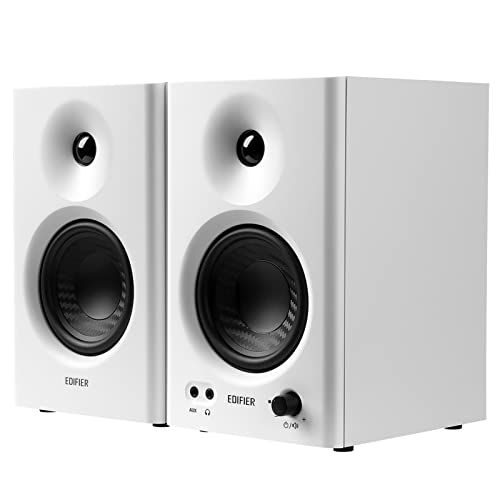
- Near-flat tuning for creators
- TRS, RCA, AUX, and headphone output
- Monitor mode and music mode switch
Best For: bedroom producers and compact desktop setups
Compact Mix Workhorse
Yamaha HS5 Powered Studio Monitor Pair

- Sonic-purity tuning with minimal coloration
- 5-inch nearfield design with bi-amp power
- XLR and TRS inputs for studio gear
Best For: small-room producers who need accurate nearfield monitoring
Feature-Rich Compact Monitor
Edifier MR5 3-Way Studio Bookshelf Speakers

- 3-way active design with room compensation
- XLR, TRS, RCA, AUX, and Bluetooth 6.0
- 110W RMS with 101dB peak SPL
Best For: home studios needing flexible tuning and connectivity
Flagship Detail Monitor
Yamaha HS8 8-Inch Powered Studio Monitor Pair

- 8-inch woofer with bi-amp 120W design
- 38Hz - 30kHz frequency response
- Sold as a pair for stereo studio use
Best For: Producers who want a larger nearfield monitor for mixing electronic music
Compact Desktop Monitor
Mackie CR3.5 Creative Reference Monitors

- 3.5-inch woofer and silk dome tweeter
- Tone knob and location switch for flexibility
- TRS, RCA, and 3.5 mm connectivity
Best For: Desktop producers who want compact monitors for production, gaming, and casual listening
Compact Studio Pair
Yamaha HS4 Powered Studio Monitor Pair

- 4.5-inch woofer with 1-inch tweeter
- Room control and high trim included
- XLR/TRS, RCA, and stereo mini inputs
Best For: Producers working in tight spaces who want a compact stereo monitor pair
Balanced 5-inch pick
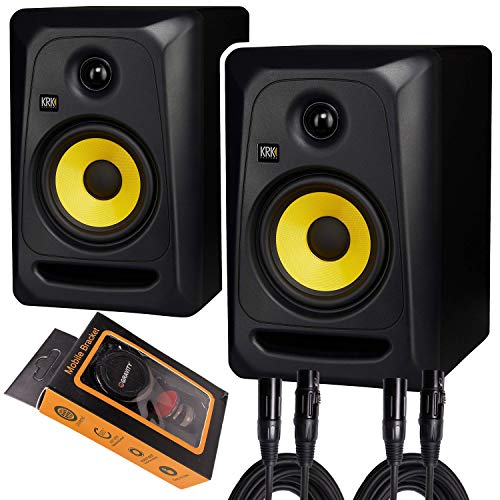
- 5-inch woofer for clear mids and tight bass
- Smooth soft-dome tweeter reaches up to 35 kHz
- Low-frequency adjustment plus optional bass boost
Best For: Electronic music producers who want adjustable low-end in a compact pair
Compact desktop option

- 50W stereo pair with clean, distortion-free output
- Room tuning controls for high and low frequencies
- TRS, RCA, aux, and headphone jack connectivity
Best For: Small desks, beginner producers, and mixed-use listening
Flexible modern monitor

- Hi-Res certified with a wide 52 Hz to 40 kHz response
- Bluetooth plus TRS, RCA, AUX, and headphone output
- Music, Monitor, and Custom modes with app EQ
Best For: Home studio users who want modern connectivity and sound shaping
Reference-Grade Nearfield – Yamaha HS7 7-Inch Powered Studio Monitor Pair
If you want studio monitors for electronic music that help expose mix issues instead of flattering them, the Yamaha HS7 pair is built for that job. With a 7-inch woofer, bi-amplified design, and a 43Hz–30kHz response, these monitors are aimed at detailed nearfield listening for studio recording and mixing.
Best For: Producers who want a larger, more revealing nearfield monitor for mixing electronic tracks and checking low-end decisions.
Pros:
- 7-inch woofer and bi-amp design support solid detail and separation.
- 43Hz–30kHz frequency response gives wide-range monitoring coverage.
- XLR and TRS inputs accept balanced or unbalanced connections.
- Sold as a pair for stereo monitoring right out of the box.
Cons:
- Larger cabinet size may take more desk or stand space.
- Does not include wireless features.
- More suited to critical listening than casual playback.
The HS7 makes sense if you prioritize accuracy and want a monitor that can keep up with layered synths, drum programming, and mix detail. It is a practical choice when your focus is translation rather than boosted sound.
Budget Desktop Monitor – Edifier MR4 Powered Monitor Speakers
The Edifier MR4 is a straightforward pick for studio monitors for electronic music when you need something compact and easy to connect. Its near-flat tuning, 1-inch silk dome tweeters, 4-inch woofers, and monitor/music mode switch make it useful for both production checks and everyday listening.
Best For: Bedroom producers, PC-based setups, and smaller desks where flexible inputs matter.
Pros:
- Near-flat tuning is aimed at artists and music creators.
- TRS, RCA, AUX, and front headphone output provide flexible connectivity.
- Monitor mode and music mode let you switch between critical and casual listening.
- Front controls make volume and tone adjustment easy.
Cons:
- 4-inch woofers are more compact than larger studio monitors.
- Single-speaker output power is modest at 42 watts.
- Best suited to smaller spaces rather than loud room-filling use.
MR4 is a sensible entry point if you want a practical, compact monitor pair for beatmaking, editing, and general desktop production. It focuses on clarity and convenience without adding unnecessary complexity.
Compact Mix Workhorse – Yamaha HS5 Powered Studio Monitor Pair
For studio monitors for electronic music, the Yamaha HS5 pair is a compact nearfield option that focuses on sonic purity and minimal coloration. The 5-inch woofer, 1-inch dome tweeter, and 54Hz–30kHz response make it a practical fit for close listening, especially when you want to hear what is really in the mix.
Best For: Producers with smaller rooms who want accurate monitoring for beatmaking and mix checks.
Pros:
- Designed to emphasize sonic purity without coloring the source.
- Bi-amplified 70-watt system supports nearfield studio use.
- XLR and TRS inputs handle balanced or unbalanced signals.
- Pair format is ready for stereo monitoring.
Cons:
- 5-inch woofer is less capable than larger models for deeper bass extension.
- Smaller cabinet is better for nearfield use than bigger rooms.
- No wireless input features are included.
The HS5 is a classic practical choice when desk space is tight and accuracy matters more than extra size. It suits producers who want a monitor that keeps electronic arrangements honest during editing and mixing.
Feature-Rich Compact Monitor – Edifier MR5 3-Way Studio Bookshelf Speakers
The Edifier MR5 is a strong option if you want studio monitors for electronic music with more flexibility than a basic desktop pair. Its 3-way active design, 46Hz–40kHz response, room compensation tools, and multiple wired plus Bluetooth connections make it well suited to home studio setups.
Best For: Home studio users who want compact speakers with tuning controls and broad connectivity.
Pros:
- 3-way active crossover with woofer, mid driver, and silk dome tweeter.
- Room compensation options help tailor sound to your space.
- XLR, TRS, RCA, AUX, Bluetooth 6.0, and headphone output offer wide connectivity.
- 110W RMS power and 101dB peak SPL support near-field and mid-sized rooms.
Cons:
- More features may be more than needed for a simple desktop setup.
- Bluetooth is convenient, but wired monitoring is still better for production work.
- Heavier than smaller entry-level monitors.
MR5 stands out when you want a compact monitor that can adapt to different rooms and devices. For electronic music production, it offers the kind of control and connectivity that can simplify a busy home studio.
Flagship Detail Monitor – Yamaha HS8 8-Inch Powered Studio Monitor Pair
If you want studio monitors for electronic music that make low-end decisions easier to trust, the Yamaha HS8 Pair is built for detailed listening. The 8-inch woofer, 1-inch dome tweeter, and bi-amped 120W design give you a full-range monitoring setup for writing, mixing, and checking bass-heavy tracks.
Best For: Producers who want a larger nearfield monitor with strong detail for mixing electronic music.
Pros:
- 8-inch woofer and bi-amped 120W power for a full, assertive monitor sound.
- 38Hz – 30kHz frequency response for wide-range listening.
- XLR connectivity suited to studio recording setups.
- Sold as a pair, so you get a complete stereo setup.
Cons:
- Large footprint may be more than you need for a small desk.
- XLR cables are not included.
- No built-in wireless convenience for casual use.
The HS8 is the most serious option here when you need room-filling detail and a monitor that can handle electronic music sessions with confidence. It makes the most sense if you have the space and want a straightforward studio-first speaker pair.
Compact Desktop Monitor – Mackie CR3.5 Creative Reference Monitors
For studio monitors for electronic music on a desk setup, the Mackie CR3.5 is a compact and flexible pick. Its 3.5-inch woven woofer, silk dome tweeter, and tone knob give you a simple way to go from flatter reference listening to a more boosted sound for casual playback.
Best For: Desktop producers who want compact monitors that can also work for gaming and everyday listening.
Pros:
- Compact 3.5-inch design fits easily on small desks.
- Tone knob lets you shape bass and high-end response.
- Location switch helps optimize desktop or bookshelf placement.
- TRS, RCA, and 3.5 mm inputs cover plenty of devices.
Cons:
- Smaller woofer means less low-end reach than larger studio monitors.
- Subwoofer is not included if you want deeper bass.
- More of a versatile desktop speaker than a pure large-room monitor.
The CR3.5 is a practical choice if you need a compact monitor that can handle music production without taking over your workspace. It is especially appealing if you want one speaker set for creative work, gaming, and listening.
Compact Studio Pair – Yamaha HS4 Powered Studio Monitor Pair
If you need studio monitors for electronic music but prefer a smaller footprint, the Yamaha HS4 Pair is a sensible desktop option. With 4.5-inch cone woofers, 1-inch dome tweeters, and room control plus high trim controls, it is designed for practical audio and DAW workstations.
Best For: Producers working in tight spaces who want a compact, wired stereo monitor pair.
Pros:
- Compact 4.5-inch design suits smaller desks and workstations.
- Room control and high trim help adapt the sound to your space.
- XLR/TRS combo, RCA, and stereo mini inputs add flexibility.
- Pair packaging gives you a ready-to-use stereo setup.
Cons:
- 26W output is modest compared with larger monitor pairs.
- 60 Hz – 22 kHz frequency response is narrower than bigger models.
- Not the best pick if you want deep bass extension without a subwoofer.
The HS4 is the most space-conscious option in this group, making it a strong fit for smaller production rooms or crowded desks. It keeps the focus on practical monitoring features rather than sheer size or power.
Balanced 5-inch pick – KRK Classic 5 Studio Monitors
If you’re shopping for studio monitors for electronic music, the KRK Classic 5 pair is built for producers who want a compact nearfield setup with a bit more low-end flexibility. The 5-inch glass-aramid woofers and soft-dome tweeters are designed to keep mixes clear while still giving you enough bass detail to make kick and synth decisions confidently.
Best For: Producers who want compact powered monitors with adjustable low-end options for electronic music mixing.
Pros:
- 5-inch glass-aramid composite woofers provide clear midrange and tight bass.
- Soft-dome tweeters with an optimized waveguide deliver smooth highs up to 35 kHz.
- Flat low-frequency adjustment helps adapt the sound to different rooms.
- Optional +2 dB bass boost adds extra low-end emphasis when needed.
Cons:
- 5-inch monitors will not move as much air as larger studio speakers.
- Wired XLR-only connectivity may be less convenient for casual desktop setups.
Overall, the Classic 5 is a practical choice if you want a reliable monitoring pair that can handle bass-focused production without losing clarity. It is especially appealing when you want a straightforward powered monitor with some room-tuning flexibility.
Compact desktop option – PreSonus Eris 3.5 Monitors
The PreSonus Eris 3.5 is a compact option for studio monitors for electronic music when desk space is limited and you need a simple, affordable stereo pair. Its 3.5-inch woven-composite woofers and silk-dome tweeters are tuned for clear, balanced playback, while the acoustic controls make it easier to adapt the sound to your room.
Best For: Desktop producers and beginners who want small powered monitors for music production and everyday listening.
Pros:
- 50 watts of built-in amplification delivers clean sound at practical listening levels.
- 3.5-inch woven-composite woofers and silk-dome tweeters aim for balanced detail.
- High- and low-frequency tuning controls help tailor the sound to the room.
- TRS, RCA, aux, and front headphone jack make desk hookup easy.
Cons:
- 3.5-inch drivers are better for close-range use than heavy bass monitoring.
- Best suited to compact setups rather than larger studio rooms.
For small workspaces, the Eris 3.5 offers a lot of flexibility in a minimal footprint. It makes sense if you want nearfield monitors that can handle production, gaming, and general listening without requiring extra gear.
Flexible modern monitor – Edifier MR3 Studio Monitors
The Edifier MR3 is a versatile pick for studio monitors for electronic music if you want monitoring flexibility plus modern wireless convenience. With Hi-Res Audio certification, a flat response from 52 Hz to 40 kHz, and multiple input options, it is set up for near-field production, editing, and everyday use on the same desk.
Best For: Creators who want a flexible monitor pair with Bluetooth, headphone output, and app-based sound control.
Pros:
- Hi-Res Audio certification and a wide 52 Hz to 40 kHz response support detailed listening.
- Balanced TRS, RCA, AUX, headphone output, and Bluetooth multi-point expand connection options.
- Music, Monitor, and Custom modes give you quick sound-shaping choices.
- MDF cabinet construction is designed to reduce distortion.
Cons:
- Bluetooth convenience is useful, but wired monitoring remains the safer choice for critical work.
- 3.5-inch mid-low drivers are compact rather than bass-heavy.
The MR3 stands out for users who want a monitor that can shift between production and casual listening without much hassle. It is a strong fit for home studios that value connectivity, control, and a clean desktop footprint.
How We Picked These Studio Monitors for Electronic Music
We focused on monitors that make electronic production easier to judge in real-world rooms. That means balanced frequency response, enough low-end extension to evaluate kick and bass lines, and build quality suited for long sessions. We also considered connectivity, size, and whether each model makes sense for desktop production, small studios, or larger rooms.
Quick Comparison: What Matters Most
Smaller monitors are often better for compact desks and near-field listening, while larger woofers can reveal more sub and low-end punch. If you produce bass-heavy genres, you may want more extension from an 8-inch model or pair your monitors with a subwoofer. If your room is untreated or small, a more modest speaker can sometimes be easier to place and easier to trust.
Key Buying Factors for Studio Monitors for Electronic Music
Woofer Size and Bass Extension
Woofer size affects how much low-frequency detail you can hear before bass starts to roll off. For Studio Monitors for Electronic Music, 5-inch models are a versatile middle ground, 7-inch speakers offer more weight, and 8-inch models are better when you need stronger low-end monitoring in a larger space.
Room Size and Listening Distance
Near-field monitors work best when you sit close to the speakers, which helps reduce room reflections. In small bedrooms or desk setups, compact models can be the smarter choice. In bigger rooms, larger monitors may project more evenly and help you hear transients and stereo movement more clearly.
Connectivity and Workflow
Balanced inputs such as TRS or XLR are useful for reducing noise and connecting to audio interfaces. If you also want casual playback from a computer or controller, flexible input options can be a bonus. Some models add tone controls or room compensation, which can help tailor the sound to your space.
Monitoring Accuracy Vs. Everyday Listening
Some speakers lean more toward flat, detailed monitoring, while others are tuned to sound pleasant for music, gaming, and streaming. Decide whether you want the most honest mix check possible or a more versatile speaker for both production and daily use.
Who Should Buy Which Studio Monitors for Electronic Music?
If you produce in a small room or on a desk, compact 3.5-inch or 4-inch models are practical and easy to place. If you want a strong all-around choice for beatmaking, synth work, and mixing, 5-inch monitors are often the safest starting point. If you need deeper bass judgment and have the space, 7-inch or 8-inch speakers are the better fit. For hybrid users who care about both production and casual listening, models with Bluetooth, multiple inputs, or room tuning features may deliver the best balance.
For most producers, the best choice comes down to room size, how low your music goes, and how accurately you need to hear the mix. Pick the pair that matches your space first, then your budget, and you’ll get far more useful results from your monitors.