Building a professional modular synthesizer system is about more than adding patch points—it’s about choosing a setup that supports your workflow, sound goals, and future expansion.
Below, we’ve curated 10 standout modular and semi-modular options for players who want hands-on control, deep routing, and serious sound design potential in 2026.
Best 10 Professional Modular Synthesizer System Picks for 2026
Flagship semi-modular performance
MOOG Matriarch 4-Note Paraphonic Analog Synthesizer

- 90 patch points for deep modular routing
- 49-key keyboard with aftertouch and sequencing
- Stereo ladder filters plus stereo analog delay
Best For: Keyboard players building a premium semi-modular hub
Budget-friendly semi-modular voice
Behringer Neutron Semi-Modular Analog Synthesizer

- Default routings let you play immediately
- Dual 3340 analog oscillators for fat tones
- Five waveform shapes for flexible sound design
Best For: Affordable semi-modular patching and sound design
Classic keyboard semi-modular
MOOG Grandmother Semi-Modular Analog Keyboard Synth

- 41 patch points for modular expansion
- 32-key keyboard with sequencer and arpeggiator
- Spring reverb can process external audio
Best For: Hands-on players building a Moog-centered modular rig
Compact paraphonic module
Behringer CAT Legendary Paraphonic Analog Synthesizer

- Eurorack format for modular setups
- Dual VCOs with four mixable waveforms
- External signal processor and analog path
Best For: Compact analog voice for Eurorack-based systems
West Coast Experimenter
Korg Volca Modular Semi-Modular Synth with Sequencer
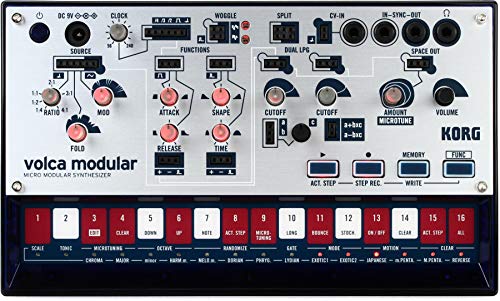
- Eight independent modules for flexible sound design
- 50 patch points for extensive routing and patching
- Compact, portable build with 16-step sequencer
Best For: Exploratory players wanting a portable semi-modular system
Rack-Style Paraphonic Choice
Behringer PROTON Eurorack-Format Semi-Modular Synth

- 2 VCOs and 2 multi-mode VCFs for layered sound design
- 2 VCAs, 4 envelopes, and wave folder expand patch control
- Includes MIDI, USB, audio, and headphone cables
Best For: Users wanting a more advanced Eurorack-format semi-modular synth
Portable Hybrid Mini
Behringer Pro VS Mini 5-Voice Hybrid Synth

- 5-voice hybrid design with wavetable synthesis
- 16-step sequencer and arpeggiator built in
- Battery or USB powered for portable use
Best For: Portable users wanting a compact hybrid synth with sequencing
Polyrhythmic Experimental Pick
MOOG Subharmonicon Semi-Modular Analog Polyrhythmic Synthesizer

- Two VCOs plus subharmonic generators for dense harmonics
- Four rhythm generators and dual sequencers for polyrhythms
- Tabletop use or 60HP Eurorack integration
Best For: Experimental players and modular users chasing rhythmic complexity
Classic Filter Legend
Korg MS20 Mini Semi-Modular Analog Synthesizer

- Self-oscillating high-pass and low-pass filters
- Flexible patching with external signal processor
- USB MIDI plus 5-pin MIDI support
Best For: Players who want a classic semi-modular voice with strong filter character
Compact Build-It-Yourself Choice
MOOG Mavis Standalone Semi-Modular Analog Synthesizer Kit

- 100% analog Moog oscillator and ladder filter circuits
- Build-it-yourself kit with patching and calibration tools
- Standalone instrument that also fits into Eurorack
Best For: Users who want a compact Moog kit with Eurorack-ready flexibility
Flagship semi-modular performance – MOOG Matriarch 4-Note Paraphonic Analog Synthesizer
If you want a professional modular synthesizer system feel without giving up a playable keyboard, the Moog Matriarch is a strong fit. It combines 4-note paraphonic analog operation, 90 modular patch points, stereo ladder filters, and stereo analog delay, making it a flexible center for sound design, sequencing, and live performance.
Best For: Players who want a premium semi-modular Moog with deep patching and performance controls.
Pros:
- 90 modular patch points for extensive sound routing and experimentation
- 49 full-size velocity-sensitive keys with aftertouch for expressive playing
- Stereo ladder filters and stereo analog delay for wide, animated tones
- Can also process external sound sources and expand with Moog or Eurorack gear
Cons:
- Large desktop/keyboard footprint at 14.25 x 32.01 x 5.51 inches
- More advanced than a simple plug-and-play synth for users who want instant results only
Overall, the Matriarch is built for musicians who want a keyboard-first instrument that still behaves like a serious modular hub. Its combination of patchability, performance features, and Moog-style analog character makes it a compelling centerpiece for an expanding setup.
Budget-friendly semi-modular voice – Behringer Neutron Semi-Modular Analog Synthesizer
The Behringer Neutron is a practical choice if you want a professional modular synthesizer system voice that is ready to play right away but still rewards patching. Its semi-modular architecture has default routings for immediate use, while dual 3340 analog oscillators and a pure analog signal path give it a focused sound-design foundation.
Best For: Synthesis users who want an affordable semi-modular analog voice with simple start-up and patching depth.
Pros:
- Semi-modular design with default routings requires no patching to start
- Dual 3340 analog oscillators for thick, classic-style sounds
- Pure analog signal path based on legendary VCO design
- Oscillator waveform control blends across five shapes for flexible tone shaping
Cons:
- No keyboard, so it is more of a module/voice than a standalone performance instrument
- Compact metal unit may feel limited if you want an all-in-one workstation
For buyers who want a straightforward entry into semi-modular patching, the Neutron keeps the workflow simple while leaving room to explore. It is a solid utility voice for building out a modular setup without a lot of setup friction.
Classic keyboard semi-modular – MOOG Grandmother Semi-Modular Analog Keyboard Synth
The Moog Grandmother is a strong match for a professional modular synthesizer system because it mixes a playable 32-key keyboard with 41 modular patch points and classic analog hardware. It also includes a built-in arpeggiator, a 256-note sequencer, and a spring reverb tank, so it can function as both an instrument and a hands-on control center.
Best For: Players who want a classic Moog semi-modular keyboard with sequencing and spring reverb.
Pros:
- 41 modular patch points for expanding and repatching the signal path
- 32 velocity-sensitive keys with built-in arpeggiator and sequencer
- Analog spring reverb can also process external sounds
- Compatible with Mother-32, DFAM, and Eurorack modular systems
Cons:
- Monophonic design may not suit players who need polyphony
- Smaller keybed than full-size performance keyboards
Grandmother stands out as an approachable but capable semi-modular instrument for musicians who want classic Moog sound and tactile control. Its mix of keyboard playability, patch points, and integrated effects makes it especially useful in hybrid modular setups.
Compact paraphonic module – Behringer CAT Legendary Paraphonic Analog Synthesizer
The Behringer CAT is a compact analog option for a professional modular synthesizer system, especially if you want a paraphonic voice in Eurorack format. With dual VCOs, pure analog VCF and VCA design, and an external signal processor, it is built for straightforward integration into a modular workflow.
Best For: Modular users who need a compact paraphonic analog voice with Eurorack-friendly format.
Pros:
- Dual VCO design with four variable simultaneous oscillator shapes
- Pure analog signal path using authentic VCO, VCF, and VCA designs
- Duophonic/paraphonic mode for two-note control flexibility
- External signal processor and Eurorack format support modular integration
Cons:
- No keyboard included, so it depends on external control or sequencing
- Compact module format may not appeal to users wanting a standalone desktop synth
The CAT is best treated as a modular voice with character rather than a self-contained performance instrument. Its small size, analog path, and integration features make it a practical building block for a larger system.
West Coast Experimenter – Korg Volca Modular Semi-Modular Synth with Sequencer
If you want a professional modular synthesizer system approach in a compact, affordable format, the Korg Volca Modular is built for hands-on patching and discovery. Its semi-modular layout, 50 patch points, and built-in sequencer make it a practical choice for players who want to explore West Coast-style synthesis without a large rack.
Best For: Sound designers and synth beginners who want a portable semi-modular setup for experimentation, sequencing, and live patching.
Pros:
- Eight independent modules support flexible sound creation.
- 50 patch points allow extensive routing and experimentation.
- Built-in 16-step sequencer adds immediate performance and composition options.
- Compact, battery- or adapter-powered design is easy to move between studio and live use.
Cons:
- Built-in speaker is useful for quick play, but not a full monitoring solution.
- Its compact format may feel limiting if you want a larger modular workflow.
- Best suited to experimental synthesis rather than traditional subtractive layouts.
This is a strong entry point if you value patching freedom, portability, and quick results over depth of system size. It works especially well for exploratory users who want to learn modular ideas in a self-contained instrument.
Rack-Style Paraphonic Choice – Behringer PROTON Eurorack-Format Semi-Modular Synth
The Behringer PROTON fits the professional modular synthesizer system mindset with a Eurorack-format semi-modular design and a deep analog signal path. With 2 VCOs, 2 multi-mode VCFs, 2 VCAs, 4 envelopes, and a wave folder, it gives you a lot of control for building more complex paraphonic patches.
Best For: Synth users who want a semi-modular Eurorack-format instrument with multiple filters, envelopes, and a more advanced analog architecture.
Pros:
- 2 VCOs and 2 multi-mode VCFs support more layered sound shaping.
- 2 VCAs and 4 envelopes provide broad patch control.
- Wave folder adds extra timbral options for more aggressive or experimental tones.
- Includes MIDI, USB, audio, and headphone cables for setup convenience.
Cons:
- Its feature set is more complex than a simple entry-level synth.
- Eurorack-format design may appeal more to modular users than casual keyboard players.
- Plastic construction may feel less premium than all-metal alternatives.
For users who want a serious semi-modular instrument with more synthesis blocks to work with, the PROTON offers a lot of flexibility in a compact format. It is a good pick when you want modular-style patching without jumping straight into a full rack.
Portable Hybrid Mini – Behringer Pro VS Mini 5-Voice Hybrid Synth
The Behringer Pro VS Mini is a compact hybrid option for buyers who want a practical professional modular synthesizer system companion rather than a full modular centerpiece. Its 5-voice design, vector morphing oscillators, wavetable synthesis, and built-in sequencer/arpeggiator make it useful for quick ideas and portable sound creation.
Best For: Portable synth users who want a small hybrid instrument with sequencing, arpeggiation, and wavetable-style sound options.
Pros:
- 5-voice hybrid architecture offers more flexibility than a basic mono synth.
- 4 vector morphing oscillators per voice support evolving textures.
- Built-in 16-step sequencer and arpeggiator improve hands-on usability.
- Battery or USB power makes it easy to use on the move.
Cons:
- It is a small instrument, so it is not a substitute for a full modular rig.
- 2.5mm jack connectivity may be less convenient than standard full-size connections.
- Best suited to portable hybrid synthesis rather than deep patch-cable workflows.
This model makes sense if portability and quick sequencing matter more than building a large modular ecosystem. It is a compact, modern synth for sketching ideas and exploring hybrid sounds with minimal setup.
Polyrhythmic Experimental Pick – MOOG Subharmonicon Semi-Modular Analog Polyrhythmic Synthesizer
If you want a professional modular synthesizer system that pushes beyond standard subtractive voices, the Moog Subharmonicon is built for dense harmonics and evolving polyrhythms. Its two VCOs, four subharmonic generators, dual four-step sequencers, and four rhythm generators make it a strong choice for exploratory patching and live sound design.
Best For: Experimental players, live performers, and modular users who want complex rhythmic structures and rich harmonic textures.
Pros:
- Two VCOs with two subharmonic generators each for a dense harmonic palette
- Four rhythm generators and two sequencers for surprising polyrhythmic patterns
- Works as a tabletop synth or as a 60HP Eurorack module
- Expandable with Moog semi-modular companions like Mother-32, DFAM, Labyrinth, or Spectravox
Cons:
- Focuses on experimental sequencing rather than traditional keyboard-style workflow
- Its 4-step sequencers may feel limited if you want longer pattern lengths
- Best results come from patching, so it may be less immediate for simple sounds
The Subharmonicon is a specialized instrument, but that specialization is exactly what makes it valuable in a professional modular synthesizer system. If your goal is rhythmic complexity and unusual tonal movement, it offers a focused and inspiring sound engine.
Classic Filter Legend – Korg MS20 Mini Semi-Modular Analog Synthesizer
The Korg MS-20 Mini is a practical pick for anyone building a professional modular synthesizer system around characterful analog tone and hands-on patching. Its flexible patch system, self-oscillating high-pass and low-pass filters, and external signal processor give it the kind of aggressive, distinctive voice many modular setups need.
Best For: Musicians who want a classic semi-modular voice with aggressive filters and external signal processing.
Pros:
- Self-oscillating high-pass and low-pass filters with distinctive distortion
- Flexible patching system for modular-style routing
- External signal processor adds useful utility beyond synthesis alone
- USB MIDI plus 5-pin MIDI support for easy integration
Cons:
- Not a full modular rack, so expansion is centered on its built-in architecture
- Included components are listed as not included in the supplied notes
- The sound is intentionally distinctive, which may not suit every role in a setup
The MS-20 Mini stands out when you need a synth that can behave like a modular voice without losing its own identity. It is a strong utility and tone-shaping choice for setups that value raw analog character.
Compact Build-It-Yourself Choice – MOOG Mavis Standalone Semi-Modular Analog Synthesizer Kit
The Moog Mavis is a smart fit for a professional modular synthesizer system when you want a compact analog voice with real patching depth. This build-it-yourself kit combines Moog oscillator and filter circuits with a diode wavefolder, sample and hold, attenuators, mults, and a built-in keyboard for expressive control.
Best For: Synth players who want a compact Moog semi-modular kit with hands-on building and Eurorack-ready flexibility.
Pros:
- 100% analog design with Moog oscillator and ladder filter circuits
- Includes wavefolding, sample and hold, attenuators, mixer, and mults
- Built-in keyboard with glide and keyboard scaling for pitch exploration
- Compact 44HP format that can be used standalone or integrated into Eurorack
Cons:
- Requires assembly, so it is less plug-and-play than a prebuilt synth
- Compact size means fewer controls than larger modular systems
- Best suited to users comfortable with patching and calibration steps
Mavis gives you a focused analog instrument that bridges desktop and modular workflows cleanly. For users who want Moog flavor in a smaller footprint, it offers a strong balance of hands-on learning and system integration.
How We Picked the Best Professional Modular Synthesizer System
We focused on instruments that offer meaningful patching options, strong sound-shaping tools, and enough flexibility to serve as the core of a Professional Modular Synthesizer System or a powerful expansion piece. Priority went to synths with dependable build quality, practical sequencing features, and clear value for the price.
We also considered how well each option fits different use cases, from compact desktop rigs to performance-ready keyboard setups and experimental semi-modular sound labs.
Quick Comparison
Think of these picks in three broad groups: hands-on keyboard instruments, compact desktop modules, and experimental or performance-oriented semi-modular designs. Keyboard-based models are usually the easiest starting point, while desktop units tend to integrate more easily into larger modular rigs. Experimental models are best when you want unusual rhythm, patching, or waveform behavior.
Key Buying Factors for a Professional Modular Synthesizer System
Patching and Expandability
Look for enough CV and audio routing to support your current setup and future modules. A strong patch bay matters more than raw feature count if you plan to grow the system over time.
Sound Engine and Voice Structure
Consider whether you need monophonic, paraphonic, hybrid, or true multi-voice behavior. For a Professional Modular Synthesizer System, voice structure affects both studio layering and live performance flexibility.
Sequencing and Clocking
Built-in sequencers, arpeggiators, and sync options can reduce the need for extra gear. If you work with drum machines or Eurorack, stable clock integration is especially important.
Playability and Ergonomics
Keyboard size, knob layout, and panel spacing all influence speed and accuracy. If you patch often, a clear layout can save time and prevent mistakes in performance or session work.
Integration with Existing Gear
Check MIDI, USB, audio routing, and modulation compatibility. The best choice is the one that fits your studio, not just the one with the most features.
Who Should Buy Which Professional Modular Synthesizer System?
Choose a keyboard-based semi-modular if you want the fastest path into expressive patching and traditional playing. Pick a compact desktop unit if you already own a controller or modular rack and want more dedicated synthesis depth per inch of space. Go for more experimental designs if you value rhythmic complexity, unusual timbres, and a more exploratory workflow.
If you’re assembling a Professional Modular Synthesizer System from the ground up, start with the instrument that gives you the strongest balance of patch points, sequencing, and hands-on control—then expand based on the sounds and workflow you use most.