If you want drums that move beyond presets, a modular drum synthesizer gives you hands-on control over tone, timing, and texture. It is a great choice for producers who want more personality than a typical drum machine.
Below, we focus on options that balance patchability, sequencing, and performance features so you can choose the right fit for your setup and workflow.
Best 10 Modular Drum Synthesizer Picks for 2026
Analog Percussion Modular
MOOG DFAM Semi-Modular Analog Percussion Synthesizer

- Fully analog with two VCOs, noise, and ladder filter
- 24-point patch bay plus 8-step sequencer
- Tabletop use or 60HP Eurorack mounting
Best For: Analog rhythm builders who want modular-style percussion synthesis
Hybrid Groove Modular
KORG drumlogue Hybrid Drum Machine

- Analog, digital, and multi-engine hybrid design
- 11 parts with 64-step sequencing
- USB-C, audio in, and assignable outputs
Best For: Hybrid drum machine users who want flexible routing and live control
Semi-Modular Sequencer Rig
Arturia MiniBrute 2S Analog Synthesizer

- Analog synth with 2 VCOs, 2 LFOs, and Steiner-Parker filter
- 48-point CV/gate patchbay for modular routing
- 64 sequence memories with pressure-sensitive pads
Best For: Sequencer-focused users who want a semi-modular analog instrument
Classic Drum Machine Workhorse
Alesis SR-16 Standalone Drum Machine
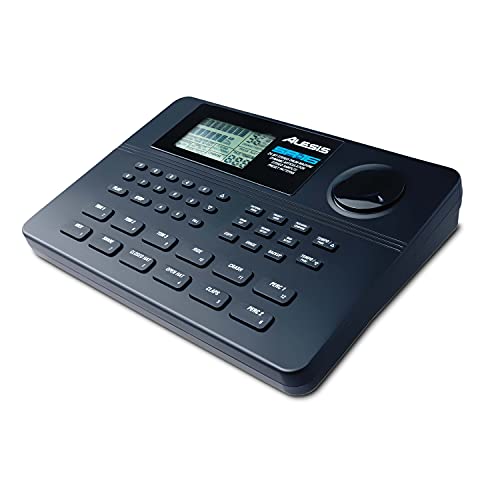
- 233 sounds with 50 user kits
- 12 velocity-sensitive pads with Dynamic Articulation
- MIDI support and step editing
Best For: Songwriters and performers who want a classic standalone drum machine
Moog Polyrhythmic Modular Pick
MOOG Subharmonicon Semi-Modular Analog Polyrhythmic Synthesizer

- Six tonal sources and dual sequencers
- Four rhythm generators for polyrhythms
- Tabletop use or 60HP Eurorack install
Best For: Experimental rhythm and modular patch exploration
Nord Percussion Modeling Pick
Nord Drum 3P Modeling 6-Channel Percussion Synthesizer

- 6 percussion channels with multipad support
- Resonant, subtractive, and FM sound engine
- Per-channel effects plus MIDI CC control
Best For: Performance-oriented synthesized percussion
Moog Compact Semi-Modular Pick
MOOG Mavis Standalone Semi-Modular Analog Synthesizer Kit

- 100% analog Moog sound with wavefolder
- Two oscillators plus ADSR and sample & hold
- Standalone kit with Eurorack integration
Best For: Compact analog patching and Eurorack expansion
Portable Digital Drum Synth

- Six-part DSP synth engine for varied drum sounds.
- Active Step, Slice, and randomize functions add pattern movement.
- Compact build with built-in speaker for portable sessions.
Best For: Portable, experimental drum synthesis and flexible step sequencing.
Analog Beat Performer

- Separate accent per drum for expressive rhythm programming.
- Song mode supports chaining patterns into longer arrangements.
- Metal chassis and analog design suit live use.
Best For: Live beatmakers who want tactile analog drums and easy pattern chaining.
Analog Bass Companion

- Three oscillators create flexible analog bass tones.
- 16-step sequencer and slide function suit groove-based styles.
- Compact, battery-powered build works well in portable setups.
Best For: Adding synced analog bass lines to drum-machine setups.
Analog Percussion Modular – MOOG DFAM Semi-Modular Analog Percussion Synthesizer
If you want a modular drum synthesizer that encourages hands-on sound design, the Moog DFAM is built for immediate experimentation. Its fully analog voice, 24-point patch bay, and 8-step sequencer make it a strong fit for creating rhythmic patterns without needing a complicated setup.
Best For: Musicians who want an analog, semi-modular percussion synth for tactile rhythm creation and Eurorack-friendly expansion.
Pros:
- Fully analog engine with two VCOs, white noise, and the Moog ladder filter
- Semi-modular design works without cables for fast exploration
- Can be used tabletop or installed as a 60HP Eurorack module
- Expandable with other Moog instruments for broader sound design
Cons:
- Focuses on experimental percussion rather than conventional drum-machine workflow
- Best value comes from users who want to patch and explore deeply
The DFAM stands out if your goal is rhythmic synthesis rather than preset-style beats. It is a strong choice for players who want an instrument that sparks new ideas through analog control and modular flexibility.
Hybrid Groove Modular – KORG drumlogue Hybrid Drum Machine
The KORG drumlogue fits the modular drum synthesizer conversation if you want a hybrid drum machine with deep routing and performance control. Its analog, digital, and multi-engine architecture, plus USB-C, audio in, and assignable outputs, gives it a flexible role in modern setups.
Best For: Players who want a hybrid drum machine with hands-on control, multi-engine sound options, and strong studio connectivity.
Pros:
- Hybrid design combines analog, digital, and multi engine sections
- Front-panel knobs and dedicated part volumes support live mixing
- 11 parts and 64-step sequencer with loop and chain functions
- Multiple outputs, USB-C, audio in, and DIN MIDI for broad connectivity
Cons:
- Less of a pure modular synth and more of a hybrid drum machine
- Advanced flexibility may be more than casual beatmakers need
drumlogue is a practical pick when you want modular-style flexibility without giving up drum-machine workflow. It is especially compelling for users who value live control and modern integration.
Semi-Modular Sequencer Rig – Arturia MiniBrute 2S Analog Synthesizer
The Arturia MiniBrute 2S is a strong modular drum synthesizer option when you want sequencer-driven analog sound shaping and patchbay flexibility. With two VCOs, two LFOs, a 48-point CV and gate patchbay, and 64 sequence memories, it is well suited to building evolving rhythmic patterns.
Best For: Beatmakers and synth users who want a semi-modular analog instrument centered on sequencing and patching.
Pros:
- Analog synth with 2 VCOs and 2 LFOs for flexible sound creation
- 48-point CV and gate patchbay expands modular routing options
- 64 sequence memories support pattern storage and recall
- Velocity- and pressure-sensitive pads add expressive control
Cons:
- More of a semi-modular synth and sequencer than a dedicated drum machine
- Requires some synthesis knowledge to get the most from its routing
If you want a performance-oriented synth for percussion-style sequencing and modular patching, the MiniBrute 2S is a versatile choice. It works best for users who value hands-on control over preset drum content.
Classic Drum Machine Workhorse – Alesis SR-16 Standalone Drum Machine
The Alesis SR-16 is not a modular drum synthesizer, but it is a useful benchmark if you want a classic standalone drum machine with straightforward operation. Its built-in sound library, step editing, and MIDI connectivity make it a reliable option for songwriting and live performance.
Best For: Songwriters, performers, and producers who want a proven standalone drum machine with simple programming and broad MIDI support.
Pros:
- Includes 233 professional sounds and 50 user drum kits
- 12 velocity-sensitive pads with Dynamic Articulation
- Step editing, sound stacking, and stereo samples with reverb and ambience
- Complete MIDI support for keyboards, computers, DAWs, and electronic drum kits
Cons:
- Uses a traditional drum-machine approach rather than modular synthesis
- Less focused on experimental sound design than the other products here
The SR-16 remains a solid practical choice if your priority is dependable drum programming over modular exploration. It is best treated as a classic groove tool rather than a synth-based percussion lab.
Moog Polyrhythmic Modular Pick – MOOG Subharmonicon Semi-Modular Analog Polyrhythmic Synthesizer
If you want a modular drum synthesizer-style instrument for experimental rhythm work, the MOOG Subharmonicon is built around polyrhythms, layered tone sources, and hands-on patching. Its six tonal sources, four rhythm generators, and dual four-step sequencers make it a strong fit for users who want percussion-like patterns that go far beyond standard drum sounds.
Best For: Synth players and producers who want evolving polyrhythmic textures, ritualistic rhythms, and modular patching flexibility.
Pros:
- Six tonal sources with two VCOs and two subharmonic generators each for a dense harmonic base
- Four rhythm generators can drive either sequencer for unexpected polyrhythms
- Dual four-step sequencers add hands-on control over pattern generation
- Can be used tabletop or installed as a 60HP Eurorack module
Cons:
- Focused on experimental sound design rather than traditional drum-machine workflow
- Patch-based approach may take more setup than a simpler percussion synth
This is a specialized choice if your modular drum synthesizer search is really about rhythmic synthesis and evolving patterns. It offers a rich, complex sound profile, but it is best suited to players who enjoy exploring unusual timing relationships and semi-modular patching.
Nord Percussion Modeling Pick – Nord Drum 3P Modeling 6-Channel Percussion Synthesizer
The Nord Drum 3P is a practical modular drum synthesizer option for players who want a dedicated percussion engine with flexible sound modeling. Its 6-channel design, integrated multipad, kick pad input, and MIDI support make it a streamlined way to build synthesized drum parts with a simpler workflow.
Best For: Drummers and producers who want a dedicated percussion synthesizer with channel-based control and performance-friendly input options.
Pros:
- 6-channel percussion synthesizer with integrated multipad and kick pad input
- Sound engine covers resonant, subtractive, and FM synthesis
- Per-channel reverb, delay, drive, crush, and EQ effects
- MIDI in/out with full CC control for flexible studio integration
Cons:
- Less modular in the patch-cable sense than a semi-modular synth
- More focused on percussion voices than broad synthesis duties
For buyers who want a drum-focused instrument rather than a general-purpose synth, the Nord Drum 3P is a straightforward and capable pick. It balances easy sound selection with deep channel-level processing, which makes it useful for both performance and production.
Moog Compact Semi-Modular Pick – MOOG Mavis Standalone Semi-Modular Analog Synthesizer Kit
The MOOG Mavis is a compact modular drum synthesizer-adjacent choice for users who want analog patching, wavefolding, and Eurorack integration in a small package. With two oscillators, a ladder filter, envelope control, and a built-in keyboard, it gives you plenty of tools for building percussive and rhythmic sounds while staying very hands-on.
Best For: Buyers who want a compact semi-modular analog synth kit with strong patching potential and Eurorack compatibility.
Pros:
- 100% analog design with Moog oscillator and filter circuits
- Includes two oscillators, ADSR, sample and hold, wavefolding, mixer, and mults
- Built-in keyboard with glide and keyboard scaling for pitch experimentation
- Can be used standalone or removed from its case for Eurorack connectivity
Cons:
- Kit-based instrument may not suit users who want a plug-and-play box
- Not a dedicated drum synth, so percussion use will be patch-driven
Mavis is best viewed as a compact analog building block for people who enjoy shaping their own sounds. If your modular drum synthesizer shortlist includes instruments that can double as a creative source for rhythmic patches, this one offers a lot of depth for its size.
Portable Digital Drum Synth – Korg Volca Drum
Korg Volca Drum Digital Percussion Synthesizer w/ 16-step Sequencer and Active Step
Check Price On AmazonIf you want a modular drum synthesizer-style workflow in a tiny, portable box, the Korg Volca Drum focuses on deep sound design and pattern variation. Its six-part DSP synth engine, waveguide resonator, and sequencing tools make it a practical pick for building unusual percussion lines without taking up much space.
Best For: Producers and performers who want compact, experimental drum synthesis with flexible step programming.
Pros:
- Six-part DSP synth engine for a wide range of drum sounds.
- Waveguide resonator adds extra resonance and character.
- Active Step, Slice, and randomize functions help create varied patterns.
- Built-in speaker and compact design support portable use.
Cons:
- Sound palette is specialized toward digital drum synthesis rather than classic analog drums.
- Auxiliary connector only, so integration may be more limited than larger machines.
- Compact format can feel minimal if you want lots of hands-on control.
Overall, the Volca Drum is a strong fit if your priority is experimenting with rhythmic textures and step-based variation in a small format. It offers enough built-in features to go from simple grooves to more intricate patterns quickly.
Analog Beat Performer – Arturia DrumBrute Impact
The Arturia DrumBrute Impact is a hands-on analog drum machine for players who want punchy rhythm programming in a compact metal chassis. For shoppers comparing a modular drum synthesizer approach to a dedicated performance unit, its separate accent control, Song mode, and sound-shaping options make it easy to build and chain patterns.
Best For: Live beatmakers and studio users who want tactile analog drum programming with pattern chaining.
Pros:
- Separate accent per drum for more expressive patterns.
- Song mode allows chaining patterns together.
- Optional Color sound-shaping works on all instruments except Cowbell.
- Metal body and alloy steel construction feel sturdy.
Cons:
- Less focused on deep synthesis than a more modular-style drum engine.
- Cowbell does not support the Color sound-shaping feature.
- Larger footprint than the ultra-compact Volca-style options.
In practice, the DrumBrute Impact is best when you want a performance-oriented analog rhythm machine rather than a small experimental synth box. Its workflow favors direct programming, quick pattern building, and live arrangement.
Analog Bass Companion – Korg Volca Bass
While it is not a drum unit, the Korg Volca Bass pairs naturally with a modular drum synthesizer setup because it adds focused low-end sequencing and analog movement. Its three oscillators, simple control layout, and 16-step sequencer make it a useful companion for building bass lines that lock tightly with drums.
Best For: Electronic musicians who want a compact analog bass companion for drum machines and groove-based setups.
Pros:
- Three oscillators deliver a variety of analog bass sounds.
- 16-step sequencer supports groove creation and bass-line programming.
- Slide function is well suited to acid and other electronic styles.
- Compact, battery-powered design with built-in speaker improves portability.
Cons:
- It is a bass synthesizer, not a drum machine.
- Simple structure may feel limited if you want deeper sound design depth.
- Best used as part of a larger setup rather than as a standalone rhythm source.
The Volca Bass makes sense if you need an affordable, portable way to add analog bass lines beside your drum hardware. It is straightforward, rhythm-friendly, and built for pairing with other synced devices.
How We Picked These Modular Drum Synthesizer Options
We prioritized instruments that offer meaningful sound-shaping control, practical sequencing, and real value for different studio and live-use needs. Because the category ranges from fully analog percussion tools to hybrid and digital designs, we looked at flexibility, immediacy, and how well each unit supports rhythmic experimentation.
We also considered whether each option works as a true creative centerpiece or as a compact companion in a larger rig. That matters if you are building a Modular Drum Synthesizer setup around external gear, syncing with other instruments, or just wanting a fast way to sketch ideas.
Quick Comparison
Some picks lean into deep patching and experimental synthesis, while others focus on performance-oriented drum programming or broad drum kit coverage. Analog models are often better for punchy, organic textures, while digital and modeling-based units can deliver wider timbres and cleaner recall. Hybrid drum machines sit in the middle, offering a balance of hands-on workflow and reliable song creation.
Key Buying Factors for a Modular Drum Synthesizer
Sound Engine and Voice Architecture
Start with the core engine. A Modular Drum Synthesizer may be semi-modular analog, digital, or hybrid, and each approach changes how much character and control you get. Analog circuits often excel at raw, physical impact, while digital or modeling engines can offer broader sonic range and tighter consistency.
Sequencing and Performance Workflow
Look for sequencing that matches your process. Step sequencers, polyrhythmic tools, active-step features, and performance controls can make a huge difference if you build beats live. If you prefer fast idea generation, an intuitive sequencer matters as much as the sound engine itself.
Patchability and External Integration
For modular-minded users, patch points, MIDI sync, CV/Gate support, and clock integration are essential. The more easily the instrument connects with synths, pedals, and Eurorack gear, the more useful it becomes in a growing setup.
Channel Count and Drum Coverage
Think about whether you want focused percussion voices or broader drum kit capability. Some options are better for kick, snare, and hat duties, while others excel at melodic percussion, abstract textures, or multi-voice rhythm design.
Who Should Buy Which Modular Drum Synthesizer?
If you want aggressive, hands-on analog percussion design, choose a semi-modular or patch-heavy instrument. If you need a reliable all-in-one beatmaker for composition and live sets, a hybrid or classic drum machine may be the better fit. Producers chasing experimental rhythms should favor polyrhythmic or modular-friendly designs, while players who want quick, polished drum programming should lean toward straightforward drum machines with strong onboard sequencing.
In short, the best Modular Drum Synthesizer for you is the one that matches your sound goals, integration needs, and preferred way of building rhythm. Pick for workflow first, then narrow by tone and feature set.