The right stand keeps an instrument accessible, stable, and protected between practice sessions, performances, and recordings. This roundup compares 10 instrument stands for guitars, ukuleles, violins, orchestral instruments, and larger collections.
We focused on practical details such as stability, portability, padding, adjustability, footprint, and instrument compatibility so you can choose a stand that fits both your gear and your space.
Best 10 Instrument Stands Picks for 2026
Best Value

- Three adjustable width settings
- Padded metal A-frame design
- Folds flat for transport and storage
Best For: Standard acoustic and electric guitars
Most Compact
Hercules TravLite Folk Instrument Stand

- Folding portable design
- Rubber foam contact points
- Non-slip rubber pads
Best For: Lightweight folk instruments
Most Versatile
Height-Adjustable Guitar Stand

- Fits standard guitar types and banjos
- Adjustable height with locking knob
- Foldable tripod with padded contact points
Best For: Home practice and temporary setups
Heavy-Duty Pick
Hercules Multi Orchestral Stand

- 20 kg load capacity
- Locking folding yoke
- Adjustable backrest support
Best For: Orchestral instruments needing substantial support
Solid Wood Small-Instrument Stand

- Solid acacia wood frame for added stability
- Adjustable, padded support for ukuleles and violins
- Folds for storage and includes bow-holder storage
Best For: Ukulele and violin players seeking a stable, portable stand
Adjustable Guitar Stand
CG-4 Folding Stand for Guitars

- 20-pound capacity for many electric, classical, and bass guitars
- Height adjusts from 25.6 to 28.4 inches
- Padded, folding design with non-slip feet
Best For: Guitarists needing adjustable height and portable storage
Decorative Wood Instrument Stand

- X-shaped wood frame suits ukuleles and small instruments
- EVA foam pads protect instrument contact points
- Lightweight design folds to about 11 inches
Best For: Ukulele display and portable storage
Best Lightweight Pick
Compact Adjustable Guitar Stand
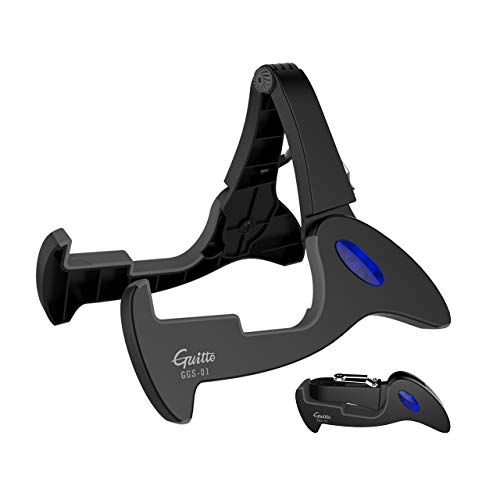
- Folds to a compact, 0.99-lb package
- Adjustable arms fit multiple instrument types
- Padded supports and non-slip feet
Best For: Traveling musicians and single-instrument setups
Best Multi-Instrument Rack

- Holds up to five guitars or basses
- Solid metal frame with 100-lb capacity
- Folds for transport and storage
Best For: Studios, bands, and multi-guitar collections
Best Adjustable Tripod
Reinforced Universal Guitar Stand
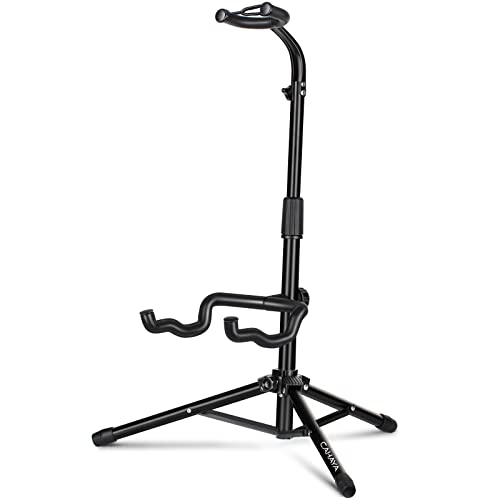
- Adjusts from 30.7 to 37 inches
- Tripod base adds stability with non-slip feet
- Padded arms fit guitars, basses, banjos, and more
Best For: Players seeking adjustable height and broad compatibility
Best Value – Portable Folding Guitar Stand
This A-frame stand is a practical choice for shoppers comparing instrument stands for acoustic or electric guitars. It arrives fully assembled, offers three width settings, and folds flat for storage or transport.
Best For: Guitarists who want a lightweight, adjustable stand for home use, rehearsals, or travel.
Pros:
- Fits most acoustic and electric guitars with three adjustable-width settings.
- Soft foam arms and backrest help protect the instrument.
- Folds flat and includes non-slip rubber feet.
- Metal construction supports up to 10 kg.
Cons:
- Its A-frame, single-level design may not suit unusual instrument shapes.
- It is designed for one instrument at a time.
With no assembly required and a compact folding profile, this stand is an uncomplicated everyday option for standard acoustic and electric guitars.
Most Compact – Hercules TravLite Folk Instrument Stand
The Hercules GS303B is a compact folding option for shoppers seeking instrument stands for folk instruments. Its rubber foam contact points and non-slip pads focus on secure, padded support in a lightweight package.
Best For: Folk-instrument players who prioritize portability and a folding design.
Pros:
- Folding design makes transport and storage convenient.
- Rubber foam contact points provide padded instrument support.
- Non-slip rubber pads help keep the stand in place.
- Lightweight alloy-steel construction weighs 1.9 pounds.
Cons:
- Its listed load capacity is 5 pounds.
- The single-level design is intended for one instrument.
This is a focused, lightweight stand rather than a height-adjustable model, making it a sensible pick when simple folding storage matters most.
Most Versatile – Height-Adjustable Guitar Stand
This foldable tripod stand is a flexible choice among instrument stands for standard acoustic, electric, and bass guitars, as well as banjos. Its adjustable height and padded contact points make it useful for everyday setups on flat surfaces.
Best For: Home practice, temporary setups, and players needing one stand for several standard guitar types.
Pros:
- Compatible with most acoustic, electric, and bass guitars and similar instruments.
- Adjustable height with a friction knob and secure upper yoke.
- Tripod base, anti-slip feet, and rubber padding support stable placement.
- Lightweight and foldable for transport and storage.
Cons:
- Not recommended for oversized or non-standard body shapes.
- Stability depends on a flat surface, proper leg positioning, and tightening.
- Designed for everyday or temporary use rather than heavy-duty studio applications.
The DS-GS002 offers useful adjustability and broad compatibility, but careful setup is important for reliable support and positioning.
Heavy-Duty Pick – Hercules Multi Orchestral Stand
The Hercules DS538B is the high-capacity choice in this group of instrument stands. Its locking folding yoke, adjustable backrest, and 20 kg load capacity are designed to provide substantial support for orchestral instruments.
Best For: Players who need a sturdy stand with adjustable back support and a high load capacity.
Pros:
- Supports up to 20 kg, or 44 pounds.
- Locking pin secures the folding upper yoke.
- Adjustable backrest safely supports the instrument.
- Folds when the locking pin is pressed.
Cons:
- At 4.7 pounds, it is heavier than the compact options listed here.
- Its 15.6-inch height may not suit every playing or storage arrangement.
- The stand is intended for one instrument at a time.
For shoppers prioritizing capacity and locking support over minimal weight, the DS538B is the most robustly specified stand in this selection.
Solid Wood Small-Instrument Stand – Donner Acacia Folding Stand
For shoppers comparing instrument stands for ukuleles, violins, mandolins, banjos, or other small instruments, this Donner model emphasizes stable construction and compact storage. Its solid acacia wood frame, padded contact points, adjustable width, and foldable design make it practical for home display or travel.
Best For: Ukulele and violin players who want a sturdy, protective stand with bow storage.
Pros:
- Solid acacia wood construction provides a heavier, stable base.
- Adjustable width accommodates soprano, concert, and tenor ukuleles plus violins.
- Soft foam arms, a rubber backrest, and non-slip feet help protect instruments.
- Folds quickly and includes a rear hole for violin bow storage.
Cons:
- Its 1.5-pound load capacity limits it to small instruments.
- Hush Guitar users must insert the stand before placing the instrument.
This is a particularly appealing choice when natural wood styling and stability matter more than supporting full-size guitars. The compact folding format also makes it suitable for musicians who move between rooms or venues.
Adjustable Guitar Stand – CG-4 Folding Stand for Guitars
This CG-4 is one of the more versatile instrument stands in the group, with adjustable height and support for many 36–42-inch guitars. Its folding upper and lower cradles, padded arms, and non-slip feet suit home practice areas, studios, shops, and musicians who need portable storage.
Best For: Electric, classical, and bass guitar players who want adjustable positioning and a 20-pound capacity.
Pros:
- Supports electric, classical, and bass guitars with a stated 20-pound load capacity.
- Height adjusts from 25.6 to 28.4 inches for flexible positioning.
- Foam-padded arms, a soft backrest, and non-slip feet help protect and stabilize instruments.
- Upper and lower cradles fold compactly for transport and storage.
Cons:
- It is not compatible with Jazz Bass or Jazz Guitar models.
- The stand is intended for 36–42-inch instruments, so very small or unusually shaped instruments may not fit as intended.
Choose this model if adjustable height and broader guitar compatibility are priorities. Its folding structure is convenient for transport, while the locking top ball is designed to keep the stand head positioned securely.
Decorative Wood Instrument Stand – WOGOD Folding X-Frame
For small-instrument owners seeking instrument stands that also complement a room, this WOGOD X-frame combines a dark wood appearance with a lightweight, foldable design. It is made for ukuleles, mandolins, violins, banjos, and similar instruments, with EVA foam at contact points for added protection.
Best For: Ukulele owners who want a decorative display stand that folds for travel or storage.
Pros:
- Supports several ukulele sizes along with mandolins, violins, banjos, and other small instruments.
- Heavy-duty X-shaped construction provides a sturdy placement frame.
- EVA foam padding at contact points helps guard against scratches and damage.
- Folds to approximately 11 inches and weighs about 0.23 kg for portability.
Cons:
- The listed 300-gram load capacity limits it to lightweight instruments.
- It is designed for small instruments rather than full-size guitars.
This stand makes the most sense for display-focused use in a living room, studio, or recording space. Its low weight and quick assembly are useful for travel, though the modest load rating should be checked against the instrument before purchase.
Best Lightweight Pick – Compact Adjustable Guitar Stand
For players who need portable instrument stands for practice, travel, or quick setup, this foldable A-frame model keeps things simple. Its adjustable arms accommodate acoustic, electric, bass guitars, and ukuleles, while padded contact points help protect the instrument’s finish.
Best For: Traveling musicians and players who need a lightweight stand for one instrument.
Pros:
- Folds down to a compact size and weighs about 0.99 lb.
- Adjustable two-level arms fit several guitar and ukulele types.
- Soft padding, non-slip feet, and a secure lock system help protect and stabilize the instrument.
Cons:
- Holds one instrument only.
- The plastic construction may feel less substantial than an all-metal rack.
This is a practical choice when portability matters more than maximum capacity. It requires no assembly and offers useful adjustability for everyday practice or travel.
Best Multi-Instrument Rack – Folding 5-Guitar Stand
Among instrument stands designed for larger collections, this folding rack is built to hold up to five guitars or basses. Its solid metal structure, rubberized base, and portable folding design make it suitable for home studios, displays, rehearsals, and stage use.
Best For: Guitarists, studios, and bands storing several acoustic, electric, classical, or bass instruments together.
Pros:
- Stores up to five guitars or basses in one rack.
- Solid metal construction with a stated 100-pound load capacity.
- Folds for easier transport and storage, with rubber on the base to help protect floors.
- Minimalist black design works for studio or display use.
Cons:
- At 4 pounds and roughly 34 inches wide, it is less compact than a single-guitar stand.
- Hardware is included, so assembly is required.
If you regularly keep multiple instruments ready to play, this rack offers a more organized alternative to separate stands. Its folding format adds flexibility for gigs while its wider footprint suits dedicated storage areas.
Best Adjustable Tripod – Reinforced Universal Guitar Stand
For musicians comparing adjustable instrument stands, this CAHAYA tripod provides a broad height range and a reinforced base. Its thick padded arms support instruments from acoustic and electric guitars to basses, banjos, mandolins, and V-shaped guitars, while the stand folds flat for storage.
Best For: Players who want height adjustment, broad instrument compatibility, and a stable floor stand for practice or performance.
Pros:
- Height adjusts from 30.7 to 37 inches.
- Tripod legs, three support bars, and non-slip feet promote a steady footing.
- Thick sponge padding and uneven support arms help protect and hold different instrument shapes.
- Folds flat for transportation and storage.
Cons:
- Weighs about 1,000 g, making it heavier than the compact A-frame option.
- It is designed for one instrument at a time.
This stand is a strong fit when stability and adjustability take priority. The added neck fixing screw and reinforced cradle connection are useful details for musicians who move between instruments or playing environments.
How We Picked These Instrument Stands
We selected stands across several common use cases rather than treating every model as interchangeable. The lineup includes compact A-frame and tripod designs for individual guitars, small wooden stands for ukuleles and similar instruments, specialized orchestral support, and multi-guitar racks for collections or rehearsal spaces.
Our evaluation focuses on the features that matter in everyday use: dependable support, protective contact points, useful height or width adjustment, folding convenience, portability, footprint, and the types of instruments each stand is designed to hold. Product descriptions and specifications should still be checked before purchase, especially when using an unusually shaped, heavy, or vintage instrument.
Quick Comparison
| Best For | Stand Type | What to Look For |
|---|---|---|
| One acoustic, electric, or bass guitar | A-frame or tripod | Padded supports, stable feet, suitable width |
| Travel and quick setup | Folding stand | Low weight, compact folded size, secure locking points |
| Ukulele, mandolin, or violin | Small wooden or compact floor stand | Correct instrument dimensions and padded contact surfaces |
| Multiple guitars | Multi-instrument rack | Capacity, spacing, rack stability, and storage footprint |
| Orchestral instruments | Specialized multi-instrument stand | Instrument-specific supports and load distribution |
Key Buying Factors for Instrument Stands
Compatibility and Fit
Start with the instrument, not the stand’s appearance. Acoustic, electric, classical, and bass guitars can have different body widths and neck profiles. Small instruments such as ukuleles, mandolins, and violins also need appropriately sized supports. Confirm the listed compatibility and measure your instrument if the fit is uncertain.
Stability and Protection
Look for a broad, balanced base, nonslip feet, and supports that keep the instrument upright without excessive pressure. Foam or rubber padding helps prevent scratches, but inspect the material periodically for wear or debris. A stand should sit on a level surface and remain away from high-traffic areas whenever possible.
Portability and Storage
Folding models are useful for lessons, gigs, rehearsals, and small rooms. Check both the folded dimensions and the opening mechanism; a compact stand is only convenient if it sets up securely and does not collapse accidentally. For home studios, footprint and ease of access may matter more than minimum weight.
Capacity and Adjustability
If you own several instruments, a multi-guitar rack can save floor space compared with separate stands, but verify its total capacity and spacing. Adjustable supports are helpful when sharing a stand between instruments, provided the adjustment points lock firmly and do not contact delicate finishes.
Who Should Buy Which Instrument Stands?
Choose an A-frame or tripod stand if you need an affordable, straightforward solution for one guitar. These designs are generally easy to fold and move, making them practical for bedrooms, practice rooms, and performances.
Choose a compact wooden stand for a ukulele, mandolin, violin, or another smaller instrument, but confirm the dimensions before ordering. Choose a specialized orchestral stand when your instrument requires wider or more tailored support than a guitar stand provides.
Choose a multi-instrument rack if you regularly keep several guitars ready to play and have a dedicated storage area. It can reduce clutter, though a single portable stand is usually better for musicians who travel frequently.