Choosing the right worship keyboard means balancing expressive playability, dependable sounds, stage-friendly controls, and a budget that fits your church. The best synthesizer may be an 88-key workstation, a compact performance board, or a flexible sound-design instrument.
This roundup compares 10 options across Yamaha, Roland, Novation, and Behringer to help worship teams find the right combination of piano feel, pads, leads, layers, sequencing, and live control.
Best 10 Synthesizers for Church Musicians Picks for 2026
Best Weighted-Key Workstation

- 88-note GHS weighted action
- Motif engine for layered sounds
- USB audio/MIDI connectivity
Best For: Church musicians seeking piano feel and workstation versatility
Best Compact Vocal Synth

- 37 mini keys and 18-voice polyphony
- Built-in microphone and VocalTune
- Animate buttons and arpeggiator
Best For: Portable worship setups needing synth textures and vocal effects
Best Professional Piano-Action Synth
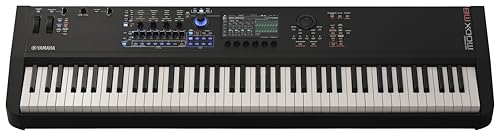
- 88-key graded-hammer action
- Three sound engines
- Faders, Super Knob, and touchscreen
Best For: Advanced church musicians needing expressive control and broad sounds
Best Complete Live Bundle

- 88 keys with ZEN-Core sounds
- USB-C and portable operation
- Includes stand, bench, pedal, and cover
Best For: Church musicians wanting a ready-to-play live keyboard package
Flagship Expressive Choice

- 400-note polyphony across three engines
- Polyphonic aftertouch for expressive control
- 88-key GEX action and seamless sound switching
Best For: Expressive church keyboardists needing a full-size flagship workstation
Hands-On Analog Value

- Dual 3340 analog oscillators
- Pure analog, semi-modular signal path
- Compact source for custom textures
Best For: Church musicians adding analog basses, leads, and experimental sounds
Versatile Performance Workstation

- Over 7,000 onboard sounds
- Multiple advanced sound engines and expansions
- 61 keys, sampling, pads, and DAW integration
Best For: Church keyboardists needing a broad, all-purpose live performance platform
Compact USB Workhorse

- 128-note polyphony for layered live playing
- Plug-and-play USB audio and MIDI
- Lightweight 49-key design
Best For: Worship teams needing portable performance and computer connectivity
Expressive Stage Flagship

- 76 semi-weighted keys for extended range
- Three engines for synth and instrument sounds
- Faders, Super Knob, and touchscreen control
Best For: Professional worship keyboardists needing range and deep control
Balanced Worship Performance

- 61 semi-weighted keys in a manageable format
- Three engines cover synths and realistic instruments
- Expressive faders and Super Knob controls
Best For: Worship players wanting professional flexibility in a 61-key setup
Best Weighted-Key Workstation – Yamaha MX88
For church musicians who want piano-like playability alongside broad workstation sounds, the Yamaha MX88 combines an 88-note GHS weighted action with the Motif sound engine. Its class-compliant USB audio/MIDI connection also makes it practical for straightforward computer and DAW integration.
Best For: Worship players who prioritize realistic piano feel, layered sounds, and dependable live performance capability.
Pros:
- 88-note GHS weighted action is heavier in the low keys and lighter in the high keys, like an acoustic piano.
- Motif sound engine supports layering, zoning, switching, and controlling up to eight elements in one voice.
- Class-compliant USB audio/MIDI offers plug-and-play computer connectivity without driver installation.
- 128-note polyphony helps reduce note dropouts during live playing or full 16-track sequences.
Cons:
- At 30.6 pounds, it is less convenient to move than a compact synthesizer.
- The three-digit LED and 20 x 2-line display may feel limited for users who prefer larger visual interfaces.
The MX88 is a strong fit when church music requires authentic piano response without giving up layered sounds, effects, and sequencing flexibility. Its weighted keybed and generous polyphony favor players who perform substantial keyboard parts.
Best Compact Vocal Synth – Novation MiniNova
The Novation MiniNova is a compact option for church musicians who need expressive synth textures, quick sound selection, and vocal processing in a small package. Its 37 mini keys, built-in microphone, Animate buttons, and arpeggiator make it suited to hands-on performance parts.
Best For: Worship players adding pads, leads, basses, vocal effects, and portable synth parts to a live setup.
Pros:
- Offers up to 18 voices, powerful effects, 256 presets, and space for 128 user sounds.
- Built-in gooseneck microphone and VocalTune process vocals through the keyboard and effects engine.
- Eight backlit Animate buttons and a real-time arpeggiator support interactive performance.
- Weighs 6 pounds and includes USB, MIDI, and a 12V power supply.
Cons:
- Its 37 mini keys are less suitable for full-range piano playing than an 88-key instrument.
- Analog modeling and performance controls may be more specialized than needed for players seeking primarily acoustic keyboard sounds.
The MiniNova makes sense as a focused sound-design or secondary keyboard choice. It is especially appealing when portability, vocal processing, and immediate synth manipulation matter more than weighted-key piano technique.
Best Professional Piano-Action Synth – Yamaha MODX M8
The Yamaha MODX M8 is designed for church musicians who want an expressive 88-key instrument with advanced sound creation and stage control. Its graded-hammer action, three sound engines, color touchscreen, physical faders, and Super Knob support detailed performance work in worship, studio, and live settings.
Best For: Professional or advanced players who need realistic piano response, broad sound coverage, and hands-on control.
Pros:
- 88-key graded-hammer action provides heavier low-key and lighter high-key response.
- Three engines cover classic analog-style synths, modern FM synthesis, and realistic instruments.
- Eight physical faders, Super Knob, color touchscreen, and dedicated display knobs support fast editing.
- Expanded Softsynth Plugin replicates MODX M sounds in a compatible DAW.
Cons:
- At 40.5 pounds, it is a substantial keyboard for frequent transport.
- Its professional feature set may require more setup and learning than a simpler stage keyboard.
The MODX M8 is the most performance-focused choice here for players who want one keyboard to cover acoustic instruments, modern synthesis, and detailed live expression. Its graded action favors pianists, while the controls and software integration expand its usefulness beyond the sanctuary.
Best Complete Live Bundle – Roland JUNO-D8 Bundle
The Roland JUNO-D8 bundle gives church musicians an 88-key synth plus practical accessories for playing and setup. With pianos, organs, synths, the ZEN-Core engine, hands-on controls, USB-C support, an adjustable stand, bench, sustain pedal, and cover, it is built around convenient live use.
Best For: Intermediate and advanced worship players who want a ready-to-use keyboard package for rehearsals, services, and performances.
Pros:
- Provides instant access to pianos, organs, synths, and more than 3,800 ready-to-play sounds through the ZEN-Core engine.
- Knobs, sliders, and Roland pitch bend/mod lever enable quick live sound adjustments.
- USB-C supports audio/MIDI connection and mobile battery operation for portable use.
- Bundle includes an adjustable stand, bench, sustain pedal, cover, instructional video, and polishing cloth.
Cons:
- The complete bundle is larger and less streamlined to transport than a keyboard-only purchase.
- Its 32-pound weight and nearly 55-inch width still require suitable transport and storage space.
The JUNO-D8 bundle is a practical choice when accessories are as important as the keyboard itself. It combines full-size weighted keys and live-oriented sounds with a stand, seating, pedal, and protection, reducing the need to assemble a separate worship setup.
Flagship Expressive Choice – Yamaha Montage M8X
For church musicians seeking synthesizers for church musicians, the Yamaha Montage M8X is a feature-rich flagship option built for expressive live performance. Its 88-key GEX action, polyphonic aftertouch, three sound engines, and broad polyphony support layered arrangements, detailed pads, and dynamic lead parts.
Best For: Church keyboardists who want a full-size, highly expressive instrument for sophisticated worship arrangements and performance control.
Pros:
- 400-note total polyphony across three engines supports complex arrangements.
- Polyphonic aftertouch allows individual held notes to be modulated expressively.
- Seamless Sound Switching helps transitions between sounds feel smooth.
- Dedicated Keyboard, Part, and Scene controls add hands-on performance flexibility.
Cons:
- At 61.9 pounds, it is a substantial instrument for transport.
- Its flagship feature set may be more than a simple church setup requires.
The Montage M8X is a strong choice when expressive control, extensive sound design, and a full 88-key layout matter more than portability. Its DAW softsynth integration also adds value for musicians who work both onstage and in the studio.
Hands-On Analog Value – Behringer Neutron
The Behringer Neutron offers a compact, affordable-minded approach to synthesizers for church musicians who want analog character and hands-on sound shaping. Its dual 3340 oscillators, pure analog signal path, and semi-modular design can add distinctive basses, leads, and atmospheric textures to a worship rig.
Best For: Church musicians who want a compact analog sound source for creative textures, specialty parts, and experimental programming.
Pros:
- Dual 3340 analog oscillators provide a fat, classic-style sound foundation.
- Semi-modular architecture includes default routings for immediate use without patching.
- Waveform blending across five shapes supports varied tone creation.
- Individual pulse-width and tone-modulation controls expand sound-shaping options.
Cons:
- Its paraphonic design is less suited to conventional full chord playing.
- It is a focused analog synthesizer rather than an all-in-one keyboard workstation.
- The semi-modular features may require extra sound-design learning.
The Neutron makes the most sense as a complementary instrument for a church setup that already has core keyboard sounds covered. It can bring analog weight and experimentation to selected moments without taking up much physical space.
Versatile Performance Workstation – Roland FANTOM 6 EX
The Roland FANTOM 6 EX is a versatile choice for church musicians who need broad sounds, composition tools, and performance control in one 61-key instrument. Its multiple sound engines, more than 7,000 onboard sounds, sampling capabilities, pads, and DAW integration suit layered worship sets and changing song requirements.
Best For: Church keyboardists who need a flexible 61-key performance platform with extensive sounds, effects, sampling, and modern workflow tools.
Pros:
- Multiple engines, including ZEN-Core, V-Piano, SuperNATURAL, and Virtual ToneWheel, cover varied parts.
- Over 7,000 onboard sounds provide a broad palette for worship arrangements.
- Included classic ACB and model expansions add modeled vintage sounds.
- Sampling, RGB pads, and extensive effects support creative live performance.
Cons:
- The 61 synth-action keys may not suit players who prefer a full 88-key layout.
- Its extensive features and sound library can require time to organize for live use.
- It may be more capability than a small church band needs.
The FANTOM 6 EX is particularly compelling for churches that want one keyboard to cover modern synth parts, acoustic-style sounds, modeled instruments, samples, and studio-connected workflows. Its 61-key format balances range with a more manageable footprint than an 88-key flagship.
Compact USB Workhorse – Yamaha MX49BK
For church musicians seeking synthesizers for church musicians, the Yamaha MX49BK is a compact, performance-ready option with broad instrument sounds, hands-on voice control, and straightforward USB connectivity for stage or studio setups.
Best For: Worship teams that need a lightweight 49-key synthesizer with dependable live polyphony and simple computer integration.
Pros:
- 128-note polyphony helps support layered live playing and full 16-track sequences without dropouts.
- Class-compliant USB audio and MIDI provide plug-and-play connectivity without driver installation.
- Motif Sound Engine supports layering, zoning, switching, cycling, and randomizing up to eight elements in one voice.
- Virtual Circuit Modeling recreates vintage effects and signal processors.
Cons:
- Its 49-key layout offers less range than the 61- and 76-key alternatives.
- The supplied notes do not identify a built-in display or advanced touchscreen workflow.
At 12.5 pounds, the MX49BK is especially practical for musicians who transport their own gear. Its USB recording and playback support also makes it useful when a worship setup needs both keyboard sounds and computer-based audio or MIDI control.
Expressive Stage Flagship – Yamaha MODX M7
The Yamaha MODX M7 is a professional 76-key choice for church musicians who want expansive sounds, expressive real-time control, and a more substantial keyboard range for worship performance and studio work.
Best For: Experienced keyboardists who need wide melodic and accompaniment range, deep sound variety, and hands-on control on stage.
Pros:
- Three sound engines cover classic analog-style synths, modern FM synthesis, and realistic instruments.
- Eight physical faders and the Super Knob provide immediate expressive control during performances.
- Color touchscreen, dedicated display knobs, and upgraded navigation support faster editing.
- ESP integration replicates the MODX M7 in a compatible DAW for creating and mixing sounds.
Cons:
- The 76-key format is larger than more compact synthesizer options.
- Its professional feature set may require more setup and learning than a simpler worship keyboard.
With semi-weighted keys, advanced sequencing, digital effects, and a lightweight design, the MODX M7 balances stage capability with studio flexibility. It is a strong fit when a church musician values both range and detailed sound shaping.
Balanced Worship Performance – Yamaha MODX M6
The Yamaha MODX M6 offers church musicians a versatile 61-key platform for synthesizer textures, realistic instruments, and expressive live control without moving up to the larger 76-key format.
Best For: Worship players who want professional sound design and stage controls in a more manageable 61-key instrument.
Pros:
- Three powerful engines provide analog-style, FM, and realistic instrument sounds.
- Eight physical faders and the Super Knob enable hands-on changes during worship sets.
- Color touchscreen, six dedicated display knobs, and updated navigation streamline operation.
- ESP support extends the MODX M6 workflow into a compatible DAW.
Cons:
- Its 61 keys provide less range than the MODX M7’s 76-key design.
- The professional programmable feature set may be more than beginners need.
The MODX M6 is a practical middle ground for church stages: it retains the MODX M series’ expressive controls and broad sound engines while using a more compact 61-key layout. Its 22.7-pound weight also supports relatively manageable transport.
How We Picked the Best Synthesizers for Church Musicians
We evaluated these keyboards by focusing on the demands of worship performance: realistic piano response, usable pads and atmospheric textures, fast sound selection, dependable construction, and connectivity for amplifiers, mixers, pedals, and computers. We also considered keyboard size, action type, portability, multitimbral performance, and whether each instrument is better suited to a main keyboard role, a second-tier setup, or studio and sound-design work.
Because churches vary widely in size and musical style, this list includes weighted 88-key instruments, lighter 61- and 76-key boards, compact synthesizers, and flagship workstations. Product bundles may also add practical accessories, but verify the included items and regional specifications before purchasing.
Quick Comparison
- Best for weighted piano feel: Yamaha MX88 and Yamaha’s 88-key graded-hammer models.
- Best for flagship worship production: Yamaha Montage M8X and Roland FANTOM 6 EX.
- Best for compact live setups: Yamaha MX49BK and the 61-key Yamaha model.
- Best for expressive analog-style sounds: Novation MiniNova and Behringer Neutron.
- Best for an all-in-one bundle: The Roland JUNO-D8 package with stand, bench, sustain pedal, and accessories.
Key Buying Factors for Synthesizers for Church Musicians
Key Action and Range
Weighted 88-key actions are valuable when the keyboardist regularly plays piano-led worship, while synth-action keys are easier to play quickly and transport. A 61-key model often provides the best balance for pads, leads, splits, and limited stage space. Choose 76 keys when you want additional range without the full size and weight of an 88-key board.
Sounds and Layering
Look for convincing acoustic pianos, electric pianos, organs, strings, pads, and ambient textures. Layering and split functions are especially useful when one player needs to cover piano, bass, pad, or lead parts. Workstations offer deeper sequencing and arrangement tools; simpler performance synthesizers may be faster to operate during a service.
Live Control and Connectivity
Dedicated knobs, sliders, assignable controls, quick preset access, sustain-pedal support, and dependable audio outputs can make a major difference on stage. USB connectivity is useful for recording, software instruments, and managing sounds. Check whether the instrument supports the number of outputs and external pedals your setup requires.
Portability and Support
Measure your stage, storage, and vehicle space before choosing a large workstation. Also consider included warranties, software, editor support, and the availability of replacement accessories. A lighter keyboard that volunteers can safely transport may be more practical than a heavier model with more features.
Who Should Buy Which Synthesizers for Church Musicians?
Choose an 88-key Yamaha if realistic piano response is your highest priority. Choose the Montage M8X or FANTOM 6 EX if your team needs deep sound creation, sophisticated layering, and a central production workstation. Choose a 61- or 76-key Yamaha for a flexible church keyboard that is easier to move. Choose the MX49 when portability and low weight matter most. Choose the MiniNova or Neutron for distinctive synth textures, experimentation, and a complementary second keyboard. Finally, choose the JUNO-D8 bundle if the included accessories simplify your first complete stage setup.