Moving beyond a beginner instrument is an exciting step, but the right choice depends on your technique, repertoire, budget, and comfort with features such as open holes or a B foot joint.
We selected 10 options spanning conventional student flutes, alternative designs, practice resources, and intermediate sheet music to help advancing players build a more useful setup.
Best 10 Flutes for Intermediate Players Picks for 2026
Reliable Student Upgrade
Yamaha YFL-222 Intermediate Flute
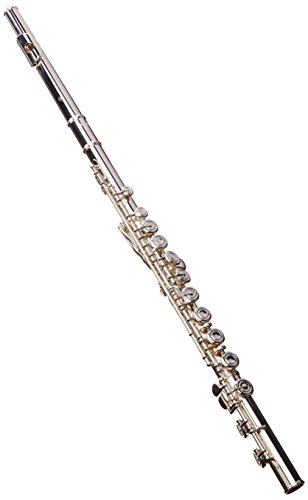
- Offset G key system
- Silver-plated keys and nickel-silver body
- Case, cleaning supplies, and two-year warranty included
Best For: Students seeking a dependable Yamaha flute with a warm sound
Budget-Friendly Starter

- 16-key closed-hole design
- Durable cupronickel body
- Includes case and essential cleaning accessories
Best For: Newer players wanting an affordable, ready-to-play package
Warm Wood Alternative
Stellar F-Sharp Native American Flute

- Western red cedar construction
- Warm, resonant, full-bodied voice
- Instruction book and case included
Best For: Intermediate players wanting a handmade wooden F-sharp flute
Feature-Rich Step-Up
Glory 17-Key Open-Hole C Flute

- 17-key open-hole C configuration
- B foot joint and offset G
- Silver-plated cupronickel body and keys
Best For: Developing players ready for an open-hole flute setup
Technique Builder
Trevor Wye Practice Book Omnibus

- Combines Books 1–6 in one volume
- Covers tone, breath, articulation, and intonation
- Updated diagrams and clearer notation
Best For: Structured technical practice and long-term flute development
Repertoire Expander
50+ Intermediate Classics for Flute

- Includes 50+ recognizable classical melodies
- Progresses from easier to more challenging pieces
- Uses accessible keys and supports sight-reading
Best For: Classical repertoire, recitals, and progressive sight-reading practice
Ensemble Pick
Intermediate Classic Duets for Two Flutes

- Features 22 classical and traditional duets
- Covers low C through third-octave G
- Encourages listening as melodies alternate between parts
Best For: Lessons, rehearsals, and playing with another intermediate flutist
Classical Repertoire Pick

- 13 classical selections for flute and piano
- Online accompaniment tracks included
- Useful for lessons, recitals, and contests
Best For: Intermediate flutists building a classical recital or study library
Duet Fun Pick
Shanties and Sea Songs for Two Flutes

- 26 traditional melodies arranged as duets
- Written for approximately Grades 4–6+
- Melody is shared between both players
Best For: Intermediate flute partners, teachers, and themed ensemble practice
Pop Songbook Pick

- 101 solo flute arrangements in 160 pages
- Familiar pop hits and ballads
- Useful for lessons, practice, and casual performance
Best For: Intermediate students motivated by contemporary songs and familiar melodies
Reliable Student Upgrade – Yamaha YFL-222 Intermediate Flute
For players comparing flutes for intermediate players, the Yamaha YFL-222 offers a familiar student-oriented setup with an offset G key system, silver-plated keys, and a nickel-silver body. It includes a case and cleaning supplies, making it a practical choice for lessons, practice, and concert use.
Best For: Students ready for a dependable Yamaha flute with a warm, rich sound profile and included essentials.
Pros:
- Offset G key system supports a comfortable student-oriented setup.
- Silver-plated keys and a nickel-silver body provide a polished, durable design.
- Includes a flute case, cleaning supplies, and a listed two-year warranty.
Cons:
- The supplied specifications list stainless steel as the material type, which may require clarification against the nickel-silver body description.
- Its student-focused configuration may offer fewer advanced features than a more specialized professional model.
The YFL-222 is a sensible option when reliability, included accessories, and a warm sound matter more than highly specialized features.
Budget-Friendly Starter – Glory Closed-Hole C Flute
Glory Closed Hole C Flute With Case, Tuning Rod,Joint Grease and Cloth, Gloves, Nickel Silver
Check Price On AmazonAmong flutes for intermediate players, the Glory Closed Hole C Flute is a straightforward, cost-conscious option with a 16-key closed-hole design. Its outfit includes a hard-shell case, tuning rod, cork grease, cleaning cloth, and gloves, so players have the basic supplies needed to begin or continue practicing.
Best For: Beginners and developing players who want an accessible closed-hole flute package at a budget-conscious price.
Pros:
- Closed-hole design is easier to cover than an open-hole configuration.
- Genuine cupronickel body is described as durable and tarnish-resistant.
- Includes a case, tuning rod, cork grease, cleaning cloth, and gloves.
Cons:
- The 16-key configuration is less feature-rich than the 17-key open-hole models in this roundup.
- The supplied listing uses both professional and beginner-oriented descriptions, so buyers should confirm the intended level.
This Glory model makes the most sense when easy key coverage and a complete accessory bundle are priorities.
Warm Wood Alternative – Stellar F-Sharp Native American Flute
Players exploring flutes for intermediate players beyond standard concert models may prefer the Stellar Basic F# Native American Style Flute. Hand made from locally sourced Pacific Northwest western red cedar, it is designed for a warm, resonant voice and includes an instruction book and case.
Best For: Intermediate players seeking an earthy wooden flute with a full-bodied tone and a distinctive F-sharp format.
Pros:
- Western red cedar is described as warm and resonant.
- Deep, full voice with concert-quality 440 Hz tuning.
- Includes an instruction book and case, with support from a small family-owned business.
Cons:
- It is a Native American style F-sharp flute rather than a conventional C concert flute.
- The listing notes that a bag is not included.
The Stellar is a specialized choice for players who value handmade cedar construction, a mellow voice, and a different playing tradition.
Feature-Rich Step-Up – Glory 17-Key Open-Hole C Flute
For players comparing flutes for intermediate players, the Glory GFL-05-SLA adds a 17-key configuration, open-hole design, offset G, and B foot joint. Its silver-plated cupronickel body and keys come with a case, cleaning rod, joint grease, cloth, and gloves.
Best For: Developing players ready to work with an open-hole 17-key C flute and B foot joint.
Pros:
- 17-key open-hole design provides a more advanced configuration than a basic closed-hole model.
- Includes an offset G and B foot joint.
- Silver-plated cupronickel construction and leather pads are described as durable and airtight.
- Accessory package includes a case and several maintenance items.
Cons:
- Open holes can demand more precise finger coverage than closed holes.
- The supplied notes identify the color as 17 Open Hole, which is less specific than a standard finish description.
This Glory is the more feature-oriented choice in the group for players who want to practice an open-hole layout and use a B foot joint.
Technique Builder – Trevor Wye Practice Book Omnibus
For flutes for intermediate players, the Trevor Wye Practice Book for the Flute: Omnibus Edition offers a structured way to strengthen core technique. Combining Books 1–6, it covers tone, breathing, articulation, intonation, finger technique, and phrasing in one substantial reference.
Best For: Intermediate players who want a comprehensive practice reference for lessons, independent study, auditions, or ongoing technical development.
Pros:
- Combines six practice-book volumes in one edition.
- Covers tone, breath control, articulation, intonation, and finger technique.
- Includes updated diagrams, clearer notation, and improved page design.
- Useful for both individual practice and teaching.
Cons:
- Its 238-page format may feel extensive for players seeking a short, focused workbook.
- The collection is technique-centered rather than a repertoire book.
This is a strong choice when your priority is building a dependable practice routine and refining fundamentals. Its broad scope makes it better suited to committed players than to someone looking only for occasional exercises.
Repertoire Expander – 50+ Intermediate Classics for Flute
Among flutes for intermediate players, this collection is a practical way to expand repertoire while practicing recognizable melodies. More than 50 classical arrangements are organized from easier to more challenging, with accessible keys and parts ranging from low C to third-octave A.
Best For: Intermediate to advanced players seeking sight-reading material, recital selections, or enjoyable classical tunes in progressive difficulty.
Pros:
- Includes more than 50 familiar works by major composers.
- Arrangements progress from easier pieces to more demanding selections.
- Uses easy keys and offers both short tunes and longer arrangements.
- Supports sight-reading practice, recitals, and casual playing.
Cons:
- It assumes a solid knowledge of flute fingerings and music reading.
- Some pieces extend to the third-octave A, which may challenge developing players.
The progressive ordering makes this a flexible repertoire book: players can start with comfortable selections and work upward. Choose it over a technique manual if playing recognizable music is your main motivation for practicing.
Ensemble Pick – Intermediate Classic Duets for Two Flutes
For flutes for intermediate players who enjoy playing with others, Intermediate Classic Duets for Two Flutes provides 22 classical and traditional arrangements. The parts are written for players of a similar intermediate standard, with melodies moving between parts to encourage listening and musical interaction.
Best For: Two intermediate flutists practicing together in lessons, rehearsals, at home, or for informal performances.
Pros:
- Offers 22 classical and traditional melodies.
- Parts cover low C to third-octave G.
- Includes slow and fast pieces in mostly easy keys.
- Melody sharing develops ensemble listening and coordination.
Cons:
- Some selections are described as quite tricky for Grade 4+ players.
- It requires a second flutist of a comparable playing level.
- At 35 pages, it is more limited in scope than a large solo collection.
This is an engaging choice when collaboration is part of your practice plan. Its mix of familiar excerpts, traditional tunes, and varied difficulty gives partners material to play immediately and pieces to develop over time.
Classical Repertoire Pick – Intermediate Flute Collection
For players seeking substantial flutes for intermediate players repertoire, The Flute Collection – Intermediate Level offers classical selections for flute with piano accompaniment. Its varied programming suits lessons, recitals, contests, and private study.
Best For: Intermediate flutists building a classical recital or study library.
Pros:
- Includes 13 selections spanning composers such as Bach, Handel, Mozart, Fauré, and Barber.
- Provides online piano accompaniment tracks through an included access code.
- Supports work on phrasing, articulation, rhythmic accuracy, and interpretation.
Cons:
- Focused on classical solo literature rather than popular or contemporary songs.
- Requires access to a piano accompanist or online tracks for the fullest experience.
With 68 pages of carefully selected repertoire, this is a practical choice for advancing students who want achievable works with meaningful performance potential.
Duet Fun Pick – Shanties and Sea Songs for Two Flutes
For two players comparing flutes for intermediate players, this duet collection adds variety through 26 traditional sea songs. The arrangements are aimed at approximately Grades 4–6+ and are designed for shared melody playing.
Best For: Intermediate flute partners, teachers, and ensemble practice with a playful theme.
Pros:
- Offers 26 traditional melodies arranged for two intermediate flutes.
- Organizes the music as a themed voyage through five sections.
- Shares the melody between players so both parts receive tune-playing opportunities.
- Includes first-verse and chorus lyrics for added context and engagement.
Cons:
- Requires two flute players rather than serving as a solo collection.
- The nautical theme may not appeal to players seeking standard classical repertoire.
This is an engaging option for lessons, informal performances, or ensemble practice when players want accessible arrangements with a strong sense of occasion.
Pop Songbook Pick – 101 Hit Songs for Flute
Players looking for motivating flutes for intermediate players materials may prefer a familiar-song collection. 101 Hit Songs for Flute presents accessible solo arrangements spanning modern pop and recognizable ballads for practice, lessons, and casual performance.
Best For: Intermediate students who stay motivated by contemporary songs and familiar melodies.
Pros:
- Provides 101 solo flute arrangements across 160 pages.
- Includes recognizable songs such as “Clocks,” “Firework,” “Roar,” and “Uptown Funk.”
- Supports practice with clear notation and accessible phrasing.
- Can serve lessons, independent study, band practice, or casual performances.
Cons:
- The arrangements are designed for beginners and intermediate players, so advanced players may want more challenging versions.
- Focuses on solo pop repertoire rather than accompanied classical works.
Its broad song list makes this a flexible, approachable choice for players who want to develop reading, tone, rhythm, and phrasing through music they already recognize.
How We Picked These Flutes for Intermediate Players
This roundup includes both playable flute instruments and carefully chosen learning resources, because progressing musicians often need more than a new body and keywork. We considered construction, included accessories, design features, repertoire level, practice value, and suitability for players who have moved beyond basic beginner material.
Instrument listings were assessed for practical details such as closed- or open-hole layouts, C or B foot joints, offset G keys, plating, cases, and cleaning accessories. Books were selected for technique development, solo performance, recognizable repertoire, and ensemble practice.
Quick Comparison
| Category | Best suited to | What to look for |
|---|---|---|
| Standard student flute | Players developing consistent fundamentals | Reliable keywork, comfortable ergonomics, and service support |
| Open-hole or B-foot flute | More advanced intermediate players | Hand position, finger control, and a clear reason to upgrade |
| Native American-style flute | Players seeking an alternative musical voice | Tuning, fingering system, materials, and included learning support |
| Technique and repertoire books | Any player needing structured practice | Appropriate difficulty, useful exercises, and playable arrangements |
Key Buying Factors for Flutes for Intermediate Players
Choose the Right Key and Hole Configuration
A conventional C flute is the most versatile choice for lessons, bands, orchestras, and standard sheet music. Closed-hole models are usually simpler to control, while open-hole instruments can support more advanced technique but may require plugs, adjustment, and a period of adaptation.
Consider the Foot Joint and Ergonomics
A B foot joint extends the instrument’s low range, but it can add weight and change balance. Offset G keys may feel more comfortable for some hands. If possible, prioritize a design that supports relaxed fingers and stable posture over extra features alone.
Check Setup, Accessories, and Service
Cases, cleaning rods, cloths, grease, and gloves add convenience, but they do not replace professional inspection. Budget for adjustment or repair when buying an unfamiliar instrument, and confirm the seller’s return and warranty policies.
Match Repertoire to Your Actual Level
Technique books and graded collections should challenge you without making every practice session frustrating. Solo collections, popular songs, classical arrangements, and duets serve different goals, so choose material that encourages regular playing.
Who Should Buy Which Flutes for Intermediate Players?
Players wanting a dependable conventional upgrade should focus on a recognized student or intermediate C flute with comfortable keywork and strong support. Those ready to develop more demanding finger technique may prefer an open-hole model or B foot joint, provided they are prepared for the adjustment period.
Beginners to alternative flute traditions should treat a Native American-style F-sharp flute as a separate musical instrument rather than a direct replacement for a concert flute. Players who already own a suitable instrument may get the greatest value from a structured technique guide, classical collection, duet book, or flexible pop repertoire.
Before buying, compare total cost, return terms, included accessories, and compatibility with your teacher’s recommendations. The best option is the one that fits your hands, supports your musical goals, and motivates consistent practice.