The best microphone preamp can give a weak or noisy microphone signal the clean gain it needs before recording, streaming, or live use. The right model depends on your microphone type, available connections, phantom-power requirements, and how much control you want over the sound.
We selected 10 microphone preamps ranging from compact inline boosters to full channel strips and USB audio interfaces, so you can find a practical match for your setup and budget.
Best 10 Microphone Preamp Picks for 2026
All-in-One Channel Strip

- Preamp with four integrated processing sections
- XLR and 1/4-inch input options
- Rackmountable 1U design with loop-out
Best For: Vocal, podcast, and rack-based recording setups
Clean Gain Booster
Cloudlifter CL-1 Mic Activator

- Provides up to +25 dB of gain
- Phantom-powered with protected passive mics
- Compact XLR in-line design
Best For: Low-output passive microphones and voice recording
Compact Class-A Booster
Triton Audio FetHead In-Line Preamp
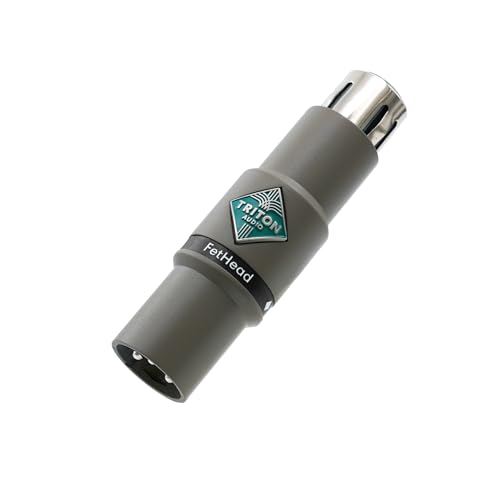
- Low-noise Class-A JFET amplifier
- Double single-ended topology
- Shielded, compact enclosure
Best For: Minimal microphone chains needing an in-line gain stage
Tube-Color DI Preamp

- 12AX7 tube and XMAX solid-state stages
- Separate microphone and instrument inputs
- Phantom power, pad, filter, and polarity controls
Best For: Home recording with microphones and instruments
Best Budget Upgrade

- 19–66 dB practical gain range
- Claimed -120 dBV EIN low-noise performance
- XLR/TRS/TS connectivity with Type-C power
Best For: Budget vocal, instrument, streaming, and portable recording setups
Best All-in-One Interface
Focusrite Scarlett Solo 4th Gen

- One XLR mic preamp and Hi-Z input
- 24-bit/192 kHz with 120 dB dynamic range
- Includes recording software and Air modes
Best For: Solo recording, songwriting, and compact computer-based studios
Best for Flexible Outputs

- Up to 75 dB gain with claimed -120 dB EIN
- 48V phantom power for condenser microphones
- Balanced XLR plus dual 3.5mm outputs
Best For: Vocal recording and mixed studio-portable audio setups
Best with Extra Features

- Adds 25dB of gain to dynamic and ribbon microphones
- -70dB noise rating for cleaner recording chains
- Requires 48V phantom power; not for condenser mics
Best For: Podcasts, broadcast, studio, and live dynamic-mic setups
Plug-and-Play Upgrade

- Delivers up to 29dB of clean gain
- Compact metal XLR adapter for interfaces and mixers
- Requires 48V phantom power; dynamic and ribbon mics only
Best For: Low-output dynamic microphones in studio or stage setups
Versatile Mic Support
20dB XLR Microphone Preamplifier

- Supports both dynamic and condenser microphones
- Provides 20dB of balanced, transparent gain
- Compact metal housing for portable recording setups
Best For: Home studios, podcasts, streaming, and mixed-microphone users
All-in-One Channel Strip – dbx 286s Microphone Preamp
The dbx 286s is a versatile microphone preamp and channel strip for users who want input gain plus several hands-on processing tools in one rackmount unit. Its compression, de-esser, enhancer, and expander/gate sections make it suitable for shaping vocals, instruments, and other recorded or live sources.
Best For: Home studios, vocal recording, podcasting, live sound, and rack-based setups that need integrated signal processing.
Pros:
- Combines a microphone preamp with compression, de-essing, enhancement, and expander/gate processing.
- Accepts XLR microphone input and 1/4-inch TRS line input for instruments or pre-recorded tracks.
- Includes extensive status LEDs, loop-out connectivity, and rack-mount hardware.
Cons:
- Its single-channel design may not suit stereo or multichannel recording.
- The range of controls may be more than needed for a simple preamp-only setup.
Choose the dbx 286s when you want an expandable, hardware-based microphone preamp with built-in dynamics and tone-shaping tools rather than a basic gain stage.
Clean Gain Booster – Cloudlifter CL-1 Mic Activator
The Cloudlifter CL-1 is an in-line microphone preamp designed to add up to 25 dB of gain to quiet passive microphones. It uses phantom power while preventing that phantom power from passing through to the microphone, making it a focused solution for improving signal strength without changing the microphone’s natural sound.
Best For: Passive ribbon microphones, podcasts, voiceovers, streaming, and recording setups with compatible phantom-powered microphone inputs.
Pros:
- Adds up to +25 dB of microphone gain for quiet audio sources.
- Uses +48V phantom power without transferring phantom power to passive microphones.
- Compact XLR design supports studio, broadcast, live sound, and streaming applications.
Cons:
- Requires a microphone input that supplies standard phantom power.
- It is a gain booster, not a full channel strip with onboard compression or EQ.
The CL-1 is a practical choice when your existing interface or mixer needs more clean gain, particularly with low-output passive microphones and ribbons.
Compact Class-A Booster – Triton Audio FetHead In-Line Preamp
The Triton Audio FetHead is an in-line microphone preamp built around a low-noise Class-A JFET amplifier. Its shielded enclosure and compact format make it an unobtrusive way to add microphone gain within a compatible recording chain.
Best For: Users seeking a compact in-line microphone preamp with a Class-A JFET design for recording and microphone signal chains.
Pros:
- Uses a low-noise Class-A JFET amplifier.
- Features a double single-ended amplifier topology with four matched JFETs.
- Shielded enclosure helps suit compact, connected microphone setups.
Cons:
- The supplied notes do not specify gain amount, connector details, or phantom-power requirements.
- Its in-line format offers fewer controls than a desktop or rackmount preamp.
The FetHead makes sense for buyers prioritizing a small, specialized microphone gain stage and a JFET-based circuit over a feature-heavy channel strip.
Tube-Color DI Preamp – PreSonus TubePre v2
The PreSonus TubePre v2 combines a 12AX7 tube stage with a solid-state XMAX input stage, giving this microphone preamp and DI box separate gain and tube-drive controls. It also includes practical input and routing features for microphones and instruments, making it useful when you want flexible connectivity with the option of tube saturation.
Best For: Home studios and performers recording microphones or instruments who want tube-drive control, DI functionality, and basic input shaping.
Pros:
- Combines a 12AX7 tube preamp with a solid-state XMAX input stage.
- Provides separate instrument and microphone inputs with XLR and 1/4-inch TRS connectivity.
- Includes phantom power, high-pass filter, -20 dB pad, and polarity reversal.
Cons:
- It has one channel, limiting simultaneous multichannel recording.
- Tube-based operation may be unnecessary for users seeking a strictly clean, simple preamp.
The TubePre v2 is a flexible pick for recording setups that need both microphone and instrument input options plus adjustable tube coloration in a compact preamp/DI format.
Best Budget Upgrade – Rodyweil RO03 Mic Preamp
The Rodyweil RO03 is a practical microphone preamp for users who need substantial clean gain without a large studio setup. Its 19–66 dB gain range, claimed -120 dBV EIN, Type-C power input, and XLR/TRS/TS connectivity make it suitable for vocals, instruments, and portable recording workflows.
Best For: Budget-conscious vocalists, streamers, and musicians who want a flexible standalone preamp.
Pros:
- Offers a usable 19–66 dB gain range designed around real-world operation.
- Features a claimed -120 dBV EIN and low-noise performance.
- Includes XLR, TRS, and TS connections plus Type-C power for portability.
- The 1MΩ instrument input is designed to preserve instrument tone when used as a DI.
Cons:
- The two input ports cannot be used simultaneously.
- For lowest noise, the manufacturer recommends connecting to an audio interface’s TRS line input rather than its XLR input.
- It is a single-channel preamp.
The RO03 stands out when you want high gain and broad connection options at a low budget. It is especially appealing for portable setups, though careful cabling is important for achieving its lowest-noise results.
Best All-in-One Interface – Focusrite Scarlett Solo 4th Gen
The Focusrite Scarlett Solo 4th Gen combines a microphone preamp with a USB audio interface, making it a streamlined choice for recording directly to a computer or iPad. It offers a 120 dB dynamic range, 24-bit/192 kHz operation, an Hi-Z instrument input, and Air modes for added vocal and guitar presence.
Best For: Songwriters and home-recording users who want a microphone preamp, instrument input, and recording software in one compact interface.
Pros:
- Includes one XLR microphone preamp and a separate Hi-Z instrument input.
- Supports up to 24-bit/192 kHz recording with a stated 120 dB dynamic range.
- Air modes are designed to add presence and harmonic drive to vocals and guitars.
- Includes Pro Tools Intro+, Ableton Live Lite, Cubase LE, and Hitmaker Expansion software.
Cons:
- It provides one microphone input, so it is not intended for multi-microphone recording.
- Its USB-focused design requires a compatible computer or iPad for recording workflows.
- It has fewer standalone preamp-style connection options than a dedicated XLR/TRS unit.
Choose the Scarlett Solo when simplicity matters more than adding a separate preamp box. Its integrated USB connectivity, software bundle, and Air modes make it a strong starting point for solo recording and songwriting.
Best for Flexible Outputs – JCANOL MIC-1 Mic Preamp
The JCANOL MIC-1 is a microphone preamp built for users who need high gain and multiple output formats. It provides up to 75 dB of gain, a claimed -120 dB EIN, 48V phantom power, balanced XLR output, and separate 3.5mm outputs for connecting to compact audio devices.
Best For: Vocal recording and hybrid studio or portable setups using dynamic, condenser, or ribbon-style signal chains.
Pros:
- Provides up to +75 dB of stated clean gain for low-output dynamic microphones.
- Includes 48V phantom power for compatible condenser microphones.
- Offers balanced XLR output alongside independent 3.5mm mic and line outputs.
- The 1MΩ TS instrument input is designed to reduce impedance-related signal loss.
Cons:
- The two input ports cannot be used simultaneously.
- Its listed connectivity is centered on XLR and 6.35mm connections, so users may need suitable cables for some equipment.
- The supplied notes do not specify an included software bundle or USB computer interface.
The MIC-1 is a good fit when output flexibility is a priority. Its XLR connection suits balanced studio wiring, while the 3.5mm outputs make it easier to integrate with smaller portable recording devices.
Best with Extra Features – Coda 25dB Dynamic Mic Preamp
The Coda MB-1 is a focused microphone preamp for adding 25dB of clean gain to quiet dynamic and ribbon microphones. Its low-noise design suits podcasting, broadcast recording, studio work, and live sound, provided your setup supplies 48V phantom power.
Best For: Dynamic and ribbon microphones used for podcasts, vocal recording, broadcasting, and live sound.
Pros:
- Adds 25dB of clean gain while targeting a -70dB noise floor.
- Can improve gain before feedback and reduce line noise on long cable runs.
- Durable aluminum construction works for stage or studio use.
Cons:
- Requires 48V phantom power from an interface or external supply.
- Does not work with condenser microphones.
This is a practical choice when a low-output dynamic or ribbon mic needs more level without replacing your existing interface. Confirm phantom-power availability and microphone compatibility before buying.
Plug-and-Play Upgrade – StudioMan DPM1 XLR Preamp
The StudioMan DPM1 is a compact microphone preamp designed to give low-output dynamic and ribbon microphones an additional 29dB of clean gain. It fits between the microphone and interface or mixer, helping users avoid pushing a noisy built-in preamp too hard.
Best For: Podcasters, vocalists, streamers, and live-sound users with dynamic or ribbon microphones and a 48V-capable interface or mixer.
Pros:
- Provides up to 29dB of clean, transparent gain.
- Compact plug-and-play XLR design is easy to add to an existing setup.
- Metal housing helps with durability and interference shielding.
- Includes a one-year manufacturer warranty and technical support.
Cons:
- Requires 48V phantom power, which is not included.
- Designed only for dynamic and ribbon microphones, not condenser microphones.
Choose the DPM1 when your main priority is a simple, high-gain XLR upgrade for a quiet dynamic mic. Its compatibility limitations are important, but the compact format makes installation straightforward.
Versatile Mic Support – 20dB XLR Microphone Preamplifier
This compact microphone preamp provides 20dB of balanced amplification and includes 48V power for compatibility with both dynamic and condenser microphones. Its lightweight metal case and low-noise circuit make it suited to home studios, recording, podcasting, and live streaming.
Best For: Users who need a portable XLR booster that supports both dynamic and condenser microphones.
Pros:
- Works with both dynamic and condenser microphones.
- Provides 20dB of clean, transparent gain.
- Balanced circuitry is designed for low-noise operation.
- Compact black metal housing helps limit electromagnetic interference.
Cons:
- Offers less stated gain than the 25dB and 29dB alternatives in this roundup.
- Product notes do not specify a warranty or detailed connector configuration beyond XLR output.
This model stands out for broader microphone compatibility and an included 48V power feature. It is a sensible option for mixed-microphone setups where portability and basic low-noise gain are more important than maximum boost.
How We Picked the Best Microphone Preamps
We compared these models by looking at usable gain, noise performance, microphone compatibility, power requirements, connectivity, controls, and intended use. We also considered whether each unit is best suited to a dynamic, condenser, or ribbon microphone, and whether it works as a standalone preamp or as part of a recording interface.
A good Microphone Preamp should add enough clean gain without introducing distracting hiss. Extra features such as compression, de-essing, tone shaping, direct instrument input, or USB connectivity can be valuable, but only if they suit your workflow.
Quick Comparison
- Channel strip: The dbx DBX286SV adds compression, de-essing, enhancement, and gating for voice-focused processing.
- Inline boosters: Cloudlifter CL-1, Triton Audio FetHead, Coda, and StudioMan models are compact choices for increasing the output of low-sensitivity microphones.
- Tube and hybrid options: PreSonus TubePre v2 is suited to users who want tube coloration alongside preamp and DI functionality.
- USB recording: Focusrite Scarlett Solo 4th Gen combines microphone preamp circuitry with computer connectivity and conversion.
- Compact multi-input units: The RO03 and MIC-1 offer high gain and phantom power for flexible home-recording setups.
Key Buying Factors for a Microphone Preamp
Gain and Noise
Dynamic and ribbon microphones often need more gain than condensers. Check the available gain range, but do not judge a unit by gain alone: a high maximum can be less useful if the preamp becomes noisy near the top of its range. Low equivalent input noise, often listed as EIN, is a helpful specification when comparing serious recording options.
Microphone Compatibility
Confirm that the preamp supports your microphone’s output and power needs. Condenser microphones generally require 48V phantom power, while passive ribbon microphones require extra care because some equipment can damage them. Inline boosters usually need phantom power from the connected interface, even though they do not pass it to the microphone.
Connections and Workflow
Choose XLR connections for traditional studio routing, a USB interface when you need direct computer recording, and a compact inline adapter when you simply need more level. If you record vocals or podcasts, onboard processing may reduce the need for separate hardware or software.
Controls and Features
Compression, de-essing, a gate, tube circuitry, DI input, and tone controls can improve efficiency, but they also add complexity. Prioritize clean gain first, then select features that solve a specific problem in your recording chain.
Who Should Buy Which Microphone Preamp?
For podcasts and spoken voice: Choose a channel strip such as the dbx DBX286SV if you want hands-on dynamics and sibilance control. A simple booster is better when you already process audio in software.
For low-output dynamic microphones: Cloudlifter CL-1 or FetHead-style inline preamps are compact solutions for adding gain before an existing interface. Verify phantom-power compatibility before buying.
For first-time home recording: The Focusrite Scarlett Solo is the most complete option when you need a preamp, USB connection, and headphone monitoring in one device.
For singers and instrumentalists: PreSonus TubePre v2 is worth considering if you want DI connectivity or tube coloration, while multi-input high-gain models may suit more flexible setups.
For budget-conscious buyers: Compact RO03, MIC-1, Coda, StudioMan, and similar units can solve specific gain problems affordably. Check build quality, included cables, phantom-power behavior, and return coverage before committing.