The right multitrack recorder can make podcast production simpler by capturing each speaker on a separate track, providing reliable headphone monitoring, and reducing dependence on a computer.
We compared these 10 options for input capacity, portability, recording quality, remote-interview support, and overall value so you can choose a recorder that fits your format and workflow.
Best 10 Multitrack Recorders for Podcasts Picks for 2026
Best All-Around Podcast Hub

- Four XLR inputs and four headphone outputs
- Automatic mix-minus for phone and USB guests
- Multitrack recording with programmable sound pads
Best For: Group podcasts and remote interviews
Best for Computer-Free Editing

- Eight-track recording with touchscreen editing
- Built-in drum loops, synths, and MIDI support
- USB-C interface and DAW control surface
Best For: Portable editing and music-oriented podcasts
Best for Assisted Audio Cleanup

- Four XLR inputs and four headphone outputs
- AI noise reduction, tone enhancement, and compression
- Up to +70 dB of microphone gain
Best For: Four-person podcasts with simpler audio processing
Best Flexible Field Recorder

- Four-track recorder with stereo microphones
- Two XLR/TRS inputs and 32-bit float recording
- USB-C recording plus SD-card backup
Best For: Portable podcasts, interviews, and field recording
Best Podcast Bundle
Zoom PodTrak P4 with Four ZDM-1 Mics

- Four XLR inputs with +48V phantom power
- Four headphone outputs and four sound pads
- Includes four ZDM-1 podcast microphones
Best For: Group podcasts with up to four participants
Best Standalone Recorder
Zoom R20 16-Track Tabletop Recorder
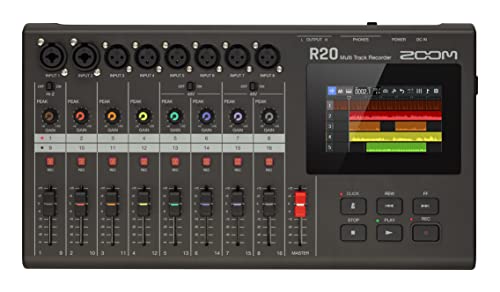
- Records and mixes without a computer
- Up to 16 tracks and eight simultaneous inputs
- Touchscreen editing with onboard effects
Best For: Computer-free recording and larger audio projects
Best Accessory Kit
Zoom PodTrak P4 Podcast Recording Bundle

- Four XLR inputs and individually controlled headphone outputs
- Includes mic, headphones, pop filters, card, and batteries
- Supports separate WAV tracks, SD recording, and USB audio
Best For: New teams building a ready-to-use four-person setup
Flexible Track Builder

- Four-track recording with bounce and undo
- 32-bit float capture helps prevent clipping
- Battery-powered recorder and USB audio interface
Best For: Portable solo podcasting, music, and layered audio ideas
Four-Person Podcast Kit

- Four XLR inputs and individual headphone outputs
- Mix-Minus and TRRS support phone call audio
- Includes four-mic accessory package and 64GB card
Best For: New or established four-person podcast teams
Complete Four-Mic Setup

- Four-track podcast recording with four headphone feeds
- Includes four handheld mics, stands, cables, and headphones
- Phone-call support through Mix-Minus and TRRS
Best For: Four-person shows needing a complete handheld-mic setup
Best All-Around Podcast Hub – PodTrak P4
The Zoom PodTrak P4 is a practical choice among multitrack recorders for podcasts, especially when you need to connect several speakers and manage a remote guest. It provides four XLR inputs, separate headphone monitoring, and multitrack recording in a compact, battery-powered design.
Best For: Group podcasts with up to four microphone inputs, remote interviews, and creators who want dedicated headphone monitoring.
Pros:
- Four XLR microphone inputs with phantom power
- Four headphone outputs with individual volume controls
- Automatic mix-minus supports phone and USB remote interviews
- Programmable sound pads and multitrack recording for inputs and pads
Cons:
- Battery life is rated at up to 3.5 hours on two AA batteries
- Its podcast-focused design may be less suitable for larger music projects
With its combination of four-person support, remote-call handling, and independent monitoring, the P4 is one of the most straightforward options for a traditional podcast setup.
Best for Computer-Free Editing – Zoom R12
The Zoom R12 brings a more complete production workflow to the multitrack recorders for podcasts category. Its touchscreen, eight-track capacity, and built-in editing tools make it useful when you want to cut, loop, and mix recordings without relying on a computer.
Best For: Creators who want extensive onboard editing, musical podcast elements, or a portable recorder with room to expand beyond two live inputs.
Pros:
- Records up to eight tracks with DAW-style editing tools
- Touchscreen interface supports cutting, copying, looping, and mixing
- Includes 150 drum loops and 18 FM synth instruments
- Works as a USB-C audio interface and DAW control surface
Cons:
- Only two XLR/TRS combo inputs are provided
- Its musician-oriented features may be more than a simple voice podcast requires
The R12 stands out when editing flexibility matters more than having many simultaneous microphone inputs, offering a portable studio-style workflow with built-in creative tools.
Best for Assisted Audio Cleanup – PodTrak P4next
The Zoom PodTrak P4next is designed for podcasters who want multitrack recording with additional assistance during production. It combines four XLR inputs and four headphone outputs with AI noise reduction, tone enhancement, and compression features intended to help create balanced speech.
Best For: Four-person podcast sessions where clear monitoring and simplified audio cleanup are priorities.
Pros:
- Four XLR inputs support up to four people plus a call-in guest
- Up to +70 dB of gain accommodates demanding podcast microphones
- AI noise reduction, Tone Enhancement, and COMP assist with sound shaping
- Four headphone outputs have separate volume controls
Cons:
- Battery requirements and battery life are not specified in the supplied details
- Its AI tools may be unnecessary for users who prefer to process audio manually
The P4next is a strong fit for teams that want the familiar four-mic podcast layout while reducing the amount of hands-on audio adjustment needed during recording.
Best Flexible Field Recorder – Zoom H4 Essential
The Zoom H4 Essential is a versatile option among multitrack recorders for podcasts when portability and broader recording use matter. It combines built-in stereo microphones with two XLR/TRS inputs, 32-bit float recording, USB-C connectivity, and direct SD-card backup.
Best For: Solo podcasters, interviews, field recording, and creators who also need to capture music, video audio, or live performances.
Pros:
- Four-track recording with built-in stereo microphones
- Two XLR/TRS inputs accept external microphones, instruments, mixers, or soundboards
- 32-bit float recording helps provide clip-free audio
- Can record or stream over USB-C while saving to an SD card
Cons:
- Provides two external inputs rather than four dedicated podcast microphone inputs
- Runs on two AA batteries, with no battery-life figure supplied in the notes
Choose the H4 Essential if you want one recorder for podcasts and general-purpose audio work, particularly when built-in microphones and backup recording are valuable.
Best Podcast Bundle – Zoom PodTrak P4 with Four ZDM-1 Mics
Zoom PodTrak P4 Portable Multitrack Podcast Recorder Bundle with 4X Zoom ZDM-1 Podcast Pack
Check Price On AmazonIf you need multitrack recorders for podcasts that can accommodate a full panel, the Zoom PodTrak P4 bundle is a practical starting point. It combines four high-gain XLR inputs, four independent headphone outputs, sound pads, and four included ZDM-1 podcast microphones.
Best For: Group podcasts with up to four microphone participants.
Pros:
- Four XLR inputs with +48V phantom power support.
- Four independent headphone outputs for participant monitoring.
- Includes four ZDM-1 podcast microphones and four sound pads.
- Supports simultaneous TRRS and USB call-ins.
Cons:
- The included recorder uses two AA batteries and lists up to four hours of digital recording time.
- The bundle is less suitable if you already own microphones.
For creators assembling a complete multi-person setup, this bundle reduces the need to source microphones and monitoring gear separately while retaining useful call-in and sound-effect features.
Best Standalone Recorder – Zoom R20 16-Track Tabletop Recorder
The Zoom R20 is a strong alternative for buyers comparing multitrack recorders for podcasts who also want hands-on editing and mixing. Its touchscreen workflow records up to 16 tracks, with up to eight tracks captured simultaneously, without requiring a computer.
Best For: Creators who want computer-free recording with room for larger audio projects.
Pros:
- Records, edits, and mixes directly on the device.
- Supports up to 16 tracks and eight simultaneous recording tracks.
- Includes six XLR inputs, two XLR/TRS combo inputs, and onboard effects.
- Offers 150 rhythm patterns and an onboard synth with 18 sounds.
Cons:
- Its 4.3-pound tabletop design is less portable than compact podcast-focused recorders.
- The maximum sample rate listed is 44.1 kHz.
Although designed with musicians in mind, the R20’s input count, touchscreen controls, and standalone editing make it useful for podcast teams that prioritize expansion and post-production on the recorder itself.
Best Accessory Kit – Zoom PodTrak P4 Podcast Recording Bundle
This PodTrak P4 accessory bundle suits buyers seeking multitrack recorders for podcasts with the essential extras included. Along with four XLR mic inputs and four individually controlled headphone outputs, it includes a handheld microphone, headphones, pop filters, a 64GB card, batteries, and other setup accessories.
Best For: New podcast teams wanting a ready-to-use four-person recording kit.
Pros:
- Four XLR inputs with gain controls, mute buttons, and phantom power.
- Four headphone outputs with individual volume control.
- Records separate input sources in 16-bit/44.1kHz WAV format.
- Includes a 64GB microSDXC card, microphone, headphones, pop filters, and batteries.
Cons:
- The listed battery life is up to three hours.
- The bundle’s included accessories may be unnecessary for users with an existing studio setup.
Its mix-minus call audio, TRRS connection, sound pads, and SD or USB recording options give this kit useful flexibility for interviews, remote guests, and live-style podcast production.
Flexible Track Builder – Zoom R4 Multi-Track Recorder
The Zoom R4 is a compact choice among multitrack recorders for podcasts when you want to capture voice, music, or ideas without relying on a computer. Its two XLR/TRS combo inputs, 32-bit float recording, built-in microphones, and battery operation make it practical for portable sessions and layered production.
Best For: Solo creators and podcast producers who want portable recording with room for musical beds, effects, or additional layers.
Pros:
- Records up to four tracks and supports bouncing to keep adding layers.
- 32-bit float recording helps avoid clipping without constant gain adjustments.
- XLR/TRS combo inputs accommodate microphones, instruments, and keyboards.
- Includes more than 80 built-in rhythm patterns and works as a USB audio interface.
Cons:
- Provides two XLR/TRS combo inputs rather than four dedicated podcast microphone inputs.
- Its 3.5 mm headphone output may be less convenient for multi-person monitoring.
The R4 stands out for flexible, hands-on recording rather than a podcast-only workflow. Choose it if layering and portability matter more than multiple headphone feeds or built-in call-management features.
Four-Person Podcast Kit – Zoom PodTrak P4 Bundle
This PodTrak P4 bundle is built for multi-person shows and is one of the more podcast-focused multitrack recorders for podcasts. It combines four XLR microphone inputs, four individually controlled headphone outputs, separate-track recording, call support, and a broad accessory package.
Best For: Podcast teams recording up to four participants who need microphones, headphones, monitoring, and basic call-in support in one kit.
Pros:
- Four XLR inputs and four headphone outputs support group recording.
- Individual headphone volume controls let each participant set a comfortable level.
- Mix-Minus and TRRS connectivity help manage phone call audio and feedback.
- Includes microphones, headphones, pop filters, rechargeable batteries, charger, and a 64GB card.
Cons:
- Records in 16-bit/44.1kHz WAV rather than the R4’s 32-bit float format.
- The supplied bundle is relatively extensive, which may be unnecessary for creators who already own accessories.
- Battery operation is listed for up to three hours, depending on the power setup.
For a new or growing podcast crew, this package reduces the number of separate purchases needed to start recording. Its four-person monitoring and call features are more specialized for podcasts than the R4’s general-purpose track-building design.
Complete Four-Mic Setup – Zoom PodTrak P4 Platinum Kit
The Platinum PodTrak P4 kit is a ready-to-assemble option among multitrack recorders for podcasts, pairing the four-input P4 recorder with four handheld microphones, headphones, stands, pop filters, cables, batteries, and storage. It is designed to get a full group recording setup running with fewer extra purchases.
Best For: Four-person podcast productions that prefer handheld microphones, desktop stands, and a complete monitoring package.
Pros:
- Four XLR inputs and four separate headphone outputs support group sessions.
- Each input has gain control and mute, while phantom power is available for XLR inputs.
- Mix-Minus and TRRS connection support phone-based interviews without feedback.
- Includes four handheld microphones, XLR cables, headphones, stands, pop filters, rechargeable batteries, and a 64GB card.
Cons:
- The large accessory bundle may add storage and setup requirements.
- Recording is limited to 16-bit/44.1kHz WAV according to the supplied notes.
- The included handheld microphone arrangement may be less convenient than compact desk microphones for small spaces.
This kit is a strong practical choice when four participants need a nearly complete recording station from day one. Compared with the other P4 bundle, its emphasis is on handheld microphones and desktop stands rather than the DM1-PMP microphone package.
How We Picked the Best Multitrack Recorders for Podcasts
We focused on the features that matter most in real podcast workflows: the number and type of microphone inputs, independent headphone outputs, multitrack recording, USB connectivity, portability, and ease of monitoring. We also considered whether each model suits solo creators, interview shows, mobile recording, or larger productions.
The selection includes dedicated podcast recorders, handheld units, and tabletop multitrack systems. Bundles are judged on the value of their included microphones and accessories, not just the recorder itself. Features such as 32-bit float recording, AI noise reduction, sound pads, effects, and remote-input support were treated as workflow advantages rather than automatic indicators of better sound.
Quick Comparison
| Best For | What to Look For |
|---|---|
| Solo podcasts | Simple controls, one or two inputs, and USB connectivity |
| Two- to four-person shows | Four XLR inputs and a separate headphone output for each guest |
| Remote interviews | Phone or USB input, mix-minus support, and dependable monitoring |
| Music and podcast crossover | More tracks, effects, drum loops, or flexible overdubbing |
| Mobile recording | Battery operation, compact construction, and strong built-in microphones |
Key Buying Factors for Multitrack Recorders for Podcasts
Inputs and Headphone Outputs
Count how many guests you record at once and check the connector type. XLR inputs are the standard choice for dynamic podcast microphones, while combo inputs offer more flexibility. A dedicated headphone output for every participant helps prevent splitters, volume conflicts, and monitoring problems.
Separate Tracks and Editing Control
Multitrack recording gives each voice its own channel, making it easier to fix levels, remove interruptions, and apply processing later. Confirm how many tracks the recorder captures simultaneously and whether files transfer easily to your editing software.
Connectivity and Remote Guests
USB can turn a recorder into an audio interface for computer-based recording or live streaming. Phone inputs and mix-minus features are particularly useful for call-ins, but verify compatibility with your phone and preferred calling app before buying.
Recording Quality and Portability
For field work, battery life, physical controls, and a durable enclosure may matter more than advanced studio features. Thirty-two-bit float recording can provide extra protection against sudden peaks, but microphone placement and room acoustics still have a major effect on quality.
Who Should Buy Which Multitrack Recorders for Podcasts?
Choose a dedicated four-input podcast recorder if your priority is a multi-person show with straightforward setup and individual headphone monitoring. A bundle makes sense when you also need microphones, cables, or pop filters and want to avoid sourcing each accessory separately.
Choose a handheld recorder if you record interviews outdoors, produce video, or need built-in microphones alongside external inputs. Musicians and creators who want podcasting plus songwriting features should consider a model with more tracks, effects, drum loops, or overdubbing. Finally, choose a tabletop recorder when you need expanded input capacity and a more studio-like workflow for larger productions.