The best audio mixers for studio work make it easier to combine microphones, instruments, playback devices, and monitoring in one reliable setup. The right model depends on your channel count, recording workflow, connectivity needs, and whether you prefer hands-on analog controls or app-based digital mixing.
We’ve gathered 10 options ranging from compact stereo mixers to flexible digital consoles, focusing on useful features such as preamp quality, phantom power, USB connectivity, effects, Bluetooth, and expandability.
Best 10 Audio Mixers for Studio Picks for 2026
Best Wireless Digital Control
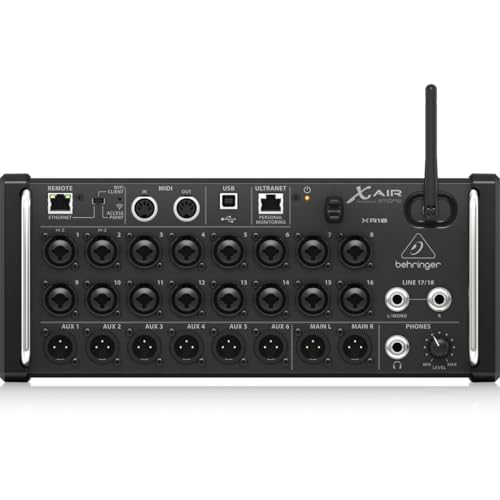
- 18 channels and 12 buses for complex setups
- 16 programmable Midas-designed mic preamps
- Built-in Wi-Fi and 18 x 18 USB interface
Best For: Studios and live rigs needing tablet control and multichannel recording
Best Compact Effects Mixer

- Six-channel compact analog mixer
- Two mic preamps and four stereo line channels
- Built-in digital effects
Best For: Small studios needing simple mixing with onboard effects
Best for Streaming and USB Recording

- 10 channels with Onyx preamps on mic channels
- Bluetooth playback and USB-C recording
- 24 GigFX+ effects with tap tempo
Best For: Podcasters, streamers, and small studios needing flexible connectivity
Best Simple Analog Mixer

- Six-channel analog design with D-PRE preamps
- Three-band EQ, high-pass filters, and one-knob compression
- Rugged powder-coated metal chassis
Best For: Small studios and performances needing hands-on analog control
Feature-Rich Value Pick
FULUODE CT-80S 8-Channel Mixer

- Eight channels with 48V phantom power
- USB recording, Bluetooth 5.0, and MP3 playback
- Slim design for studio, karaoke, and events
Best For: Flexible home studio and live-use setups
Clean Analog Performance

- Three Onyx mic preamps
- Eight high-headroom line inputs
- Low-noise design with phantom power
Best For: Compact analog studio and broadcast setups
Streaming-Ready Choice

- Eight-input analog mixer with equalization
- Stereo USB interface for computer or mobile use
- Mixes PC and gaming audio into streaming output
Best For: Streaming, podcasting, and home recording
Best Value Studio Mixer
6-Channel Bluetooth Audio Mixer
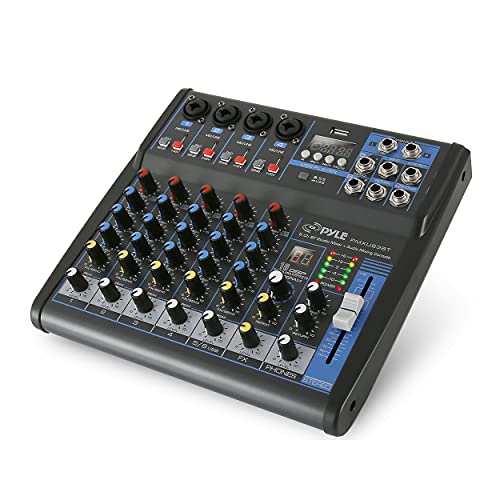
- Six-channel layout with XLR and 1/4-inch inputs
- Bluetooth, USB, flash-drive, and MP3 playback
- 48V phantom power and three-band EQ
Best For: Compact home studios, live gigs, and karaoke
Flexible Channel Pick
8-Channel Bluetooth DJ Audio Mixer

- Eight channels for expanded source connectivity
- Bluetooth and USB-A MP3 playback
- 16-bit DSP, phantom power, and three-band EQ
Best For: Larger home studios, rehearsals, live gigs, and karaoke
Effects-Focused Option

- Four XLR inputs with switchable 48V phantom power
- Bluetooth and USB playback or recording support
- 16 DSP effects with reverb and delay
Best For: Vocal recording, streaming, karaoke, and effects-based mixing
Best Wireless Digital Control – Behringer X AIR XR18
For studios that need extensive routing and remote control, the Behringer X AIR XR18 is a versatile choice among audio mixers for studio and live applications. It combines 18 channels, programmable Midas-designed preamps, built-in Wi-Fi, and an 18 x 18 bidirectional USB interface.
Best For: Studio or live setups needing tablet control, many inputs, and direct multichannel recording.
Pros:
- 18-channel, 12-bus digital mixer supports larger and more complex setups.
- 16 programmable Midas-designed mic preamps provide flexible input control.
- Built-in tri-mode Wi-Fi router enables direct tablet operation without an external router.
- 18 x 18 bidirectional USB interface supports direct multichannel recording.
Cons:
- Operation is centered on iPad or Android tablet control rather than a traditional physical control surface.
- Its larger channel count may be more than a small, simple studio requires.
The XR18 stands out when remote mixing, high input capacity, and computer-based recording matter more than compact analog simplicity. Its feature set is especially suited to expandable studio and hybrid live-production workflows.
Best Compact Effects Mixer – Yamaha MG06X
The Yamaha MG06X is a compact analog option for straightforward studio work, offering six inputs, two microphone preamps, four dedicated stereo line channels, and built-in digital effects. Its small footprint suits setups where essential mixing controls matter more than extensive routing.
Best For: Small studio setups needing a simple six-input mixer with microphone preamps and effects.
Pros:
- Compact six-channel design is easy to integrate into smaller workspaces.
- Includes two microphone preamps and four dedicated stereo line channels.
- Built-in digital effects add practical processing without extra hardware.
- XLR output and XLR inputs support common studio connections.
Cons:
- Six inputs limit expansion for larger recording setups.
- The supplied notes do not identify a USB audio interface despite listing USB connectivity.
The MG06X is a sensible pick for users who want a compact, uncomplicated mixer with effects. It is best suited to modest channel requirements rather than large multitrack or highly expandable studios.
Best for Streaming and USB Recording – Mackie ProFX10v3+
The Mackie ProFX10v3+ combines a 10-channel analog mixer with Bluetooth playback, USB-C recording, and onboard effects. For audio mixers for studio, podcast, and streaming use, it offers a practical way to connect microphones, instruments, phones, and computers from one desk.
Best For: Home studios, podcasters, streamers, and band practice setups needing Bluetooth playback and USB recording.
Pros:
- 10 channels accommodate microphones, instruments, phones, and computers.
- Bluetooth supports wireless playback from compatible devices.
- USB-C provides multi-mode recording and computer connectivity.
- GigFX+ supplies 24 effects with tap tempo, while Onyx preamps are included on every mic channel.
Cons:
- Its analog mixer format may offer less remote control than a fully digital mixer.
- The 10-channel capacity may not suit larger studio tracking sessions.
The ProFX10v3+ is a flexible middle ground for creators who want hands-on analog mixing alongside modern Bluetooth and USB-C features. Its effects and connectivity make it particularly useful for production, streaming, and rehearsal workflows.
Best Simple Analog Mixer – Yamaha MG06
The Yamaha MG06 is a straightforward six-channel analog mixer for users who prefer tactile controls and essential signal shaping. It includes studio-grade D-PRE preamps, three-band EQ, high-pass filters, one-knob compressors, and a rugged metal chassis.
Best For: Small studios, lectures, and performances needing dependable analog mixing without USB.
Pros:
- Studio-grade D-PRE preamps use a discrete Class A inverted Darlington circuit.
- Three-band EQ and high-pass filters help shape signals and reduce unwanted noise.
- One-knob compressors simplify control for guitars, bass, snare, and vocals.
- Impact-resistant powder-coated metal chassis is suited to regular use.
Cons:
- No USB audio interface is included.
- Six channels provide limited room for expansion.
- Analog-only connectivity may require additional hardware for computer recording.
The MG06 focuses on core analog mixing rather than digital integration. Choose it when hands-on EQ, compression, solid preamps, and a durable chassis are higher priorities than USB recording or advanced routing.
Feature-Rich Value Pick – FULUODE CT-80S 8-Channel Mixer
The FULUODE CT-80S is a versatile option for shoppers comparing audio mixers for studio use, karaoke, live music, or small events. It combines eight channels with USB recording, Bluetooth 5.0, MP3 playback, reverb, and 48V phantom power in a slim, corded design.
Best For: Home studios, karaoke setups, campus events, conferences, and small live performances needing flexible wired and wireless connectivity.
Pros:
- Eight-channel layout with support for microphones and instruments.
- Includes 48V phantom power, USB recording, Bluetooth 5.0, and MP3 playback.
- Large LED display and ultra-thin 1.57-inch design.
- Supports cable, wireless, and capacitive microphone connections.
Cons:
- Uses a 110V American plug, which may limit compatibility in other regions.
- Its feature set is oriented toward general-purpose entertainment and live use rather than advanced studio routing.
- The supplied specifications do not identify supported software updates.
Choose this model if built-in playback, wireless connection, and multiple input options matter more than a strictly streamlined recording workflow. Its phantom power and USB recording make it studio-capable, while the karaoke and event features broaden its usefulness.
Clean Analog Performance – Mackie 802VLZ4 Mixer
The Mackie 802VLZ4 is a straightforward choice for audio mixers for studio applications where low-noise analog operation and dependable microphone inputs are priorities. Its eight-channel format includes three Onyx mic preamps, eight high-headroom line inputs, and phantom power for condenser microphones.
Best For: Compact studio, broadcast, and small live-sound setups that need quality mic preamps and conventional XLR or TRS outputs.
Pros:
- Three boutique-quality Onyx microphone preamps.
- High-headroom, low-noise design for clean analog mixing.
- Eight high-headroom line inputs provide flexible source connections.
- Phantom power supports condenser microphones, while improved RF rejection suits broadcast applications.
Cons:
- Does not list USB connectivity or an integrated USB audio interface.
- Fewer built-in digital features than mixers with Bluetooth, MP3, or USB recording.
- Warranty is listed as one year and non-transferable.
The 802VLZ4 is best suited to buyers who want a focused analog mixer rather than an all-in-one digital media hub. Its Onyx preamps, headroom, and RF rejection make it a practical fit for clean, traditional signal handling.
Streaming-Ready Choice – Behringer XENYX 802S Mixer
Behringer XENYX 802S Premium Analog 8-Input Mixer with USB Streaming Interface
Check Price On AmazonThe Behringer XENYX 802S is a practical pick among audio mixers for studio, podcasting, recording, and streaming. It pairs eight-input analog mixing and equalization with a stereo USB audio interface, allowing computer or mobile-device connection and direct mixing of PC or gaming audio into the streaming output.
Best For: Streamers, podcasters, and home-recording users who need analog controls plus USB connectivity for computer or mobile workflows.
Pros:
- Stereo USB audio interface connects to a computer or mobile device.
- Designed for streaming, podcasting, and recording.
- Supports direct mixing of PC and gaming sounds into the streaming output.
- Provides analog mixing and equalization with XLR, TRS, and RCA outputs.
Cons:
- The supplied notes do not specify phantom power or microphone preamp details.
- Its eight-input layout may be limiting for larger recording or live-sound setups.
- It is corded and does not list wireless or Bluetooth connectivity.
This model makes the most sense when USB streaming is central to the setup. It offers a useful bridge between traditional analog controls and computer-based audio, especially for content creators managing voice, music, and system audio.
Best Value Studio Mixer – 6-Channel Bluetooth Audio Mixer
For shoppers comparing audio mixers for studio work, the Pyle PMXU63BT offers a compact six-channel setup with Bluetooth, USB connectivity, and recording-friendly controls. It includes XLR and 1/4-inch inputs, 48V phantom power, and a three-band EQ for flexible vocal, instrument, and playback mixing.
Best For: Small studio setups, home recording, live gigs, karaoke, and users who want wireless playback in a compact mixer.
Pros:
- Bluetooth, USB, flash-drive, and MP3 compatibility for playback and mixing.
- Four? Actually supplied notes do not specify number of XLR channels; six total channels with XLR and unbalanced 1/4-inch inputs.
- 48V phantom power, LED peak indicators, and three-band EQ on all channels.
- Rugged steel chassis with sealed rotary controls and a multi-voltage power supply.
Cons:
- Six channels may be limiting for larger recording or performance setups.
- The supplied information does not identify supported software updates.
This is a practical choice when you need essential studio and live-mixing features without a large footprint. Its Bluetooth and USB options add convenience, while the phantom power and EQ provide useful control for microphones and instruments.
Flexible Channel Pick – 8-Channel Bluetooth DJ Audio Mixer
Among audio mixers for studio applications, this eight-channel Pyle model is suited to buyers who need more input capacity than a basic six-channel board. Bluetooth streaming, USB MP3 playback, DSP effects, phantom power, and multiple output options support flexible home, rehearsal, live, and karaoke setups.
Best For: Users who need eight channels, wireless music streaming, basic DSP effects, and a steel-bodied mixer for studio or live use.
Pros:
- Eight channels provide more connection capacity for microphones and stereo line sources.
- Includes Bluetooth, USB-A MP3 playback, and a 16-bit DSP processor.
- 48V phantom power, LED peak indicators, and three-band EQ on all channels.
- Offers 1/4-inch TRS and XLR outputs in a compact steel chassis.
Cons:
- The supplied notes do not provide a warranty description.
- Bluetooth is listed, but the notes do not specify additional wireless controls or range.
The extra channels make this a stronger fit than a smaller board when several sources must stay connected. It remains relatively compact, though buyers seeking advanced digital recording or software integration should verify those requirements separately.
Effects-Focused Option – 6-Channel Studio Audio Mixer
This six-channel board is a feature-oriented option for shoppers seeking audio mixers for studio recording, streaming, karaoke, or live use. It combines four XLR inputs, 1/4-inch connections, Bluetooth, USB playback, 48V phantom power, three-band EQ, and 16 built-in DSP effects including reverb and delay.
Best For: Home studios, streaming, karaoke, and vocal setups that benefit from built-in reverb, delay, and flexible microphone connections.
Pros:
- Four XLR inputs support condenser or dynamic microphones, with 48V phantom power available.
- Built-in Bluetooth and USB interface support wireless streaming, USB playback, mixing, and recording.
- Sixteen DSP effects, including reverb and delay, add onboard processing options.
- Independent channel, master-volume, and effects faders provide hands-on control.
Cons:
- The listed manufacturer warranty is 90 days from purchase.
- The supplied dimensions are unusually large for a compact mixer, so confirm available workspace.
- Its traditional analog design may require manual setup and operation.
This model stands out for users who want effects built into the mixer rather than relying entirely on external processing. Its four XLR inputs and varied playback options are useful, but the short warranty and relatively large listed dimensions deserve consideration before purchase.
How We Picked the Best Audio Mixers for Studio Use
We compared these mixers by looking at the features that matter most in a recording or project-studio environment: available inputs, microphone preamps, phantom power, USB or computer connectivity, onboard effects, monitoring controls, portability, and overall workflow. We also considered whether each mixer is better suited to simple stereo recording, multitrack production, streaming, rehearsal, or live sound.
Because studio needs vary widely, this list includes both straightforward analog boards and more advanced digital options. A larger channel count is not automatically better if it adds complexity you will not use.
Quick Comparison
- Best for flexible digital control: Behringer X AIR XR18
- Best compact mixer with effects: Yamaha MG06X
- Best for recording and streaming features: Mackie ProFX10v3+
- Best simple analog option: Yamaha MG06
- Best for multiple inputs on a budget: Mackie 802VLZ4 or Behringer XENYX 802S
- Best for Bluetooth and media playback: Pyle or FULUODE models
Key Buying Factors for Audio Mixers for Studio Recording
Channel Count and Input Types
Count the microphones, instruments, stereo playback sources, and effects returns you expect to use at the same time. Extra channels provide room to grow, but a compact six-input mixer may be easier to place and operate for a solo musician or small setup.
USB Recording and Computer Connectivity
If you want to record directly into a DAW, verify what the USB connection supports. Some mixers provide a simple stereo feed, while digital consoles or more advanced interfaces may offer multitrack recording and deeper routing options.
Preamps, Phantom Power, and Sound Control
Microphone preamp quality affects noise, headroom, and usable gain. For condenser microphones or active DI equipment, look for dependable 48V phantom power. EQ, high-pass filtering, compression, and onboard effects can also reduce the need for additional hardware.
Analog Versus Digital Workflow
Analog mixers offer immediate hands-on control and simple setup. Digital mixers can provide scene recall, extensive routing, remote control, and detailed processing, but they often require more configuration and may rely on a tablet or computer.
Who Should Buy Which Audio Mixers for Studio?
Choose a compact Yamaha mixer if you need dependable controls for vocals, instruments, or small stereo setups without unnecessary features. Pick the Mackie ProFX10v3+ if USB recording, Bluetooth, effects, and streaming flexibility are priorities. The Behringer X AIR XR18 is the stronger choice for users who need many inputs, remote mixing, and sophisticated routing for a larger studio or rehearsal rig.
Budget-focused buyers may prefer the Behringer XENYX, Mackie 802VLZ4, or one of the compact Pyle and FULUODE boards. These models can suit basic home recording, playback, karaoke, DJ use, and small live systems, though buyers should confirm the exact USB, driver, and multitrack capabilities before purchase.