The right mixer can make a major difference when building a vinyl setup, whether you are learning basic transitions, scratching with turntables, or performing with digital and analog sources.
We selected 10 DJ mixers for turntables across different budgets and styles, focusing on phono connectivity, channel layout, crossfader performance, effects, USB features, and practical home or club use.
Best 10 Dj Mixer for Turntables Picks for 2026
Best Club-Style Starter

- Two-channel club-style workflow
- Free rekordbox DVS unlock
- Magvel Fader and channel filters
Best For: Beginners building a turntable-based home setup
Best Value Scratch Mixer

- Phono/line switchable RCA inputs
- Replaceable, adjustable crossfader
- Mic, record, and headphone outputs
Best For: Practice rigs, parties, and beginner scratch setups
Best Four-Channel Rotary Option

- Four stereo channels with three phono inputs
- Analog high-pass and low-pass filter
- Independent balanced master and booth outputs
Best For: Rotary-style, multi-turntable DJ setups
Best Full-Kill EQ Budget Pick
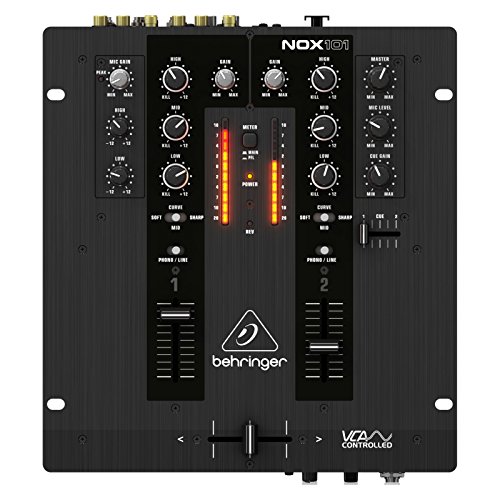
- Three-band full-kill EQ filters
- VCA-controlled Ultraglide crossfader
- RCA, TRS, and XLR connectivity
Best For: Budget two-channel mixing and scratch control
Best Compact Pick
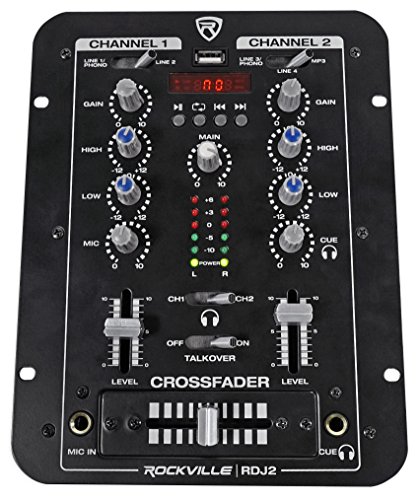
- Four RCA line inputs for flexible source connections
- USB MP3 player with LCD display
- Compact metal design with cue monitoring
Best For: Home DJs and mobile setups
Best Pro Battle Mixer

- Dual USB audio interfaces for Serato DJ
- Magvel Fader Pro crossfader
- 16 pads and 22 built-in Beat FX
Best For: Scratch, battle, and performance DJs
Best Three-Channel Value

- Three dual-input stereo channels
- Dual auto-BPM counters
- Durable Ultraglide crossfader
Best For: Traditional multi-source DJ setups
Best Scratch Mixer

- Adjustable MAGVEL FADER PRO crossfader
- Six Scratch Cutter patterns
- USB-powered 2-channel design
Best For: Turntable scratch DJs using Serato DJ
Best 5-Channel Value

- Five-channel mixing layout
- Auto-BPM counter with beat-sync display
- Digital effects and VCA crossfader
Best For: Multi-source DJ setups with effects
Best for Karaoke and Events

- Direct phono inputs for two turntables
- Dual balanced mic inputs with talkover
- Bluetooth and USB/MP3 playback
Best For: Mobile DJs, karaoke, and event mixing
Best Club-Style Starter – Pioneer DJM-250MK2
The Pioneer DJM-250MK2 is a strong pick if you want a straightforward dj mixer for turntables with a familiar club-style layout. Its two-channel design, phono/line-oriented workflow, built-in filters, and included rekordbox DVS unlock make it suitable for learning beatmatching or building a home separates setup.
Best For: Beginners who want club-style controls, turntable-friendly DVS capability, and a durable crossfader for blending or light scratching.
Pros:
- Two-channel layout mirrors a standard professional booth workflow.
- Includes a free rekordbox DVS unlock for mixing digital files with turntables or media players.
- Dedicated Sound Color FX Filter and smooth Magvel Fader add hands-on control.
Cons:
- Only two channels, so it is less suitable for larger multi-source setups.
- Its no-fuss feature set may feel limited for DJs seeking extensive effects.
The DJM-250MK2 focuses on core mixing skills rather than an overloaded feature list. Choose it when a familiar club layout, DVS support, and reliable control matter most.
Best Value Scratch Mixer – Numark M2
The Numark M2 is a practical, versatile dj mixer for turntables when you want essential controls at an accessible level. It accepts two phono/line switchable inputs, includes a microphone input, and adds scratch-focused crossfader controls for practice, parties, or mobile setups.
Best For: Beginners and working DJs who need flexible RCA connectivity, microphone support, and adjustable scratch controls.
Pros:
- Two phono/line switchable inputs connect turntables or other sources.
- Three-band EQs, replaceable crossfader, reverse, and slope controls support mixing and scratching.
- Rack-mountable, portable design includes mic, master, record, and headphone connections.
Cons:
- Outputs are primarily RCA, with fewer balanced connection options than some mixers.
- The two-channel layout may not suit larger multi-deck systems.
The M2 covers the fundamentals without complicating the front panel. It is a sensible choice for a flexible practice mixer or a compact rig that also needs microphone and recording connections.
Best Four-Channel Rotary Option – Headliner R4
The Headliner R4 expands the usual dj mixer for turntables setup with four stereo channels, three phono inputs, and an analog filter section. Its rotary-style channel controls, isolator EQs, and separate master and booth outputs make it a strong fit for DJs who want hands-on sound shaping and room to add more sources.
Best For: DJs who prefer rotary controls, need four channels for multiple turntables or media players, and value independent booth monitoring.
Pros:
- Four channels include three phono inputs for turntable-heavy setups.
- Analog high-pass and low-pass filter offers frequency and resonance control.
- Balanced XLR and unbalanced RCA master and booth outputs support varied sound systems.
- ALPS potentiometers, a metal enclosure, and wood side panels provide a distinctive build and appearance.
Cons:
- Its 4.63 kg construction is less portable than compact two-channel mixers.
- Rotary controls may not suit DJs accustomed to traditional channel faders.
The R4 is designed for expansive, tactile mixing rather than minimal bedroom use. Consider it when multiple phono sources, analog filtering, and dedicated booth control justify moving to a four-channel format.
Best Full-Kill EQ Budget Pick – Behringer NOX101
The Behringer PRO MIXER NOX101 is a compact dj mixer for turntables centered on two-channel control and hands-on EQ shaping. Its three-band full-kill filters, VCA control, and Ultraglide crossfader make it appealing for DJs who want direct transitions and scratch-oriented fader control.
Best For: Budget-conscious DJs who want full-kill EQ filters, flexible analog connections, and a two-channel mixing layout.
Pros:
- Three-band EQs with full-kill filters provide decisive frequency control.
- Full VCA control and an Ultraglide crossfader support precise mixing and cuts.
- RCA, TRS, and XLR connectivity accommodates varied input and output needs.
Cons:
- Only two channels, limiting expansion for additional decks.
- The supplied notes do not specify dedicated phono input details, so verify turntable connectivity for your setup.
The NOX101 keeps the feature set focused on core two-channel performance. It makes the most sense when full-kill EQ and crossfader control are higher priorities than advanced software or multi-channel expansion.
Best Compact Pick – Rockville RDJ2
If you need a practical dj mixer for turntables in a compact format, the Rockville RDJ2 offers selectable RCA inputs, straightforward channel controls, and USB MP3 playback. Its portable metal housing also suits home setups and mobile use.
Best For: Home DJs and mobile users who want an affordable, compact two-channel mixer with turntable-friendly RCA connectivity.
Pros:
- Four RCA line inputs support turntables and other audio sources.
- Separate gain, bass, and treble controls provide useful sound shaping.
- USB MP3 playback, cue monitoring, and a crossfader add practical mixing flexibility.
- Compact, lightweight metal housing is easy to transport.
Cons:
- Limited to two channels.
- USB playback is built in, but the listed outputs and inputs are primarily RCA-based.
The RDJ2 is a sensible choice when simple controls, multiple RCA inputs, and portability matter more than advanced software performance features.
Best Pro Battle Mixer – Pioneer DJ DJM-S7
For DJs seeking a performance-focused dj mixer for turntables, the Pioneer DJ DJM-S7 combines two-channel battle-mixer design with dual USB audio interfaces, Serato DJ support, performance pads, and extensive effects controls.
Best For: Scratch, battle, and digital DJs who want Serato DJ integration, hands-on performance controls, and a premium crossfader.
Pros:
- Dual USB audio interfaces support computer-based DJ workflows.
- Magvel Fader Pro crossfader is designed for performance mixing.
- Includes 16 performance pads and 22 built-in Beat FX.
- Bluetooth 5.0 provides an additional audio input option.
Cons:
- More expensive and feature-heavy than a basic home mixer.
- Two-channel layout may not suit DJs needing several simultaneous source channels.
The DJM-S7 is the strongest fit here for performance-oriented users who value Serato features, effects, pads, and a specialized battle-mixer layout.
Best Three-Channel Value – Behringer Pro Mixer DX626
Behringer Pro Mixer Dx626 Professional 3-Channel Dj Mixer With Bpm Counter, Black
Check Price On AmazonThe Behringer DX626 is a practical dj mixer for turntables when you need more source flexibility than a basic two-channel model. It provides three dual-input stereo channels, kill-style EQ controls, BPM counting, and a microphone option.
Best For: DJs who want a traditional three-channel mixer with multiple stereo inputs, BPM monitoring, and durable crossfader hardware.
Pros:
- Three dual-input stereo channels accommodate multiple sources.
- Dual auto-BPM counters help with tempo awareness.
- Three-band kill EQ provides strong frequency-cut control.
- Ultraglide crossfader is rated for up to 500,000 life cycles.
Cons:
- Its listed audio input and output connections are RCA-based.
- It lacks the USB performance and software integration features found on the Pioneer model.
The DX626 favors traditional hands-on mixing and extra channel capacity, making it a reasonable option for DJs who prefer a conventional layout over modern computer-focused features.
Best Scratch Mixer – Pioneer DJ DJM-S5
The Pioneer DJ DJM-S5 is a focused 2-channel dj mixer for turntables, especially for Serato DJ scratch setups. Its MAGVEL FADER PRO crossfader, USB power, and dedicated scratch features make it a practical choice for DJs prioritizing hands-on performance.
Best For: Turntable scratch DJs using Serato DJ.
Pros:
- MAGVEL FADER PRO crossfader offers adjustable weight and resistance.
- Scratch Cutter provides six cutting patterns for real-time effects.
- USB-powered design adds setup flexibility.
- Effect levers can be held, released, or locked for hands-free control.
Cons:
- Only two channels are available.
- Its feature set is specialized toward scratch performance.
- Serato DJ is central to its intended workflow.
Choose the DJM-S5 if responsive scratching and compact USB-powered operation matter more than having multiple channels for a larger system.
Best 5-Channel Value – Behringer DJX750
The Behringer DJX750 is a 5-channel dj mixer for turntables and multi-source setups. It combines a VCA-controlled crossfader with digital effects, an XPQ stereo surround effect, and an automatic BPM counter for DJs who want broad mixing flexibility.
Best For: DJs needing five channels, effects, and beat-sync display features.
Pros:
- Five channels support more connected sources.
- Dual auto-BPM counter includes time and beat-sync display.
- Digital effects include advanced parameter control.
- VCA-controlled crossfader is designed for smooth, reliable performance.
Cons:
- Its larger, heavier design may be less convenient for portable setups.
- The supplied specifications do not identify a dedicated turntable phono input.
- It requires corded electric power.
The DJX750 makes the most sense when channel count and built-in effects are priorities, but verify your turntable connection requirements before purchasing.
Best for Karaoke and Events – Pyle PMX8BU
The Pyle PMX8BU is a versatile 3-channel dj mixer for turntables, karaoke, and mobile events. Built-in phono inputs, dual balanced microphone inputs, Bluetooth, and USB/MP3 playback make it suited to mixed audio duties beyond traditional DJing.
Best For: Mobile DJs, karaoke hosts, and event setups using turntables and microphones.
Pros:
- Built-in phono preamps connect turntables directly on channels 1 and 2.
- Dual balanced mic inputs provide independent gain and talkover controls.
- Bluetooth, USB/MP3 playback, and 3.5mm AUX expand source options.
- Cue headphone monitoring supports pre-listening before the master output.
Cons:
- It offers three channels rather than a larger professional layout.
- Its 3.5mm headphone output may be less versatile for some setups.
- It is designed for corded electric operation.
The PMX8BU is a practical all-in-one option when turntables need to share space with microphones, wireless playback, and event-focused features.
How We Picked the Best Dj Mixer for Turntables
We compared these mixers by looking first at turntable compatibility, including phono inputs and the ability to connect multiple decks. We also considered channel count, crossfader feel, cue-monitoring controls, microphone support, effects, USB or digital integration, and the layout’s suitability for scratching or conventional mixing.
Because buyers have different priorities, this list includes straightforward two-channel mixers, flexible four- and five-channel models, rotary-style designs, and performance mixers built around Serato DJ. Build quality, control placement, and value were also weighed alongside headline features.
Quick Comparison
| Best For | Recommended Type | What to Look For |
|---|---|---|
| Beginning vinyl DJs | Simple two-channel mixer | Phono inputs, clear EQ controls, and easy cueing |
| Scratch performance | Battle-style performance mixer | Responsive crossfader, curve controls, and digital software support |
| Multiple turntables | Four- or five-channel mixer | Additional phono/line inputs and flexible routing |
| Rotary mixing | Analog rotary mixer | Independent channel controls, musical filtering, and spacious layout |
| Home parties and karaoke | Mixer with USB, Bluetooth, or talkover | Microphone inputs, media playback, and convenient source switching |
Key Buying Factors for a Dj Mixer for Turntables
Phono Inputs and Grounding
Turntables with conventional cartridges generally need phono inputs because their signal is weaker than a line-level source. Check that the mixer has enough phono channels for your setup, and confirm whether your turntables require separate grounding connections.
Channel Count and Connectivity
A two-channel mixer is enough for two turntables, but extra channels add room for a third deck, media player, drum machine, microphone, or backup source. Review the actual input types rather than relying only on the advertised channel count.
Crossfader and EQ Controls
Scratch DJs should prioritize a smooth, adjustable crossfader with a suitable curve control. For blend-focused vinyl mixing, full-frequency EQ controls and a well-spaced layout may matter more than advanced crossfader features.
Effects, USB, and Software
Built-in effects can expand a performance setup, while USB connectivity may simplify recording or computer-based mixing. Serato-oriented mixers are useful for hybrid workflows, but verify software compatibility and included licenses before buying.
Microphone and Monitoring Features
If the mixer will be used for announcements or parties, look for dedicated microphone gain, talkover, and balanced outputs where possible. A strong headphone cue section is essential for previewing records without sending them to the audience.
Who Should Buy Which Dj Mixer for Turntables?
Choose a basic two-channel model if you are learning to mix records and want a simple, affordable control surface. Scratch-focused users should choose a performance mixer with a responsive crossfader and software integration. DJs planning to connect several sources should move to a four- or five-channel design.
A rotary mixer is the better fit for gradual, blend-oriented transitions and a spacious analog workflow. For casual entertaining, a model with USB playback, Bluetooth, talkover, or flexible microphone inputs may be more useful than a club-style performance layout. Before ordering, match the mixer’s phono, line, output, and software connections to every component you already own.