If you need honest sound without giving up desk space, compact studio monitors are a smart upgrade for a home studio, editing setup, or bedroom workspace.
We focused on models that stay manageable in size while still offering the clarity, connectivity, and low-end control most buyers need.
Best 10 Compact Studio Monitors Picks for 2026
Compact Reference Pair
Yamaha HS3 Powered Studio Monitor in Black

- 3.5-inch woofer and 0.75-inch dome tweeter
- Room control and high-trim help tailor the sound
- XLR/TRS, RCA, and stereo mini inputs
Best For: Desktop studios and close-range wired monitoring
Small HiFi Desktop Set
Sanyun SW208 3" Active Bluetooth Speakers

- Bluetooth 5.0 plus USB with built-in 24-bit DAC
- 3-inch carbon fiber drivers for compact desktop use
- Bass, treble, and volume knobs on the speaker
Best For: Desk users who want compact speakers with easy wireless and USB playback
Desk-Friendly Monitor Pair

- 3.5-inch woofers sized for desks and small studios
- Tone knob and location switch for quick tuning
- Includes isolation pads and cables
Best For: Home studios and desk setups that need simple, practical monitor controls
Hi-Res Compact Monitor
Edifier MR3 Powered Studio Speakers

- Hi-Res Audio Certified with 52Hz to 40kHz response
- Balanced TRS, RCA, AUX, Bluetooth, and headphone output
- Music, Monitor, and Custom modes with app EQ
Best For: Creators wanting a compact, flexible desktop monitor with modern connectivity
Desktop Bluetooth Reference Pick
JBL 104-BT Compact Bluetooth Desktop Monitors
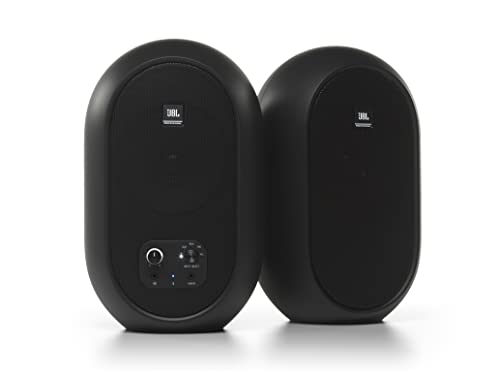
- Coaxial 4.5-inch driver for a wide sweet spot
- Bluetooth 5.0 plus Aux, RCA, and TRS inputs
- Front-panel volume, input select, and headphone mute
Best For: Desktop users who want compact studio monitors with Bluetooth
Budget-Friendly Near-Field Option
PreSonus Eris 3.5 Powered Studio Monitors

- 50 watts of built-in amplification
- High- and low-frequency tuning controls
- Balanced TRS, RCA, and front aux inputs
Best For: Budget-conscious buyers needing compact studio monitors for desks and small rooms
Modern Hi-Res Desktop Choice
Edifier M60 Compact Hi-Res Desktop Speakers

- 66W RMS output in a compact footprint
- Bluetooth 5.3 with LDAC plus USB-C and AUX
- Bundled angled aluminum stands for desktop listening
Best For: Users who want compact studio monitors with Hi-Res audio and modern connectivity
Compact Desktop Monitor Pick
M-AUDIO BX3 3.5" Wired Studio Monitors

- Zero-latency wired monitoring
- 3.5-inch Kevlar woofer and silk dome tweeter
- Rear EQ and multiple input options
Best For: Desktop creators needing wired, compact monitors with flexible connections
Ultra-Compact Reference Choice
IK Multimedia iLoud Micro Monitor

- Very small footprint for desks or travel
- DSP tuning for bass, treble, and placement
- Bluetooth, RCA, and aux connectivity
Best For: Producers who need portable, accurate monitors with DSP tuning
Wireless Small-Room Option
Ortizan C7 Powered Studio Monitors Pair

- Bluetooth 5.3 plus RCA, AUX, USB, and TRS inputs
- 24-bit DAC for digital audio playback
- 3.5-inch woofer and 0.75-inch silk dome tweeter
Best For: Small-room buyers wanting wireless convenience and flexible inputs
Compact Reference Pair – Yamaha HS3 Powered Studio Monitor in Black
If you want compact studio monitors for a desktop setup, the Yamaha HS3 keeps the footprint small while still giving you a true nearfield monitoring option. This pair uses a 3.5-inch woofer and 0.75-inch dome tweeter, with room control and high-trim adjustments to help you adapt the sound to your space.
Best For: Desktop producers, home studios, and anyone who wants a small wired monitor pair with flexible inputs.
Pros:
- Sold as a pair with 2-way powered design for stereo monitoring.
- Multiple input options include XLR/TRS combo, RCA, and stereo mini.
- Room control and high-trim settings help tune the speakers to the room.
- Includes cables and anti-slip pads to get set up quickly.
Cons:
- Only 26W output power, so it is aimed at close-range use.
- Wired-only design may be less convenient than Bluetooth models.
The HS3 is a practical pick if you value compact size and straightforward monitoring over extra features. It looks well-suited to desks, laptop setups, and smaller studio spaces where accuracy and connectivity matter more than big-room volume.
Small HiFi Desktop Set – Sanyun SW208 3" Active Bluetooth Speakers
The Sanyun SW208 fits the compact studio monitors category from a more versatile desktop angle, combining small bookshelf styling with Bluetooth 5.0 and USB playback. It uses 3-inch carbon fiber speaker units, a built-in 24-bit DAC, and on-speaker bass and treble controls for quick adjustments.
Best For: Small desks, casual music listening, and computer setups that need Bluetooth plus wired USB audio.
Pros:
- Bluetooth 5.0 and USB connectivity give it flexible source options.
- Built-in 24-bit DAC can take digital audio directly over USB.
- On-speaker volume, bass, and treble controls make tuning easy.
- Compact wood-and-carbon-fiber design is easy to place on a desk.
Cons:
- More of a small HiFi bookshelf speaker than a traditional studio monitor.
- Single listing details are less focused on pro-monitor connectivity than the others here.
This is a good choice if you want compact speakers that can handle everyday listening, gaming, and desktop audio with simple adjustments. It is especially appealing when Bluetooth and USB convenience matter as much as size.
Desk-Friendly Monitor Pair – Mackie CR3.5 Studio Monitors
The Mackie CR3.5 is built for compact studio monitors shoppers who need a small pair for desks and home studios. With 3.5-inch woofers, a tone knob, and a location switch, it gives you quick control over voicing and bass placement without needing menu diving.
Best For: Small studios, desk setups, and users who want simple tuning controls in a compact monitor pair.
Pros:
- Sold as a pair and sized for desks and small studios.
- Tone knob lets you adjust voicing directly from the speaker.
- Location switch helps correct bass when placed near a wall or in open space.
- Includes isolation pads and cables in the box.
Cons:
- RCA and TRS inputs are practical, but there is no Bluetooth listed.
- Best suited to nearfield use rather than larger rooms.
The CR3.5 stands out as a straightforward desktop monitor option with useful room-placement tools. If you want a compact wired pair that is easy to set up and tweak, it is a strong fit.
Hi-Res Compact Monitor – Edifier MR3 Powered Studio Speakers
The Edifier MR3 is a strong compact studio monitors option if you want a small powered pair with more connectivity and tuning flexibility. It is Hi-Res Audio Certified, offers balanced TRS, RCA, AUX, Bluetooth, and headphone output, and includes Music, Monitor, and Custom modes for different listening needs.
Best For: Creators and listeners who want a compact monitor pair with Hi-Res certification and broad input support.
Pros:
- Hi-Res Audio Certified with a wide 52Hz to 40kHz response range.
- Balanced TRS, RCA, AUX, Bluetooth, and headphone output add flexibility.
- Music, Monitor, and Custom modes make it easy to adapt the sound.
- MDF cabinet is designed to reduce distortion.
Cons:
- Power output is modest at 18W x 2 RMS.
- Smaller drivers mean it is still best treated as a nearfield desktop speaker.
For compact studio monitors with modern inputs and app-based EQ control, the MR3 is one of the most feature-rich choices here. It should suit home studios, video editing, and everyday desktop listening very well.
Desktop Bluetooth Reference Pick – JBL 104-BT Compact Bluetooth Desktop Monitors
If you want compact studio monitors that stay simple on a desktop, the JBL 104-BT is built for that job. Its coaxial driver design, Bluetooth 5.0 streaming, and three input options make it easy to switch between reference listening, computer audio, and consumer devices without adding extra clutter.
Best For: Desktop producers, content creators, and anyone who wants a tidy compact monitor setup with Bluetooth.
Pros:
- Coaxial 4.5-inch woofer and 0.75-inch soft-dome tweeter aim for a wide sweet spot and clear stereo imaging.
- Bluetooth 5.0 plus Aux, RCA, and balanced TRS inputs make it flexible for mixed setups.
- Front-panel volume, input selection, and headphone jack with speaker mute keep control close at hand.
- Acoustically optimized for desktop placement with a ported ABS cabinet.
Cons:
- Single-box specs suggest a modest low end compared with larger studio monitors.
- Designed around desktop use, so it is less suited to bigger rooms.
The JBL 104-BT makes sense if you need a compact monitor pair that balances straightforward connectivity with a reference-style sound approach. It is especially appealing when desk space is limited and you still want multiple ways to connect.
Budget-Friendly Near-Field Option – PreSonus Eris 3.5 Powered Studio Monitors
The PreSonus Eris 3.5 is a straightforward pick if you want compact studio monitors for music, gaming, or everyday desktop audio. With 50 watts of built-in amplification, a 3.5-inch woven-composite woofer, and front-panel and rear tuning controls, it gives you an easy way to shape a small-room setup.
Best For: Home studios, desk setups, and users who want an affordable compact monitor pair with simple tuning controls.
Pros:
- 50 watts of built-in power delivers clear, dynamic output for a small monitor.
- High- and low-frequency acoustic controls help adapt the sound to your room.
- Balanced TRS, RCA, and front aux input cover common desktop sources.
- Front headphone jack adds convenient private listening.
Cons:
- The 3.5-inch woofer limits bass compared with larger compact monitors.
- Best suited to near-field listening rather than filling a large space.
For buyers who want a practical, compact studio monitor pair without a complicated setup, the Eris 3.5 stays focused on the essentials. It is a solid fit when desk space, simplicity, and flexible input options matter most.
Modern Hi-Res Desktop Choice – Edifier M60 Compact Hi-Res Desktop Speakers
The Edifier M60 is a compact studio monitors-style desktop speaker pair for users who want a small footprint without giving up modern connectivity. Its 66W RMS output, Hi-Res Audio certification, Bluetooth 5.3 with LDAC support, and bundled angled stands make it a strong fit for tidy desktop setups.
Best For: Desktop users who want a compact, high-output speaker pair with modern digital inputs and wireless streaming.
Pros:
- 66W RMS total output is strong for a compact desktop speaker pair.
- Bluetooth 5.3 with LDAC, plus USB-C and AUX, offers flexible wired and wireless input options.
- Hi-Res Audio certification and built-in DSP focus on high-quality digital playback.
- Bundled 15-degree aluminum stands help aim sound toward ear level on a desk.
Cons:
- 3-inch mid-low drivers are small, so bass depth is inherently limited.
- The advanced feature set may be more than needed if you only want basic monitor playback.
If you want compact studio monitors with a more modern feature set, the M60 stands out for wireless convenience and desktop-friendly design. It is a good match when you want strong output, tidy placement, and easy digital connectivity.
Compact Desktop Monitor Pick – M-AUDIO BX3 3.5" Wired Studio Monitors
If you want compact studio monitors for a desk setup, the M-AUDIO BX3 keeps things simple with a wired connection, small 3.5-inch drivers, and enough input options to work with a PC, DJ gear, or recording setup. It is a practical choice for monitoring, streaming, gaming, and general desktop audio without taking much space.
Best For: Desktop creators who want a wired, affordable nearfield-style monitor pair with flexible inputs.
Pros:
- Zero-latency wired monitoring for studio work, podcasting, and live use
- 3.5-inch Kevlar woofers and silk dome tweeters for clear stereo detail
- MDF cabinet and bass reflex design help reduce vibration and add low-end depth
- Rear EQ controls plus front headphone input add setup flexibility
Cons:
- Small driver size limits deep bass compared with larger monitors
- Wired-only design is less convenient than Bluetooth models
- Best suited to close-range desktop listening rather than larger rooms
The BX3 is a solid compact option if you want monitor-style sound on a desk and need broad compatibility more than wireless convenience. Its feature set is especially useful for creators who want a straightforward plug-in pair for everyday production tasks.
Ultra-Compact Reference Choice – IK Multimedia iLoud Micro Monitor
The IK Multimedia iLoud Micro Monitor is one of the most compact studio monitors you can buy, but it still aims for accurate reference sound rather than just desktop convenience. Its internal DSP, portable size, and Bluetooth support make it a strong fit for small studios, mobile work, and listening setups where space is limited.
Best For: Producers and creators who need tiny, portable monitors with accurate sound and DSP tuning.
Pros:
- Extremely small footprint for tight desks and travel use
- Internal DSP provides bass, treble, and position compensation settings
- Bluetooth plus RCA and 1/8-inch aux inputs add convenience
- 50W RMS output with controlled low end for its size
Cons:
- Limited bass extension compared with larger studio monitors
- Portable design may not suit users who want a more traditional monitor format
- Higher-end feature set can be overkill for basic desktop playback
If your main goal is to save space without giving up monitoring accuracy, this model stands out in the compact studio monitors category. It is especially appealing when portability and DSP correction matter as much as raw output.
Wireless Small-Room Option – Ortizan C7 Powered Studio Monitors Pair
The Ortizan C7 is a compact studio monitors pair built for small spaces, with Bluetooth 5.3, RCA, AUX, USB digital audio, and balanced TRS input. It is a versatile pick if you want a monitor-style speaker set for music production, TV, gaming, or desktop listening without giving up wireless convenience.
Best For: Buyers who want compact monitors with Bluetooth, USB audio, and balanced input options.
Pros:
- Bluetooth 5.3 makes wireless playback quick and convenient
- 24-bit DAC over USB helps reduce signal loss for digital audio
- 3.5-inch carbon fiber woofer and 0.75-inch silk dome tweeter aim for clear detail
- Balanced TRS plus AUX and headphone output support flexible setups
Cons:
- Wireless convenience may not be ideal for users who prefer fully wired monitoring
- Smaller drivers are better for nearfield use than room-filling bass
- Feature-rich design can be more than you need for a basic stereo speaker setup
For a compact desktop or small-room system, the C7 offers a good mix of monitoring features and everyday usability. It makes the most sense when you want multiple input paths and still want the option to go wireless.
How We Picked the Best Compact Studio Monitors
For this roundup, we prioritized models that make sense on crowded desks and in small rooms: practical cabinet size, usable nearfield performance, and enough input options to fit common PC, laptop, and interface setups. We also looked at wattage, driver size, and whether the controls help you tune placement issues instead of amplifying them.
Quick Comparison
The biggest tradeoff in Compact Studio Monitors is usually between size and bass extension. Smaller 3-inch and 3.5-inch models are easier to place and often fit better at arm’s length, while 4-inch-plus options can offer a fuller low end and a little more headroom. Bluetooth is convenient for casual listening, but wired inputs remain the better choice for mixing and latency-sensitive work.
Key Buying Factors for Compact Studio Monitors
Driver Size and Bass Reality
Don’t expect deep sub-bass from very small monitors. If you produce bass-heavy music, consider whether you will also use headphones or a subwoofer. For general editing, content creation, and casual music production, many Compact Studio Monitors are more than capable.
Connectivity and Source Flexibility
Look for the inputs you actually need: balanced TRS, RCA, USB, or Bluetooth. If you plan to connect an audio interface, balanced analog inputs are usually the safest pick. Bluetooth is a bonus, not a replacement for a wired studio path.
Controls and Room Tuning
Tone controls, EQ switches, or front-panel volume knobs can be very helpful in small spaces where the speakers sit close to walls. These tools won’t fix a bad room, but they can reduce harshness and boominess enough to make everyday monitoring easier.
Power and Listening Distance
Compact speakers are best used at short to moderate distances. If you sit close to your desk, focus on clarity and stereo imaging rather than raw output. More power can help with headroom, but better tuning matters more than a big wattage number.
Who Should Buy Which Compact Studio Monitors?
Choose the smallest models if your desk is tight, you mainly edit voice, or you want nearfield monitors for casual mixing at low to moderate volume. Step up to slightly larger Compact Studio Monitors if you want more bass presence, broader placement flexibility, or a fuller sound for music production and everyday listening. If portability matters, prioritize lighter cabinets and wireless convenience; if accuracy matters most, keep the setup simple and wired.
In short, the best choice depends on your room, your listening distance, and how much low-end extension you realistically need. For most buyers, the right compact monitors are the ones that fit the space first and the workflow second—without forcing you to compromise on clarity.