Choosing the right handheld field recorder can make the difference between usable audio and a take you cannot save. The best models balance sound quality, mic flexibility, battery life, and simple operation.
Below, we focus on practical options for filmmakers, musicians, podcasters, and creators who need reliable portable recording without extra complexity.
Best 10 Handheld Field Recorders Picks for 2026
Interchangeable Capsule Flexibility
Zoom H5 4-Track Handheld Recorder
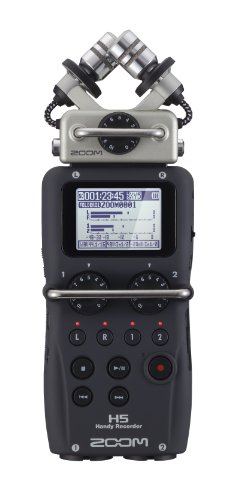
- Swappable input capsules for flexible setups
- Two XLR/TRS combo inputs with phantom power
- Records four tracks and works as a USB interface
Best For: Filmmakers and musicians who need modular input options and multitrack recording.
32-Bit Float Simplicity
TASCAM DR-05XP 32-Bit Float Recorder

- 32-bit float, 24-bit, 16-bit, and MP3 recording modes
- Built-in mics handle loud sources up to 125dB SPL
- USB-C 2-in/2-out interface for computer recording
Best For: Anyone wanting an easy stereo handheld recorder with modern format support.
Flagship Audio and Control

- Large 19.4mm X/Y mic capsule for detailed capture
- 32-bit float recording with dedicated gain knobs
- Up to 4-track WAV recording at 192kHz
Best For: Users who want clip-free recording and hands-on control for field work.
Adjustable Stereo Versatility
TASCAM DR-07XP 32-Bit Float Recorder

- Adjustable AB/XY built-in stereo microphones
- 32-bit float plus 24-bit, 16-bit, and MP3 modes
- USB-C 2-in/2-out interface with external mic input
Best For: Creators who want adjustable stereo recording and USB-C interface support.
Studio-Grade Flexibility
Zoom H6 Studio Handy Recorder for filmmakers and musicians

- 32-bit float recording on up to 6 tracks plus stereo mix
- 19.4mm microphones handle up to 140 dB SPL
- Look-ahead limiters and 44.1 to 192 kHz support
Best For: Filmmakers and musicians needing multi-track headroom in a portable recorder
Everyday Creator Recorder
Zoom H1 Essential portable stereo recorder for creators

- Clear stereo capture for videos, voiceovers, interviews, and podcasts
- USB-C mic mode for livestreams, meetings, and calls
- Lightweight 92 g design with 10-hour recording
Best For: Creators who need an easy portable recorder for everyday content
Portable High-Headroom Pick
Xvive XV1-R compact stereo recorder with 32-bit float

- 32-bit float recording with no need to adjust gain
- X/Y microphones capture up to 130 dB SPL
- USB-C mic mode plus WAV and AAC recording options
Best For: Users who want a compact recorder with high headroom and USB-C connectivity
Compact 4-Track Recorder
4-Track 32-Bit Float Recorder for Flexible Captures

- 4-track 32-bit float recording helps reduce clipped takes.
- Built-in stereo mics and two XLR/TRS inputs add flexibility.
- USB-C plus SD card backup supports mobile workflows.
Best For: Creators wanting an easy handheld recorder for music, interviews, and video audio
Expandable Multi-Input Recorder
6-Track Recorder with Four XLR Inputs

- 6-track 32-bit float recording supports larger sessions.
- Four XLR/TRS inputs and built-in X/Y mics add versatility.
- Can function as a USB audio interface and SD recorder.
Best For: Users who need more inputs and expandable handheld recording options
Portable Pattern-Flex Recorder
3-Mic Handheld Recorder with Nine Patterns

- Three built-in mics and nine patterns add recording flexibility.
- 32-bit float capture avoids manual gain adjustment.
- Bluetooth syncing and SD backup support field workflows.
Best For: Journalists and podcasters who need a compact recorder with flexible pickup patterns
Interchangeable Capsule Flexibility – Zoom H5 4-Track Handheld Recorder
The Zoom H5 is a versatile choice among handheld field recorders when you want swappable inputs and straightforward multitrack capture. It ships with a detachable X/Y capsule, gives you two XLR/TRS combo inputs with phantom power, and records four tracks at once for flexible on-location work.
Best For: Filmmakers and musicians who want a modular recorder with interchangeable capsules and dual XLR inputs.
Pros:
- Interchangeable input capsules add real setup flexibility.
- Detachable X/Y capsule includes shock-mounted mics to help reduce handling noise.
- Two XLR/TRS combo inputs support selectable phantom power and a -20dB pad.
- Records four tracks simultaneously and works as a multichannel or stereo USB audio interface.
Cons:
- Uses 2 AA batteries, so battery swaps are part of the workflow.
- Records directly to SD/SDHC cards up to 32GB, which is more limited than some newer options.
If you want a handheld field recorder that can grow with different recording setups, the H5 stands out for its capsule system and practical input options. It is built for users who value adaptability as much as basic stereo recording.
32-Bit Float Simplicity – TASCAM DR-05XP 32-Bit Float Recorder
The TASCAM DR-05XP is a practical pick in handheld field recorders for users who want simple stereo capture with modern 32-bit float support. Its built-in omnidirectional condenser microphones, multiple recording formats, and USB-C interface make it useful for music, voice, meetings, and audio-for-video work.
Best For: Users who want a compact stereo recorder with 32-bit float and easy USB-C connectivity.
Pros:
- Supports 32-bit float, 24-bit, and 16-bit recording modes.
- Built-in omnidirectional condenser mics handle sources up to 125dB SPL.
- Works as a 2-in/2-out USB-C audio interface.
- Up to 17.5 hours of operation with 2 AA alkaline batteries.
Cons:
- SD card and batteries are not included.
- Built-in mics keep it focused on stereo recording rather than expanded external inputs.
For straightforward field use, the DR-05XP keeps the feature set focused on reliable stereo capture and easy computer connectivity. It is a sensible option if you want a handheld recorder without a complicated setup.
Flagship Audio and Control – Zoom H5 Studio Handy Recorder
The Zoom H5 Studio is aimed at handheld field recorder buyers who want higher-end capture features in a portable body. It pairs a large 19.4mm X/Y microphone capsule with 32-bit float recording, dedicated gain knobs, and up to 4-track recording for more demanding location work.
Best For: Filmmakers and musicians who want clip-free recording, larger onboard mics, and hands-on level control.
Pros:
- 19.4mm X/Y microphone capsule is the largest mic setup on a handheld recorder in the supplied notes.
- 32-bit float recording helps capture clip-free audio with extended dynamic range.
- Dedicated gain knobs make level adjustments quick and intuitive.
- Records up to 4 tracks simultaneously at up to 192kHz in WAV format.
Cons:
- Uses 4 AA batteries, so power management matters on longer shoots.
- Heavier than the more compact models listed here at 14.4 ounces.
The H5 Studio is the most feature-forward option here if you want robust onboard mics and a more tactile recording workflow. It is built for users who prioritize dynamic range and direct control in the field.
Adjustable Stereo Versatility – TASCAM DR-07XP 32-Bit Float Recorder
The TASCAM DR-07XP is a flexible handheld field recorder for users who want adjustable stereo mics and simple stereo workflow. With AB/XY condenser microphones, 32-bit float support, and USB-C audio interface functionality, it covers voice, music, meetings, and audio-for-video use cases without much setup.
Best For: Creators who want adjustable built-in stereo mics plus USB-C recording to a computer.
Pros:
- AB/XY condenser microphones give you adjustable stereo capture options.
- Supports 32-bit float, 24-bit, 16-bit, and MP3 recording modes.
- 3.5mm MIC/EXT IN jack adds an external input option with plug-in power.
- Functions as a 2-in/2-out USB-C audio interface.
Cons:
- Memory card is not included.
- AA batteries are sold separately.
- It remains a stereo recorder, so it is less expandable than models with multiple XLR inputs.
The DR-07XP makes sense if you want a compact recorder with adjustable mic patterns and a direct path to computer recording. It is a practical, no-fuss option for portable stereo capture.
Studio-Grade Flexibility – Zoom H6 Studio Handy Recorder for filmmakers and musicians
If you want handheld field recorders that can handle demanding location work, the Zoom H6 Studio is built around flexibility and clean capture. Its six-track 32-bit float recording, large 19.4mm microphones, and look-ahead limiters make it a strong fit when you need reliable audio without constantly worrying about clipping or gain mistakes.
Best For: Filmmakers, musicians, and field recordists who want more tracks and more headroom in one portable unit.
Pros:
- Records up to 6 individual tracks plus a stereo mix with 32-bit float audio.
- 19.4mm mics are rated up to 140 dB SPL for loud sources and tough environments.
- Look-ahead limiters help prevent distortion before overloads happen.
- Supports 44.1 kHz to 192 kHz recording for flexible capture quality.
Cons:
- Uses 4 AA batteries rather than a built-in rechargeable battery.
- At 1.05 pounds, it is less compact than simpler pocket recorders.
Overall, this is a practical pick if your recording work moves between music, film, and on-location sound. The H6 Studio focuses on control, headroom, and multi-track capability, which makes it especially appealing when one device needs to do a lot.
Everyday Creator Recorder – Zoom H1 Essential portable stereo recorder for creators
Among handheld field recorders, the Zoom H1 Essential is aimed at quick, useful stereo capture for everyday content. It is designed for creators who need clearer audio for videos, voiceovers, interviews, and ambient sound, while also doubling as a USB-C microphone for streaming and calls.
Best For: Creators who want a simple portable recorder for content, interviews, and voice work.
Pros:
- Captures clear stereo audio for videos, tutorials, reels, and voiceovers.
- Works for podcasts, interviews, lectures, meetings, and notes.
- USB-C connection lets it function as a microphone for livestreams and calls.
- Very light at 92 g, making it easy to carry and use on the go.
Cons:
- Records for up to 10 hours, which is shorter than some alternatives.
- Uses 2 AAA batteries, so long sessions may require spares.
This is a straightforward choice if you want better sound than a phone or camera without a lot of setup. The H1 Essential focuses on convenience and practical recording modes, making it a solid everyday option for creators and interview work.
Portable High-Headroom Pick – Xvive XV1-R compact stereo recorder with 32-bit float
If you are comparing handheld field recorders for clean capture in unpredictable situations, the Xvive XV1-R stands out for its 32-bit float recording and compact design. It is built for users who want flexible file formats, USB microphone support, and simple tools like auto-record and pre-record without adding much bulk.
Best For: Musicians, podcasters, filmmakers, and anyone who wants a compact 32-bit float recorder with USB-C support.
Pros:
- 32-bit float recording helps avoid distortion and gain-setting mistakes.
- X/Y microphones handle up to 130 dB SPL for louder sources.
- Supports WAV and AAC formats, plus up to 96 kHz sample rates.
- USB-C microphone function works with PC, Mac, iOS, and Android devices.
Cons:
- Uses mono/stereo built-in mics rather than a more expandable input setup.
- Has no headphone jack, which limits direct monitoring options.
This model is a good fit when portability and recording safety matter more than a larger feature set. With 32-bit float, auto-record, and USB mic mode, it covers a lot of practical use cases in a small package.
Compact 4-Track Recorder – 4-Track 32-Bit Float Recorder for Flexible Captures
The Zoom H4 Essential is a practical choice for handheld field recorders when you want built-in mics, external input options, and clip-free 32-bit float recording in a compact unit. It fits music, interviews, podcasts, video audio, and field work, while the USB-C connection and SD card backup make it easy to build a reliable mobile setup.
Best For: Creators who want an easy-to-use 4-track recorder with built-in stereo mics and two XLR/TRS inputs.
Pros:
- Records 32-bit float audio across 4 tracks to help avoid distorted takes.
- Built-in stereo microphones plus two XLR/TRS inputs support mics, instruments, or a mixer.
- USB-C recording/streaming and SD card backup support flexible workflows.
- Spoken menu guidance can make operation easier and more accessible.
Cons:
- Only two XLR/TRS inputs, so larger setups may need a different model.
- Uses AA batteries, which means carrying spares for longer sessions.
This is a well-rounded handheld option if you need dependable field recording without overcomplicating the process. It offers the core features most solo creators and small crews need, with a strong emphasis on simple capture and backup recording.
Expandable Multi-Input Recorder – 6-Track Recorder with Four XLR Inputs
The Zoom H6 Essential stands out among handheld field recorders for users who need more input capacity and more control over multi-source recordings. With 32-bit float capture, built-in X/Y mics, four XLR/TRS combo inputs, and interchangeable capsule support, it is built for bigger sessions where flexibility matters.
Best For: Musicians, podcasters, and filmmakers who need a handheld recorder with multiple XLR inputs and expandable mic options.
Pros:
- 6-track 32-bit float recording helps preserve clean audio across multiple sources.
- Four XLR/TRS combo inputs provide more expansion than smaller handheld recorders.
- Built-in X/Y mics can capture up to 135 dB SPL.
- Works as a USB audio interface while also recording to SD card.
Cons:
- Heavier than the smaller models in this lineup at 450 g.
- Uses four AAA batteries, so power planning matters for longer sessions.
If your recording needs are growing beyond basic two-channel work, this model gives you a lot more room to scale. It is especially appealing for people who want a handheld recorder that can serve as both a field unit and an interface.
Portable Pattern-Flex Recorder – 3-Mic Handheld Recorder with Nine Patterns
The Zoom H2 Essential is a compact option in handheld field recorders for anyone who wants simple, clip-free capture with a lot of pattern flexibility. Its three built-in microphones, nine selectable recording patterns, and 32-bit float/96 kHz support make it useful for interviews, stereo ambience, and other mobile recording tasks.
Best For: Journalists, podcasters, and field recorders who want a small recorder with flexible pickup patterns and easy gain-free operation.
Pros:
- Three built-in microphones with nine selectable patterns broaden recording options.
- 32-bit float recording lets you capture audio without adjusting gain.
- USB mic mode and SD card recording support simultaneous backup workflows.
- Bluetooth timecode syncing can help align multiple units wirelessly.
Cons:
- Built-in mic design means it is less suited to external XLR mic setups.
- Only one USB-C/PC-focused device listing in the supplied details may suggest a more limited accessory ecosystem than larger models.
This is a smart pick when portability and pattern selection matter more than input count. It keeps the operation straightforward while adding wireless syncing and strong accessibility features, which can be especially useful in solo or multi-recorder field work.
How We Picked These Handheld Field Recorders
We prioritized recording quality, preamp performance, portability, ease of use, and real-world flexibility. For Handheld Field Recorders, the most important features are not just headline specs, but how well the recorder handles quick setup, loud sources, low-noise capture, and everyday field use.
We also looked for useful workflows such as 32-bit float recording, USB-C interface capability, adjustable or built-in microphones, and models that suit both beginners and experienced users.
Quick Comparison
These 10 picks cover a range of needs: compact stereo recorders for fast voice capture, larger models with more inputs for filmmaking, and 32-bit float designs that reduce the risk of clipping. In general, smaller units are better for mobility and simple interviews, while larger units are more adaptable for multi-source production.
Best Compact Options
If you want something light and easy to carry, look at the smallest recorders in the lineup. They are a strong fit for creators who record speech, ambient sound, or reference audio on the go.
Best Flexible Options
If you need room to grow, choose a model with more tracks, better expandability, or stronger connectivity. These are better suited to filmmakers and musicians who may need to record multiple sources later.
Key Buying Factors for Handheld Field Recorders
Microphone configuration: Built-in X/Y mics are convenient for quick stereo capture, while adjustable mics can help you aim at sources more precisely.
Bit depth and float recording: 32-bit float is useful when levels change unpredictably, especially for run-and-gun field work. It can reduce clipping concerns, though good mic placement still matters.
Inputs and outputs: If you plan to connect lavaliers, mixers, or cameras, check for XLR/TRS inputs, headphone monitoring, and line-out or interface support.
Portability and controls: Smaller Handheld Field Recorders are easier to carry, but larger units often offer more channels and better hands-on control. Think about whether you want speed or expandability.
Power and storage: Battery life, SD card support, and USB-C power or audio interface mode can affect how practical the recorder is for long sessions.
Who Should Buy Which Handheld Field Recorders?
Filmmakers: Choose a recorder with reliable inputs, solid monitoring, and enough flexibility for boom mics, wireless systems, or dual-system audio.
Musicians: Prioritize cleaner preamps, stereo imaging, and models that can handle louder sources without distortion.
Podcasters and solo creators: A compact unit with simple controls and strong built-in mics is often the easiest choice, especially for interviews and mobile content.
Beginners: Start with a straightforward recorder that is easy to operate quickly. If you expect changing recording levels, 32-bit float can be a smart safety net.
No matter your use case, the best Handheld Field Recorders are the ones that fit your workflow first. Match the recorder to your typical environment, input needs, and how much control you want in the field.